A post on Greater Greater Washington laments the lack of options coming online in Washington, D.C.'s housing boom—new housing is only of the most expensive variety.


Payton Chung lays out an argument for a wider variety of housing development in Washington, D.C.: "At first glance, the District's central-city housing boom might seem to be completely benign: as long as new housing is being built, does it matter where it is? But by funneling almost all new residences into central-city high-rises, the District is all but requiring that new housing be built with only the most expensive construction techniques, on the most expensive land."
Here Chung provides a pro forma for rental construction:
"How expensive are central city high-rises? The cost of just materials, labor, design, and appropriately-zoned land for a high-rise building in central DC amounts to over $400 per rentable square foot—and that's before its developer has made a single cent on her investment, much less paid interest to her investors, paid attorneys to get the site zoned correctly, paid for community improvements like transportation or affordable housing, or brought in the gimmicky amenities."
After providing more context for the housing market in Washington, D.C., Chung also makes a few simple recommendations for the District to help deliver more low- and mid-income housing.
Read the full story: Most of DC's new housing is in high-rises, which most people can't afford to live in
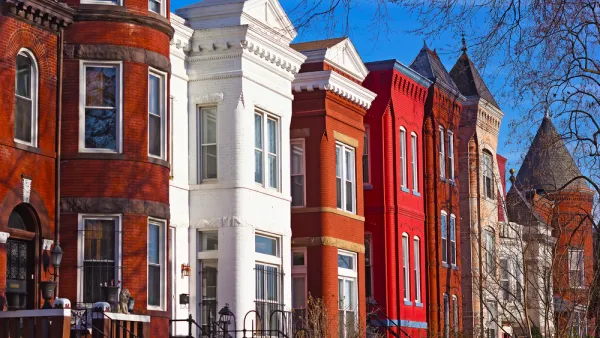
In D.C.: Rent Control Law 1, Short-Term Rentals 0
It's still illegal to convert rental units into short-term rentals that act as a hotel business in Washington, D.C. A high-profile legal settlement will thus send a bumper crop of rental units back to the market.
Report: Arlington, Virginia Is Millennial Town U.S.A.
RealtyTrac recently released an analysis of fair market rents and median home prices in more than 500 U.S. counties. Among the findings of the report: the real estate markets with the highest share of millennial population.
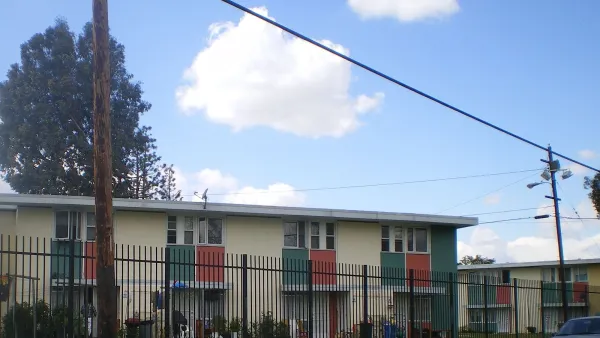
More Research Needed to Understand the Rental Market
Large institutional investors are changing the realities of the U.S. rental housing market, but a lack of information makes it hard for cities to respond.

Planetizen Federal Action Tracker
A weekly monitor of how Trump’s orders and actions are impacting planners and planning in America.

California plans to bury El Niño’s downpour
If the state plays its cards right, it may be able to store a billion acre-feet of El Niño’s water in aquifers.

Desperate measures: Advocates weigh draining Lake Powell to fill Colorado River
Draining the reservoir could reduce evaporation losses by a couple hundred thousand acre-feet.

US buildings threatened, destroyed by fires set to triple by 2060
Researchers found a high fire risk for socioeconomically vulnerable neighborhoods in the American West.

LA residents may be allowed to paint their own crosswalks
Councilwoman Katy Yaroslavsky put out a motion instructing the Los Angeles Department of Public Transportation to study the feasibility of allowing volunteers to paint crosswalks.

Dallas moves to overhaul its zoning code
The city's zoning reform will allow more multi-family and mixed-use developments.

FREE Course: Walkable City 1: Why Walkability?
After describing his path towards focusing on walkability as the essence of good planning, Jeff Speck marches through his five principal reasons for making more walkable places.
Reinventing Malls: Planning Alchemy—Turning Gray Fields Into Gold
The course focuses on the opportunities and imperatives that shape reinvention of mall sites.

City of Rosemead
Rutgers University, Edward J. Bloustein School of Planning and Public Policy
One Hundred Miles
Hunter College, City University of New York (CUNY)
The Architects Foundation
University of Cincinnati Online
City of Cambridge
Montrose County
The Pocatello Development Authority