Adding new details to a plan that is sure to create controversy, Mayor Ed Lee has a new plan to aadd affordable housing to the city of San Francisco.


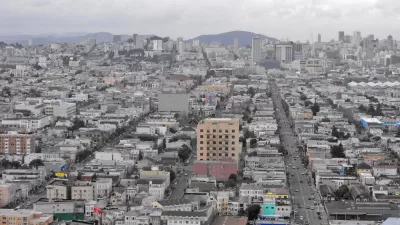
Emily Green reports: "Mayor Ed Lee detailed his goal on Tuesday to make San Francisco affordable again, fleshing out a plan to build or rehabilitate 10,000 units for low-income and working-class families by 2020."
Mayor Lee's housing plan has five "prongs," as Green describes them, including an expanded inclusionary housing program. "Lee will seek through legislation to relax current requirements so that developers could build affordable units for a broader range of incomes. For example, instead of building 10 units that would be required to rent at $1,000 a month, a developer could build 20 to rent at $1,500 a month," reports Green. In addition, "developers could add up to two stories to a building in exchange for increasing the number of units they rent or sell to low- and middle-income residents."
Another significant proposal would allow nonprofit developers to "take over federally funded public housing projects in exchange for upgrading them."
The article goes on to detail the major ideological rift that will play out over the course of the debate about Lee's proposals, but also in a pair of ballot initiatives that will go before voters in November.
FULL STORY: S.F. Mayor Lee rolls out affordable housing plan


San Francisco Planning Department Proposes Increasing Heights in Neighborhoods
The San Francisco Planning Department is proposing a trade-off to neighborhoods to comply with a state density bonus law: Modestly increase height and density limits in exchange for more affordable housing.
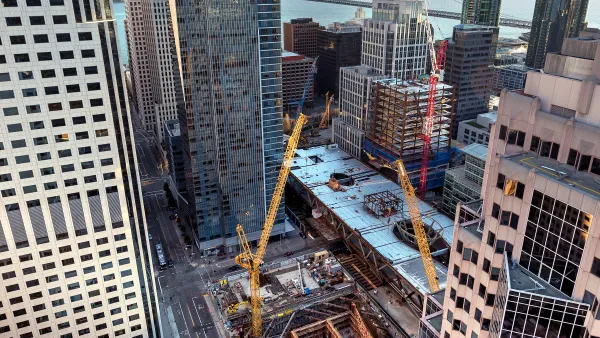
San Francisco Housing Construction Far Slower Than Other Tech Hubs
Experts blame high land and construction costs and restrictive regulations for San Francisco’s dismal rate of housing construction, which lags behind other fast-growing cities like Austin and Seattle.
San Francisco to Reconsider Inclusionary Zoning as Development Slows to a Crawl
Critics of inclusionary zoning frequently point to San Francisco as an example of what not to do. A sluggish year of development has some local politicians ready to reconsider the city’s program.

The state-sanctioned urbicide of Austin
People don’t kill cities. Freeways do.

US to reduce Colorado River water deliveries to Mexico
A new Colorado Treaty amendment reduces Mexico’s Colorado River water allocation by 250,000 acre feet.

New Jersey’s second-largest city bans standalone data centers
Jersey City will continue to allow co-location facilities, such as those meant for research institutions that store their own data.

Amtrak not solely to blame for New Jersey commuter rail's unreliability, report finds
A new study from the Garden State Initiative found that NJ Transit’s budget grew 20% across a 4 year period, but reliability declined significantly over the same period.

EPA erases limits on planet-warming pollution from power plants
Under Monday’s plan, power plants would still have some limits on how much mercury, arsenic and other contaminants they can emit.

Phoenix announces new on-demand transit service, more frequent RAPID buses
Both new services will launch in October, and are part of Phoenix's Project Effective Access Solutions for Easing Congestion.

FREE Course: Walkable City 1: Why Walkability?
After describing his path towards focusing on walkability as the essence of good planning, Jeff Speck marches through his five principal reasons for making more walkable places.
Reinventing Malls: Planning Alchemy—Turning Gray Fields Into Gold
The course focuses on the opportunities and imperatives that shape reinvention of mall sites.

Eagle County Government
Harvard University Graduate School of Design
Nashville Planning Department
The Architects Foundation
University of Cincinnati Online
The Pocatello Development Authority
The Urban Renewal Agency of the City of Pocatello
Journal of the American Planning Association