A study released by the Insurance Institute for Highway Safety on September 1 showed steep reductions in speeding in Montgomery County, Maryland, where speed cameras has been in effect since 2007, reducing fatalities and severity of injuries.


"A new study released Tuesday shows speed cameras have prompted long-term changes in driver behavior and led to substantial reductions in deaths and injuries," writes David Shepardson, Washington Bureau Chief for The Detroit News. "The cameras are used on residential streets with speed limits of 35 mph or less and in school zones."
“Speed cameras get drivers to ease off the accelerator, and crashes are less likely to be deadly at lower speeds,” said Insurance Institute for Highway Safety President Adrian Lund. “This study connects the dots to show that speed cameras save lives.”
The report was published by the Insurance Institute for Highway Safety (IIHS) "which receives all its funding from car insurance companies," writes Martin Di Caro of WAMU 88.5. Listen here.
It "decided to pick Montgomery County's program — the first in Maryland — because it has been in operation since 2007 and has gone through modifications starting in 2009, when a state law increased the speeding threshold to 12 miles per hour over the posted limit."
"As of 2014, the county had 56 fixed cameras, 30 portable cameras and six mobile speed vans," writes Shepardson. There's no secret where the fixed cameras are located - Montgomery County points them out here, along with the red light camera locations.
The findings are indeed impressive according to the institute's press release, and show great potential in reducing fatalities if used elsewhere.
- Cameras have reduced by 59 percent the likelihood of a driver exceeding the speed limit by more than 10 mph, compared with similar roads in two nearby Virginia counties that don't have speed cameras.
- Overall, the county's camera program in its current form — including the use of corridors and a minor enforcement change that took effect in 2009 — reduces fatal or incapacitating injuries by 39 percent on residential roads with speed limits of 25-35 mph.
- The estimate of 21,000 fatal or incapacitating injuries that cameras could prevent nationwide is based on that reduction.
Spillover effect: Even on streets without cameras, traffic has slowed down. "(D)rivers in Montgomery County are slowing down everywhere as a result of being conditioned by the presence of speed cameras on roads with speed limits of 35 m.p.h. or less," writes Di Caro.
That is not to say they are not without faults, as the "related" articles below for Long Island and Chicago. Particularly jarring is the one about "the tiny town of Elmwood Place, Ohio," where a controversy resulted in a litigation nightmare. CityLab's Sarah Goodyear goes into depth on the problems that erupted. In short, speed cameras may have not escaped the controversies that have clouded the use of red light cameras.
However, as the above video shows, the Montgomery County program has been well received, and citations are decreasing. The goal is to affect driver behavior, not accrue revenue. Speaking of which, here are the penalties, as noted on the county webpage:
- Vehicles traveling 12 miles per hour above the speed limit are issued citations.
- Registered owner of vehicle receives a $40.00 civil citation.
- No points will be issued against the vehicle owner’s driving record.
"Researchers also surveyed county residents; 62 percent say they're in favor of speed cameras on residential streets," wrote Di Caro. "Ninety-five percent were aware of the cameras."
A major distinguishing factor from red light cameras is that speed cameras are still "relatively rare, with only 138 jurisdictions operating such programs as of last month," notes the press release.
While San Francisco Mayor Ed Lee wants to use them, he'll have to find a state legislator to write and pass a bill allowing him to install them. See IIHS table of state laws allow automated traffic enforcement.
This is not the first study to show that speed cameras positively affect driver behavior, saving lives and reducing more serious injuries."A 2010 meta-study of dozens of research papers on speed cameras found a uniformly positive effect on street safety, with a 30 to 40 percent reduction in crashes that cause serious injury or death following the rollout of most programs," wrote Aaron Bialick for Streetsblog SF in January.
Hat tip to AASHTO Daily Transportation Update, Safety sectioin
Read the full story: Study: Speed cameras reduce traffic crashes

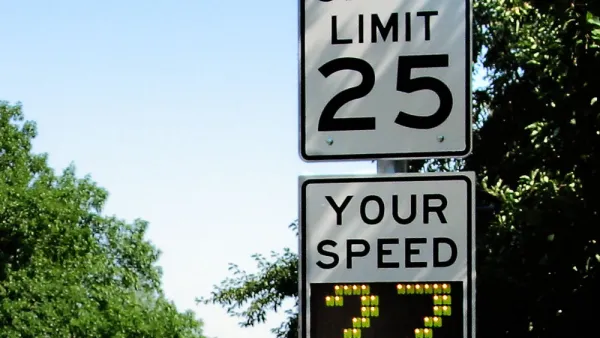
Virginia to Launch Innovative New Anti-Speeding Pilot Program
The state of Virginia's new traffic safety program will focus on speeding as fatal factor in automobile collisions and could eventually provide a model for similar programs around the country.
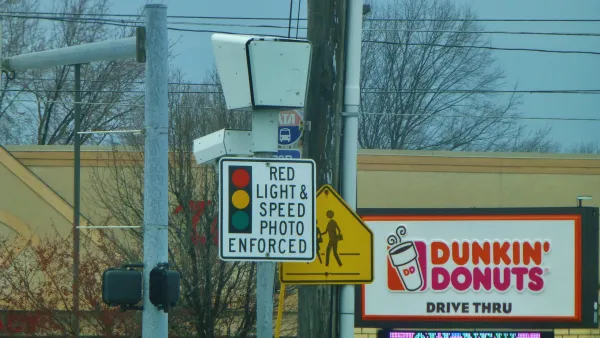
Gov. Cuomo Signs Street Safety Legislation For New York City on Mother's Day
Gov. Andrew M. Cuomo took his mother to work on Sunday so she could join him in a panel where he signed life-saving, street safety legislation to reinstate and expand the school zone speed camera program in New York City.
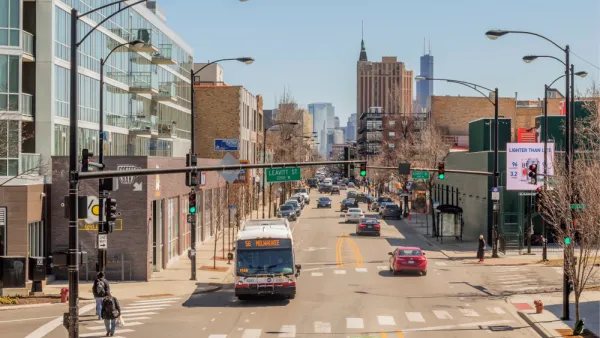
Did Chicago’s Speed Cameras Improve Safety? [UPDATED]
Advocates of automated enforcement argue it saves lives, but despite a dramatic rise in speeding tickets, pedestrian fatalities grew in 2021.

Planetizen Federal Action Tracker
A weekly monitor of how Trump’s orders and actions are impacting planners and planning in America.

Amtrak, CN end decades-long dispute with eight-year agreement
The new operating agreement establishes an updated framework for the companies to work together, including processes to resolve disputes.

Judges permit Denver to divert 77,000 acre feet from the Colorado River for reservoir expansion
Overuse and climate change have caused the Colorado River’s water levels to plummet.

NYC DOT wants faster, more permanent street upgrades
The city is examining ways to build more concrete infrastructure without getting entangled in 'decades-long' projects.

'Something we’ve never seen before:' rising utility rates could strain city finances nationwide
Data centers, climate change and other factors have caused utility rates in the United States to increase by 38% since 2020.

Trump to overrule local leaders, lease millions of acres of America’s Pacific Island territories’ seafloors to mining companies
International law says that the Indigenous people of America’s territories have a right to prior and informed consent regarding projects that impact their countries.

FREE Course: Walkable City 1: Why Walkability?
After describing his path towards focusing on walkability as the essence of good planning, Jeff Speck marches through his five principal reasons for making more walkable places.
Reinventing Malls: Planning Alchemy—Turning Gray Fields Into Gold
The course focuses on the opportunities and imperatives that shape reinvention of mall sites.

Harvard University Graduate School of Design
KFH Group Inc.
Greater Baltimore Committee
The Architects Foundation
University of Cincinnati Online
The Pocatello Development Authority
The Urban Renewal Agency of the City of Pocatello