A recent trend in returning the use of streets and other public space to the use of humans and other modes of transportation other than the car is more striking with some historical perspective.


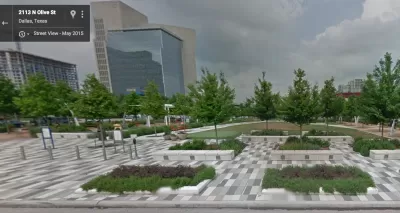
A recent trend in returning the use of streets and other public space to the use of humans and other modes of transportation other than the car is more striking with some historical perspective.
Melia Robinson shares 41 examples of public space makeovers around the world—curated by a Brazilian urban planning collective called Urb-i. The team at Urb-I scoured Google Street View, for examples of public spaces remade for humans, rather than cars. Examples from the United States include Klyde Warren Park in Dallas, Times Square in New York City, a "People St." in the Silver Lake neighborhood of Los Angeles, Atwater Street in Detroit, and Coenties Slip and Dutch Kills Green in New York City.
Robinson shares 41 examples, but the Urb-I team has produced more than 300 public space transformations from around the world.
Read the full story: 41 amazing public space transformations captured by Google Street View

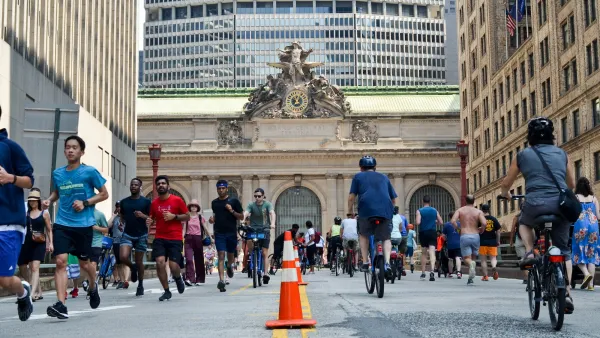
Mamdani’s Budget Fails to Expand Open Streets, Breaking Campaign Promise
The proposed budget allocates $2 million to Summer Streets and Open Streets, less than the $2.1 million allocated by the Adams administration last year.
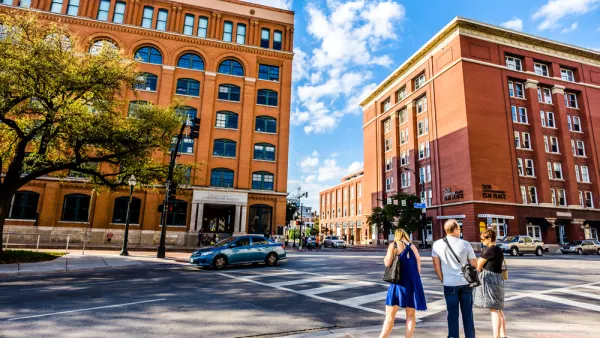
A New Vision for Dallas’ Dealey Plaza
After decades of neglect, a team of designers reimagines the infamous plaza as a safe, vibrant, multimodal public space.
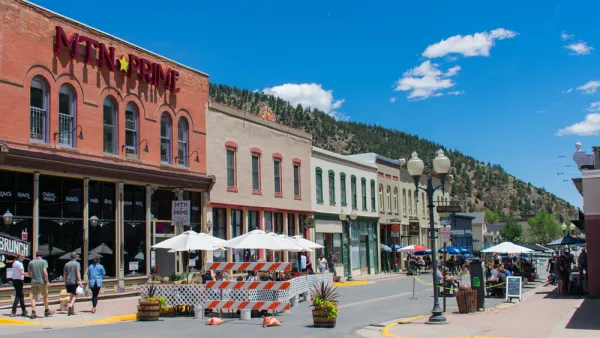
Rethinking Streets During the Pandemic
A new book from the "Rethinking Streets" series identifies 25 quick redesigns cities can use to reconfigure streets for the realities of the COVID-19 pandemic.

Planetizen Federal Action Tracker
A weekly monitor of how Trump’s orders and actions are impacting planners and planning in America.

Data reveals that NYC’s bet on congestion pricing has paid off
After almost two years of the program, reports show positive impacts on traffic and air quality and no disruptions to parking.

HUD modernizes 50-year-old manufactured housing framework
The Next Generation Manufactured Housing Action Plan establishes new energy-efficiency standards for manufactured homes, and new guidelines for anchoring them.

Developers sue Mississippi landowners who object to pipeline through their land
Because the Federal Energy Regulatory Commission approved the pipeline project, the developer can use private land without the consent of the owner.

A gas leak in NYC is costing residents $300 million
More than 90% of NYC’s electricity is from natural gas. About 2% of that gas is leaking and escaping into the air.

CA officials have the power to fix the state’s riskiest dams. They’ve never used it
California’s 40 most hazardous dams would endanger up to 1.5 million people if they failed.

FREE Course: Walkable City 1: Why Walkability?
After describing his path towards focusing on walkability as the essence of good planning, Jeff Speck marches through his five principal reasons for making more walkable places.
Reinventing Malls: Planning Alchemy—Turning Gray Fields Into Gold
The course focuses on the opportunities and imperatives that shape reinvention of mall sites.

One Hundred Miles
County of Mendocino
planning NEXT
The Architects Foundation
University of Cincinnati Online
Montrose County
Northern Illinois Transit Authority (NITA)
The Pocatello Development Authority