The Garden State once dreamed of becoming a global leader in offshore wind electricity generation. Now its plans look dead in the water.


James M. O'Neill reports that New Jersey's ambitious plans to develop offshore wind energy appear to have stalled while nearby Rhode Island is taking the lead in this renewable energy market.
"The state Board of Public Utilities has repeatedly rejected a proposal by Fishermen’s Energy to build a small wind farm off the coast of Atlantic City as a pilot project. And five years after the Legislature directed it to do so, the board has yet to complete an essential funding mechanism for offshore wind projects that would guarantee a buyer for the energy they produce."
The article goes on to speculate that New Jersey Governor Chris, once a strong proponent of a potential offshore wind industry for New Jersey, might have "soured on offshore wind because of his presidential ambitions — aware that key Republican financial donors, such as Charles and David Koch, favor the fossil fuel industry." A spokesperson for Gov. Christie recently defended his actions on affordable energy, however.
The article includes a lot more detail about the genesis of New Jersey's offshore wind ambitions as well as the political context that has slowed its momentum.
Read the full story: N.J.’s push for offshore wind farms loses steam
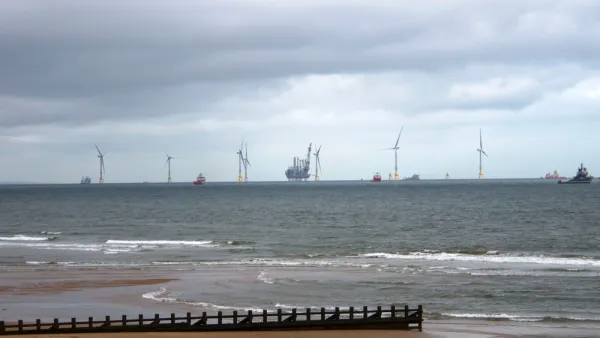
Offshore Wind Power Projects Face Financial Headwind
As offshore wind projects along the East Coast stall, so do the country’s emissions reduction goals.
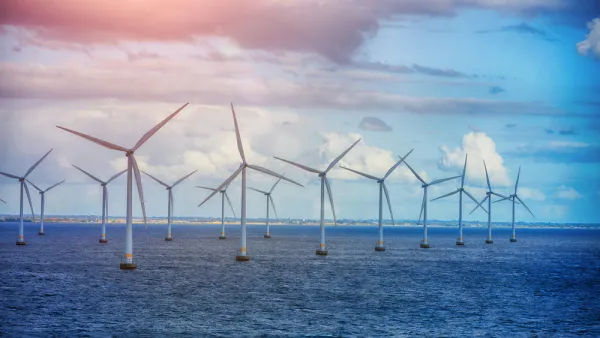
Proposed Offshore Wind Project Could Be the West Coast’s Largest
If approved, the plan to build a 2,000-megawatt facility off the coast of Washington State would be a milestone for floating offshore wind production in the United States.
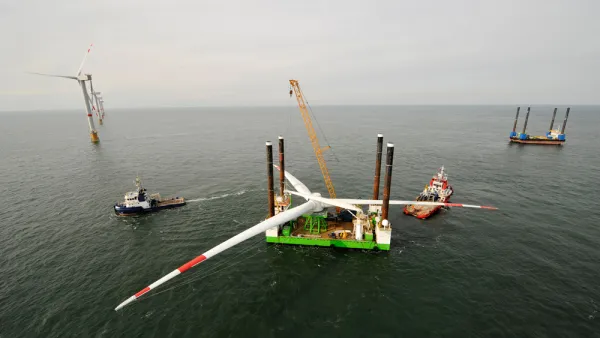
Nation's Largest Offshore Wind Farm Gets Green Light From New Jersey
There are still approvals necessary to get to the finish line, but the Ocean Wind offshore wind project took a big step forward late last week.

Planetizen Federal Action Tracker
A weekly monitor of how Trump’s orders and actions are impacting planners and planning in America.

California plans to bury El Niño’s downpour
If the state plays its cards right, it may be able to store a billion acre-feet of El Niño’s water in aquifers.

Desperate measures: Advocates weigh draining Lake Powell to fill Colorado River
Draining the reservoir could reduce evaporation losses by a couple hundred thousand acre-feet.

Housing is the top priority of Seattle’s sole new councilmember
Jenks campaigned on building 1,000 new units of affordable housing.

New tax cuts may slash $1.5 billion in funding for Miami transit, public parks
Amendment 3 will save Miami-Dade homeowners $2,700 in 2028.

Arizona, Wisconsin, Pennsylvania hope to finally advance climate goals post-midterms
The three states have spent years under Republican or divided control.

FREE Course: Walkable City 1: Why Walkability?
After describing his path towards focusing on walkability as the essence of good planning, Jeff Speck marches through his five principal reasons for making more walkable places.
Reinventing Malls: Planning Alchemy—Turning Gray Fields Into Gold
The course focuses on the opportunities and imperatives that shape reinvention of mall sites.

City of Rosemead
Rutgers University, Edward J. Bloustein School of Planning and Public Policy
One Hundred Miles
University of Michigan School for Environment and Sustainability (SEAS)
Hunter College, City University of New York (CUNY)
The Architects Foundation
City of Cambridge
Montrose County
The Pocatello Development Authority