Two adults and five pups have been photographed in Northern California by the California Department of Fish and Wildlife. They are protected by the federal and state Endangered Species Act, which is credited for their return.


"Fish and Wildlife captured photos of the wolf family -- dubbed the Shasta Pack for its proximity to Mount Shasta -- on Aug. 9," writes Aaron Kinney of the Bay Area News Group for the San Mateo County Times. "The department had planted surveillance cameras in the forested region after spotting an adult wolf in May and July."

Credit: California Department of Fish and Wildlife news
OR7, the name given a lone wolf spotted in Northern California in 2011 who created much sensation, is not among them. California Department of Fish and Wildlife (CDFW) reports he is the "breeding male" of a pack in southern Oregon.
How do they know? "OR7 was collared with a radio and satellite transmitter by the Oregon Department of Fish and Wildlife in early 2011." The trailer for the OR7 - The Journey movie is available on YouTube. Yes, the wolf starred in a movie, and was renamed "Journey," though Fish and Wildlife agencies refer to him by his number.
One speaker forecasted just what happened: "I think it is inevitable that others will follow the same corridor from Oregon to California."
"Journey's trip is only possible because we have those strong environmental laws and shows how far we have come," states Rob Klavins of Oregon Wild in the 2014 NBC News Video.
Gray wolves are listed as endangered under the Federal Endangered Species Act (ESA), notwithstanding an attempt by the U.S. Fish and Wildlife Service to delist them last year, and by the California Fish and Game Commission as of June 2014. As such, they are fully protected, "making it illegal to harass, harm, pursue, hunt, shoot, wound, kill, trap, (or) capture," warns CDFW.
"This is an Endangered Species Act success story in the making," said Pamela Flick of Defenders of Wildlife, a conservation nonprofit.
The department has been expecting wolves to migrate from Oregon, "(b)ut the appearance of the Shasta Pack came sooner than Fish and Wildlife had anticipated," writes Kinney.
"These animals have a tremendous ability to reoccupy former range (and) their reproductive potential is quite high," Karen Kovacs, the agency's wildlife program manager for Northern California, said Thursday. "These are very resilient critters."
As one might imagine, not everyone is jubilant with the return of the canine predators. "The possibility of wolf-livestock interaction is a big concern for us," said Kirk Wilbur, government relations director for the California Cattlemen's Association, writes Kinney, but he adds:
There is no evidence at this point that the wolf pack has taken any livestock, and ranchers who own land in the Shasta Pack's territory have not expressed animosity toward the predators, Fish and Wildlife officials said.
Best of luck to the Shasta Pack!
Read the full story: Wolf pack discovered in Northern California

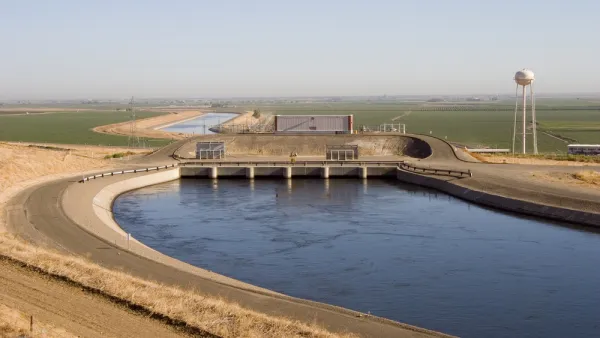
Trump Administration's New CA Water Plan Chooses Farmers Over Fish
A plan to divert water to farmers in California, released at the end of October, would allow for the annihilation of winter-run Chinook Salmon.
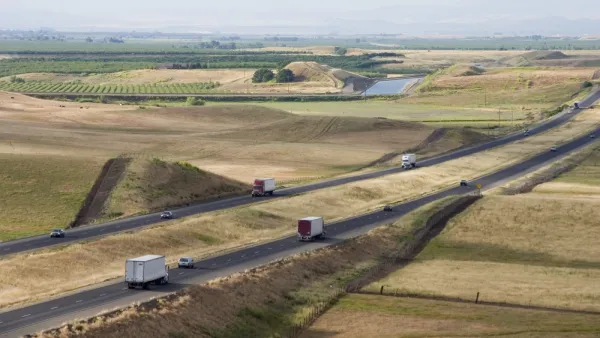
Trump Administration Finds a Way to Divert California Water to Farmers
A new federal program will clear the way for more water to be delivered to the state of California's agriculture industry, overruling environmental safeguards that protected fish.
Panel Opposes Delisting Grey Wolves
The U.S. Fish and Wildlife Service wants to take the grey wolf off the Endangered Species list across most of the continental U.S. but a key panel determined their decision was based on questionable science that dealt with species identification.

Planetizen Federal Action Tracker
A weekly monitor of how Trump’s orders and actions are impacting planners and planning in America.

Amtrak, CN end decades-long dispute with eight-year agreement
The new operating agreement establishes an updated framework for the companies to work together, including processes to resolve disputes.

Northwest rail fans eager for Sept. 30 debut of Amtrak’s Airo fleet
Get ready for that new train smell and more seats. But they won’t go faster or run more frequently on the Cascades route in Washington and Oregon.

Brightline Florida files for bankruptcy
The transit company is over $5 billion in debt.

St. Louis Metro to test if single-car trains can reduce operating costs, maintain rider satisfaction
The pilot program will run from October to spring 2027, and begin with one single-car train operating on Metrolink’s Red and Blue lines.

Pennsylvania is building data centers in abandoned mines
Housing data centers in mines provides an alternative to destroying local forests and may spare residents from data centers’ noise and air pollution.

FREE Course: Walkable City 1: Why Walkability?
After describing his path towards focusing on walkability as the essence of good planning, Jeff Speck marches through his five principal reasons for making more walkable places.
Reinventing Malls: Planning Alchemy—Turning Gray Fields Into Gold
The course focuses on the opportunities and imperatives that shape reinvention of mall sites.

City of Thousand Oaks
City of Wisconsin Rapids
Harvard University Graduate School of Design
The Architects Foundation
University of Cincinnati Online
The Pocatello Development Authority
The Urban Renewal Agency of the City of Pocatello