Writing for the Terner Center for Housing Innovation at U.C. Berkeley, Jed Kolko breaks down the data on recent trends in household formation.


In the "turnaround the housing market has been looking for," according to Jed Kolko, the U.S. Census has reported an increase in household formation for several quarters.
Before taking a deeper dive into the Census data, Kolko explains the significance of household formation: "the job market has improved, and household formation is on the rise, approaching or exceeding historical averages. As new households form, they fill up vacant homes, pushing up prices and rents. In response, homebuilders build more, which in turn adds to overall economic activity."
But that's not the kicker of the data, according to Kolko. The demographic trend driving this shift is not, as one might expect, the Millennial generation finally moving out of their parents' homes. In fact, explains Kolko, "the share of young adults living in their parents’ homes continues to rise, as the Census Bureau and the Pew Research Center have reported."
Kolko goes on to lead an exploration of how to solve the puzzle of contemporary household formation, including explanations of the critical statistics of "headship rate" and adult population growth.
The answer to the puzzle: that older adults are driving household formation, because the U.S. population is aging. In addition to making that argument and backing it up with data, Kolko also provides thorough access to the process by which he reached that conclusion.
Read the full story: WHO IS ACTUALLY FORMING NEW HOUSEHOLDS?
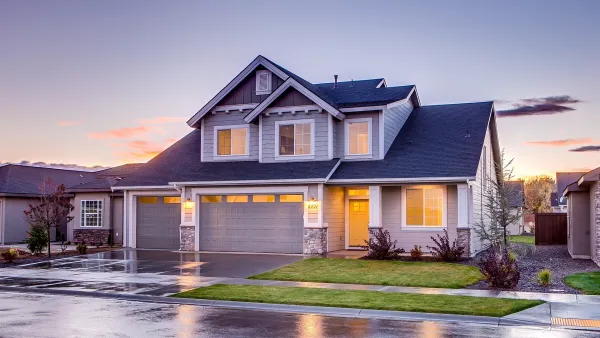
Study Finds Seniors Could Be Stuck with Unsellable Homes in the Future
A new paper predicts that home-buying trends among younger generations will lead to a flood of homes that older homeowners will not be able to sell.
Five Key Statistics for Understanding Millennial Households
There has been a lot of speculation about the motivations of Millennials as they enter the workforce and the real estate market. The Pew Research Center starts with the facts.
Survey Finds Surprising Generation Trends in the Real Estate Market
Generation X is barnstorming the market, so to speak, and Millennials and Baby Boomers might be swapping their perspectives on the urban, suburban divide.

Desperate measures: Advocates weigh draining Lake Powell to fill Colorado River
Draining the reservoir could reduce evaporation losses by a couple hundred thousand acre-feet.

Eastern Nebraska is running out of electricity
Data centers and electrification are straining eastern Nebraska’s grid, throttling economic development.

Malls are becoming the midtowns of the future
Mall and office park redevelopments are a generational opportunity to create new nodes of urbanity.

NYC breaks ground on anti-flooding infrastructure project
New York City's new system will reduce stormwater flows to local sewers by 90%.

One Kentucky town’s secret to affordable housing
The Smoketown Community Land Trust has already built seven affordable homes for community members.

Houston gains petal-shaped cooling infrastructure to make streets more ‘delightful’
The city has installed the pavilions along 15 blocks in Houston.

FREE Course: Walkable City 1: Why Walkability?
After describing his path towards focusing on walkability as the essence of good planning, Jeff Speck marches through his five principal reasons for making more walkable places.
Reinventing Malls: Planning Alchemy—Turning Gray Fields Into Gold
The course focuses on the opportunities and imperatives that shape reinvention of mall sites.

City of Rosemead
Rutgers University, Edward J. Bloustein School of Planning and Public Policy
One Hundred Miles
University of Michigan School for Environment and Sustainability (SEAS)
Hunter College, City University of New York (CUNY)
The Architects Foundation
City of Cambridge
Montrose County
The Pocatello Development Authority