A data visualization project illustrates the long and varied traditions of American single-family housing.


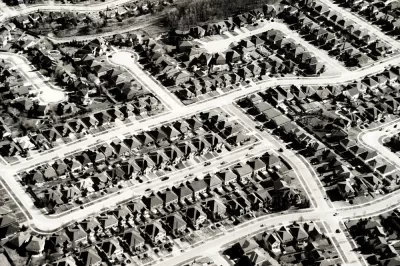
Emily Badger shares insights and lessons about the evolution of the American single-family home from a data visualization project by Pop Chart Lab. Among those lessons: "a sense of why the bland sameness of suburban subdivisions is often criticized. There is tremendous variety, and architectural heritage, in the American single-family home."
Badger also offers a few caveats about the poster. First, the "400-year visual history of the American home focuses on single-family houses, and so the collection skews suburban and rural; there are no apartment buildings here." That omission is especially noteworthy because, that is "the housing type that's home to a majority of American families."
Second, the visualization "doesn't give a full sense of how the scale itself has shifted." The beginning of the article includes a lot more detail on how the growing size of the single-family home is one of the most defining features of its evolution.
Read the full story: A single image captures how the American house has changed over 400 years
Permits for single-family homes have nosedived, along with investor confidence
Permits to build new single-family homes also hit a 3.5 year low in September.
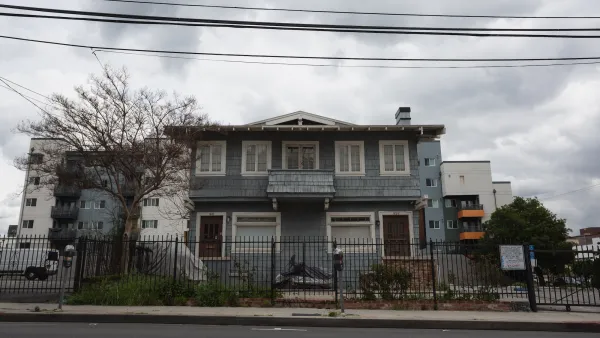
Study: Legalizing single-family home conversions could nearly double LA's new housing
Research shows that making it easier to turn single-family homes into multiple units could unlock tens of thousands of new units per year.
Study: Minimum lot sizes reinforce racial disparities
A Connecticut study found that zoning rules perpetuate residential segregation.

Planetizen Federal Action Tracker
A weekly monitor of how Trump’s orders and actions are impacting planners and planning in America.

California plans to bury El Niño’s downpour
If the state plays its cards right, it may be able to store a billion acre-feet of El Niño’s water in aquifers.

Desperate measures: Advocates weigh draining Lake Powell to fill Colorado River
Draining the reservoir could reduce evaporation losses by a couple hundred thousand acre-feet.

In Texas, data centers are swallowing promised parkland
Residents who moved to Taylor, Texas for a rural community now have to contend with three data centers in their backyard.

How a Chicago-sized wind farm beat the odds and powered on
The project spanned five presidential administrations and a standoff with a U.S. military base.

MTA gives itself 30 days to transform pit into basketball court
The site has been under construction since 2022; the city originally estimated it would finish the court in 2024.

FREE Course: Walkable City 1: Why Walkability?
After describing his path towards focusing on walkability as the essence of good planning, Jeff Speck marches through his five principal reasons for making more walkable places.
Reinventing Malls: Planning Alchemy—Turning Gray Fields Into Gold
The course focuses on the opportunities and imperatives that shape reinvention of mall sites.

City of Rosemead
Rutgers University, Edward J. Bloustein School of Planning and Public Policy
One Hundred Miles
Hunter College, City University of New York (CUNY)
The Architects Foundation
University of Cincinnati Online
City of Cambridge
Montrose County
The Pocatello Development Authority