Local officials are considering a conservancy to preserve the Houston Astrodome, considered an antiquities landmark by the Texas Historical Commission.


Gabrielle Banks reports on a new plan to save the Houston Astrodome that "has become the blueprint for a public-private partnership overseen by a conservancy…" The conservancy, Banks adds, "would unite the city, county, the sports and convention corporation and other governmental entities with private investors to revive the Astrodome without requiring voter approval."
The proposed plan is currently under consideration by "representatives of various stakeholders" and will likely be finished and ready for consideration by county officials by the end of the year. The decision to support the proposal will come to the five-member Commissioners Court, already appears to have some of the necessary political support for approval, according to the analysis and fact-finding of the article. Banks also examines other local models, like the Houston Zoo and Discovery Green, for examples of how the partnership could work.
Read the full story: A new plan emerges to save the Astrodome

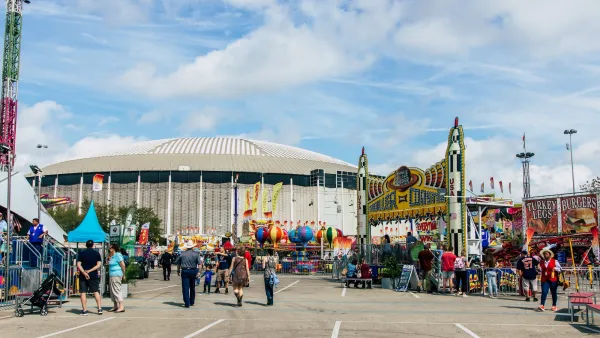
Saving the Houston Astrodome Could Cost $750 Million
Local residents have shown strong support for using public funds to preserve and restore the historic stadium as an entertainment venue.
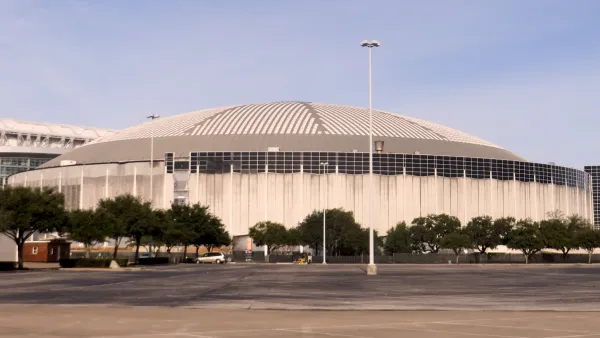
Renewed Efforts to Redevelop Houston's Historic Astrodome
A nonprofit hopes to create a viable plan for the iconic stadium—and find a way to pay for it.
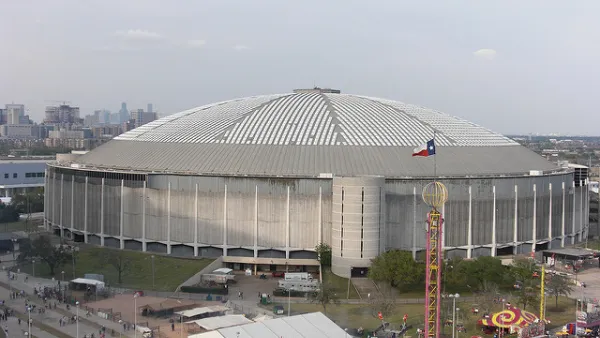
Houston's Astrodome Finally a State Antiquities Landmark
The arc of history has bent back to the Astrodome.

Planetizen Federal Action Tracker
A weekly monitor of how Trump’s orders and actions are impacting planners and planning in America.

Amtrak, CN end decades-long dispute with eight-year agreement
The new operating agreement establishes an updated framework for the companies to work together, including processes to resolve disputes.
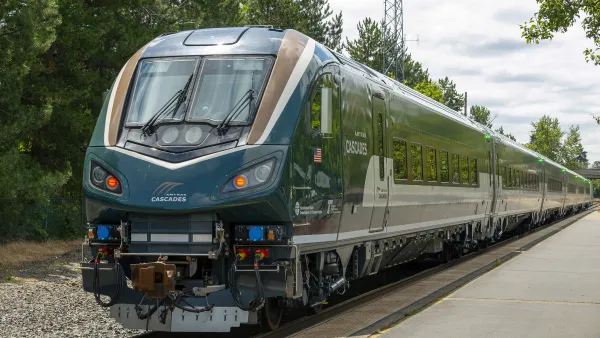
Northwest rail fans eager for Sept. 30 debut of Amtrak’s Airo fleet
Get ready for that new train smell and more seats. But they won’t go faster or run more frequently on the Cascades route in Washington and Oregon.

Brightline Florida files for bankruptcy
The transit company is over $5 billion in debt.

St. Louis Metro to test if single-car trains can reduce operating costs, maintain rider satisfaction
The pilot program will run from October to spring 2027, and begin with one single-car train operating on Metrolink’s Red and Blue lines.

Pennsylvania is building data centers in abandoned mines
Housing data centers in mines provides an alternative to destroying local forests and may spare residents from data centers’ noise and air pollution.

FREE Course: Walkable City 1: Why Walkability?
After describing his path towards focusing on walkability as the essence of good planning, Jeff Speck marches through his five principal reasons for making more walkable places.
Reinventing Malls: Planning Alchemy—Turning Gray Fields Into Gold
The course focuses on the opportunities and imperatives that shape reinvention of mall sites.

City of Thousand Oaks
City of Wisconsin Rapids
Harvard University Graduate School of Design
The Architects Foundation
University of Cincinnati Online
The Pocatello Development Authority
The Urban Renewal Agency of the City of Pocatello