Local residents have shown strong support for using public funds to preserve and restore the historic stadium as an entertainment venue.


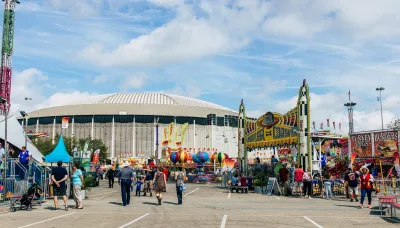
A recent analysis projects the cost of renovating Houston’s historic Astrodome stadium at over $750 million, prompting questions over the future of the building.
As Sarah Grunau reports for Houston Public Media, “The cost-intensive projection by Kirksey Architecture presents another hurdle to revitalize the famed structure that’s been vacant for longer than a decade and sits dormant in Houston’s NRG Park.” Financing the renovation of the world’s first domed stadium, which would only bring the Astrodome back “to basic operation functionality,” would require significant private investment.
Demolishing the structure would cost approximately $54 million. However, “In a survey this year from the University of Houston’s Hobby School of Public Affairs, Harris County voters overwhelmingly supported using public funds to renovate the Astrodome for use as an entertainment venue.”
FULL STORY: Renovating Houston’s Astrodome could cost $750 million, analysis finds

Proposed ‘Conservation Districts’ Could Change Preservation in Houston
The proposed model could be a new tool for preserving historic neighborhoods with more flexibility and with a focus on reducing displacement and addressing community concerns.
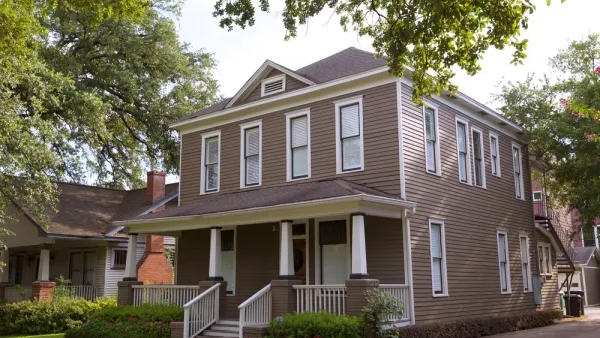
Is Historic Preservation Zoning?
In a victory for preservationists, the Texas Supreme Court upheld Houston's Historic Preservation Ordinance despite a lawsuit alleging that the ordinance constitutes illegal zoning rules.
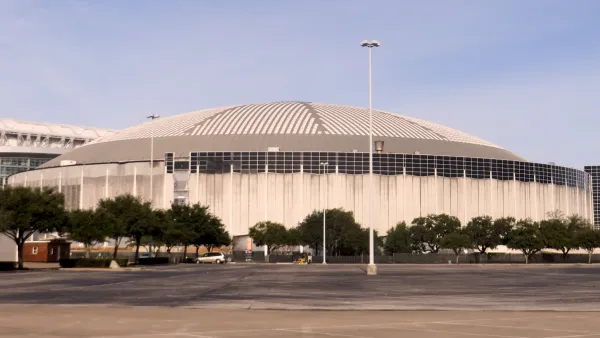
Renewed Efforts to Redevelop Houston's Historic Astrodome
A nonprofit hopes to create a viable plan for the iconic stadium—and find a way to pay for it.

Planetizen Federal Action Tracker
A weekly monitor of how Trump’s orders and actions are impacting planners and planning in America.

The state-sanctioned urbicide of Austin
People don’t kill cities. Freeways do.

US to reduce Colorado River water deliveries to Mexico
A new Colorado Treaty amendment reduces Mexico’s Colorado River water allocation by 250,000 acre feet.

5 New England states march closer to 800 megawatt wind energy project
Securing federal approval for the project may be complicated under the Trump administration, which has historically been hostile towards domestic wind power.

Baltimore to break ground on $50 million Transit Priority Project
The project will bring faster bus trips, safer streets and better bike connections to Baltimore.

Airbnb launches $250 million 'last-dollar financing' housing accelerator, makes first investment in Austin
The company will put $6.4 million towards affordable housing development in Texas’ capital.

FREE Course: Walkable City 1: Why Walkability?
After describing his path towards focusing on walkability as the essence of good planning, Jeff Speck marches through his five principal reasons for making more walkable places.
Reinventing Malls: Planning Alchemy—Turning Gray Fields Into Gold
The course focuses on the opportunities and imperatives that shape reinvention of mall sites.

Eagle County Government
Harvard University Graduate School of Design
Nashville Planning Department
The Architects Foundation
University of Cincinnati Online
The Pocatello Development Authority
The Urban Renewal Agency of the City of Pocatello
Journal of the American Planning Association