If a controversial fee fails the scrutiny of the state's courts, roads around the city will suffer the consequences.


Katherine Drieesen reports on a lawsuit threatening ReBuild Houston, "a drainage fee that voters approved in 2010 to help fund billions in street and drainage improvements."
According to Drieesen, "a Texas Supreme Court ruling two weeks ago found the ReBuild ballot measure voters narrowly approved in 2010 obscured the nature and cost of the drainage fee. The case is headed back to trial court where legal experts say a judge is likely to honor the Supreme Court decision."
If the city cannot collect the drainage fee, the city would have to shelve the next round of scheduled ReBuild Houston projects. The city had budgeted $100 million in drainage fee spending for the next fiscal year, and the fee is expected to bring in $500 million over the next five years.
Drieesen provides more details about how the city collects the drainage fee and supplements its funds with other sources of funding for road repair work. Without the drainage fee, according to Drieesen, ReBuild Houston loses one its "guiding virtues": patience. A ruling is expected in October.
Read the full story: ReBuild lawsuit could halt road projects


Houston's Drainage Controversy Isn't Unique
Houston faces political conflict around a new drainage fee, meant to fund efforts to fix the city's crumbling infrastructure. Other cities could soon find themselves in a similar predicament.
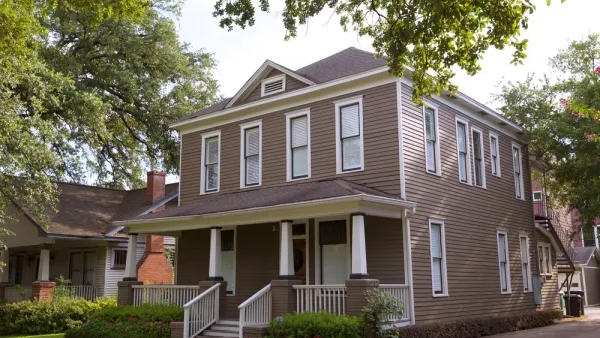
Is Historic Preservation Zoning?
In a victory for preservationists, the Texas Supreme Court upheld Houston's Historic Preservation Ordinance despite a lawsuit alleging that the ordinance constitutes illegal zoning rules.
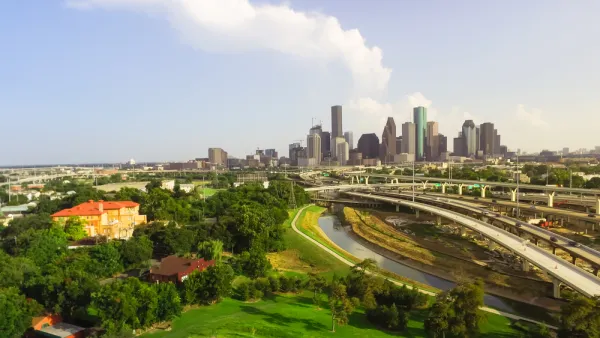
Challenges in Rebuilding Houston Extend Beyond Development
Michael Kimmelman, architecture critic of The New York Times, looks beyond sprawl and development issues that challenge Houston in its rebuilding efforts. An anti-urban, anti-regulation bias from the statehouse isn't helping matters.

Planetizen Federal Action Tracker
A weekly monitor of how Trump’s orders and actions are impacting planners and planning in America.

Amtrak, CN end decades-long dispute with eight-year agreement
The new operating agreement establishes an updated framework for the companies to work together, including processes to resolve disputes.

Northwest rail fans eager for Sept. 30 debut of Amtrak’s Airo fleet
Get ready for that new train smell and more seats. But they won’t go faster or run more frequently on the Cascades route in Washington and Oregon.

Brightline Florida files for bankruptcy
The transit company is over $5 billion in debt.

St. Louis Metro to test if single-car trains can reduce operating costs, maintain rider satisfaction
The pilot program will run from October to spring 2027, and begin with one single-car train operating on Metrolink’s Red and Blue lines.

Pennsylvania is building data centers in abandoned mines
Housing data centers in mines provides an alternative to destroying local forests and may spare residents from data centers’ noise and air pollution.

FREE Course: Walkable City 1: Why Walkability?
After describing his path towards focusing on walkability as the essence of good planning, Jeff Speck marches through his five principal reasons for making more walkable places.
Reinventing Malls: Planning Alchemy—Turning Gray Fields Into Gold
The course focuses on the opportunities and imperatives that shape reinvention of mall sites.

City of Thousand Oaks
City of Wisconsin Rapids
Harvard University Graduate School of Design
The Architects Foundation
University of Cincinnati Online
The Pocatello Development Authority
The Urban Renewal Agency of the City of Pocatello