The legislature passed a bill on April 2 that bans local governments from banning single-use plastic bags as well as other disposable containers under the premise that it's bad for the state economy, though only one city in the state has such a law.


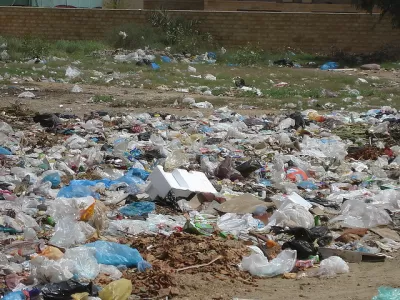
Just as California made history in September when it became the first state in the nation to ban single-use plastic bags statewide, Arizona is poised to make history if Gov. Doug Ducey signs Senate Bill 1241 that would "ban the banning" of disposable plastic bags—statewide.

The bill's sponsor, State Senator Nancy Barto (R-Phoenix), justifies it as being in the state's best economic interests to prevent cities from regulating these types of environmental issues. "Municipalities acting on their own to implement these mandates run counter to the state’s goal to overcome Arizona’s sluggish job growth and economic stability," she states in an article by Rick Rojas of The New York Times.
The bill would prevent cities and counties from regulating the “sale, use or disposition of auxiliary containers,” which include single-use disposable bags, boxes, cans and bottles. It would also prohibit requirements for businesses to report energy use.
While only the small mining and tourist city of Bisbee, population 5,575, "southeast of Tucson, banned single-use plastic bags and requires a 5-cent charge per paper bag," notes Rojas, "Tempe and Flagstaff are considering whether to enact similar bans," writes Dustin Gardiner of The Arizona Republic.
Lauren Kuby, a city councilwoman in Tempe (pop. 162,000), is critical of the bill. "In a state where leaders often rebel against federal oversight, Ms. Kuby accused legislators of taking away the decision-making authority of local officials," writes Rojas. “It’s a very ironic thing, and it’s poor public policy,” she said.
Kuby "cited estimates that 50 million single-use plastic bags are used each year in the city and that less than 5 percent are recycled," writes Rojas. "She said the city faced costs from litter, as well as from the damage the plastic bags caused to machinery at recycling facilities."
Back to California: The plastic bag industry funded a successful signature gathering to repeal the bag ban law. Consequently, voters will decide its fate at a referendum in November, 2016.
If the referendum passes, i.e., voters reject the statewide disposable bag ban, "it will not affect plastic local bag bans that have been put in place in recent years by cities and county officials in 138 California communities, including San Jose, San Francisco, Oakland, Los Angeles, Palo Alto, Santa Cruz and Monterey," according to Paul Rogers of the San Jose Mercury News.
Read the full story: Arizona Bill Would Ban Local Limits on Plastic Bags

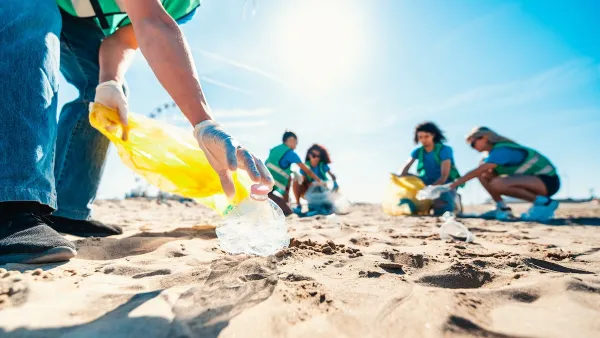
Plastic Bag Bans Actually Worked
U.S. coastal areas with plastic bag bans or fees saw significant reductions in plastic bag pollution — but plastic waste as a whole is growing.
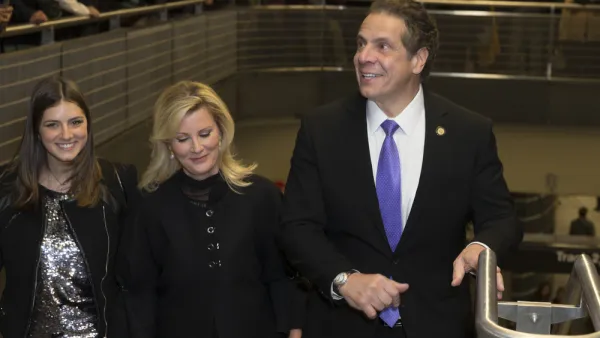
Gov. Andrew Cuomo Proposes Plastic Bag Ban After Killing New York City's Bag Law
The Democratic governor proposed a ban on single-use plastic bags in his state-of-the-state address on Jan. 15. Nearly two years earlier, he signed a bill that prevented New York City from charging for bags as the District of Columbia and Boston do.
Balloons and Straws: Where's the Connection?
Think "The Graduate," but now the emphasis in the future of plastics may be on restrictions. California may become the first state to restrict access to plastic straws, and balloons could be next due to the harm they cause the marine environment.

Planetizen Federal Action Tracker
A weekly monitor of how Trump’s orders and actions are impacting planners and planning in America.

Amtrak, CN end decades-long dispute with eight-year agreement
The new operating agreement establishes an updated framework for the companies to work together, including processes to resolve disputes.

Judges permit Denver to divert 77,000 acre feet from the Colorado River for reservoir expansion
Overuse and climate change have caused the Colorado River’s water levels to plummet.

NYC DOT wants faster, more permanent street upgrades
The city is examining ways to build more concrete infrastructure without getting entangled in 'decades-long' projects.

'Something we’ve never seen before:' rising utility rates could strain city finances nationwide
Data centers, climate change and other factors have caused utility rates in the United States to increase by 38% since 2020.

Trump to overrule local leaders, lease millions of acres of America’s Pacific Island territories’ seafloors to mining companies
International law says that the Indigenous people of America’s territories have a right to prior and informed consent regarding projects that impact their countries.

FREE Course: Walkable City 1: Why Walkability?
After describing his path towards focusing on walkability as the essence of good planning, Jeff Speck marches through his five principal reasons for making more walkable places.
Reinventing Malls: Planning Alchemy—Turning Gray Fields Into Gold
The course focuses on the opportunities and imperatives that shape reinvention of mall sites.

Harvard University Graduate School of Design
KFH Group Inc.
Greater Baltimore Committee
The Architects Foundation
University of Cincinnati Online
The Pocatello Development Authority
The Urban Renewal Agency of the City of Pocatello