"No man ever steps in the same river twice, for it's not the same river and he's not the same man." -Heraclitus, as quoted by Plato in Cratylus.


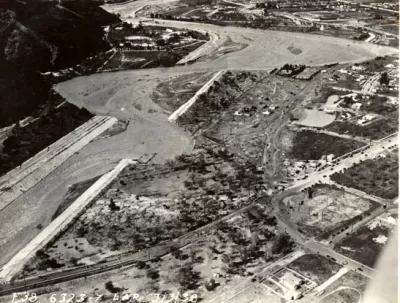
Joseph Stromberg takes inspiration from one of the entries in Time Magazine's Timeleapse project—the satellite images of Ucayali River, which from 1984 to 2012 meandered widely around its corner of Peru.
Stromberg uses the time-lapse as the impetus to explain the physical forces that cause rivers meander. Also there's a point to be made, familiar to cities built along rivers around the world: "We think of rivers as stable features of the landscape: something we can build towns and cities next to, and expect to stay in the same spot permanently. But in reality, they're constantly moving — and as much as we try it's impossible to keep them entirely under control."
Read the full story: This mesmerizing time lapse shows a river changing course over time
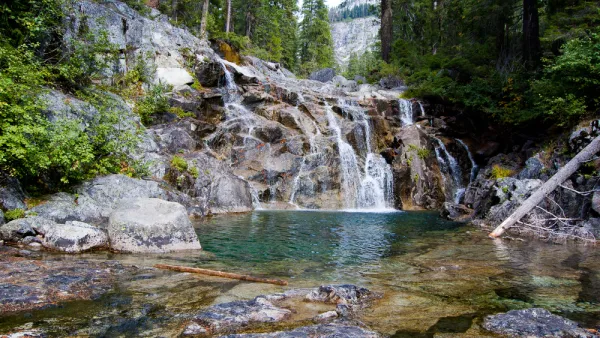
Friday Eye Candy: A Love Song for Swimming Holes
There's still technically some time left in the summer of 2019 to enjoy a dip, or a frolic, in a swimming hole.
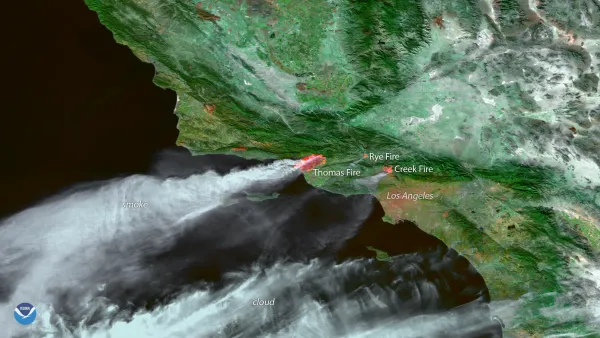
View the Smoke from the California Fires From Satellite
The National Oceanic and Atmospheric Administration has been making the most of its celestial perch to illustrate the scale of the fires currently burning in Southern California.
Friday Eye Candy: Mapping a World of Water Words
Cultures and geography have created a dictionary's worth of words for water. A new video from Vox maps (most of) them out.

Planetizen Federal Action Tracker
A weekly monitor of how Trump’s orders and actions are impacting planners and planning in America.

California plans to bury El Niño’s downpour
If the state plays its cards right, it may be able to store a billion acre-feet of El Niño’s water in aquifers.

Desperate measures: Advocates weigh draining Lake Powell to fill Colorado River
Draining the reservoir could reduce evaporation losses by a couple hundred thousand acre-feet.

Mamdani’s pied-à-terre tax survives legal challenge
A panel of judges found that the plaintiffs failed to demonstrate injury as a result of New York City's implementation of the tax.

Eastern Nebraska is running out of electricity
Data centers and electrification are straining eastern Nebraska’s grid, throttling economic development.

Seattle passes record-breaking transit services expansion
Proposition 1 will double the city’s transit tax to add 95,000 more bus trips and preserve 180,000 bus trips annually.

FREE Course: Walkable City 1: Why Walkability?
After describing his path towards focusing on walkability as the essence of good planning, Jeff Speck marches through his five principal reasons for making more walkable places.
Reinventing Malls: Planning Alchemy—Turning Gray Fields Into Gold
The course focuses on the opportunities and imperatives that shape reinvention of mall sites.


City of Rosemead
Rutgers University, Edward J. Bloustein School of Planning and Public Policy
One Hundred Miles
University of Michigan School for Environment and Sustainability (SEAS)
Hunter College, City University of New York (CUNY)
The Architects Foundation
City of Cambridge
Montrose County
The Pocatello Development Authority