"One hundred years ago, urban areas were viewed as the place for economic opportunity, but they were unhealthy, congested places. Now cities can be very healthy," says the new director of Washington, D.C.'s department of the environment.


In early January, Tommy Wells was appointed Acting Director of the District Department of the Environment (DDOE). Much of Wells's work in the city has focused on cleaning up the Anacostia River; as a councilmember for Ward 6 he pushed for clean-up efforts along its banks and successfully championed a bag bill which raised money for environmental projects through a five cent per bag fee. As the head of DDOE, Wells will oversee some 300 employees working on huge variety of issues, including lead paint remediation and intervention, toxic material clean-ups, fisheries and wildlife management, and energy planning. A few weeks after he took over at DDOE, Elevation DC sat down to talk with him about his vision for his department and his priorities for the coming years.
Read the full story: Elevation Q&A: Tommy Wells on urban agriculture, playgrounds, and a tree summit

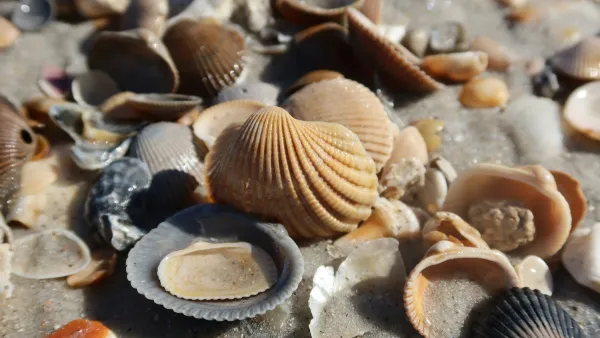
Creating Ocean-Safe Plastic from Seashells
USC researchers have created a biodegradable, marine-safe plastic alternative using calcium carbonate from seashells, offering a promising solution to ocean pollution.
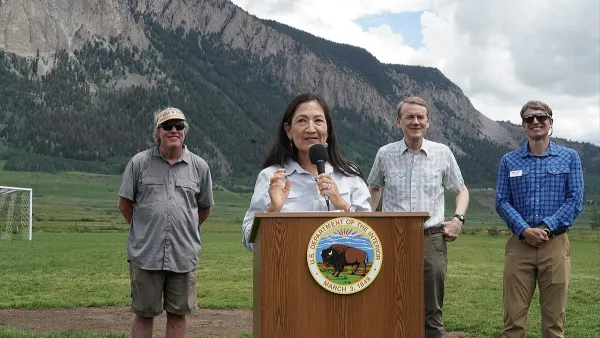
Commentary: Colorado Will Forge Ahead With Conservation Work
While federal policy may become less friendly to environmental efforts, support from state legislators and agencies can prevent the state from backsliding.
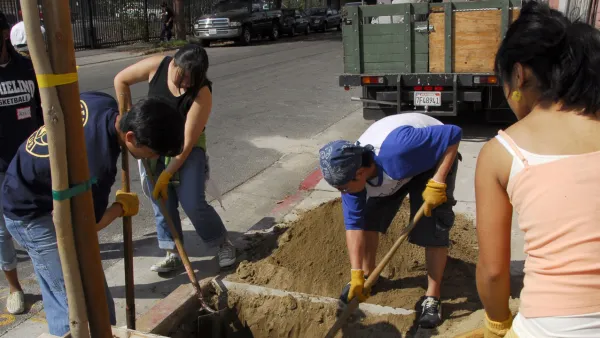
Five Ways to Build a Sustainable Community through Volunteering
Practicing sustainability can improve communities and the lives of those living there. One of the best ways to encourage sustainable living is through volunteering.

Planetizen Federal Action Tracker
A weekly monitor of how Trump’s orders and actions are impacting planners and planning in America.

California plans to bury El Niño’s downpour
If the state plays its cards right, it may be able to store a billion acre-feet of El Niño’s water in aquifers.

Chicago breaks ground on $3 billion megadevelopment
The new neighborhood, titled Foundry Park, will one day host 3,700 residences.

One of Denver’s busiest corridors to gain BRT
The project will span 18 miles and contain 74 bus rapid transit stations.

275,000 bus trips are at stake on Seattle's ballot
If passed, the Seattle Transit Measure would trigger a 0.3% sales tax and raise an average of $138 million per year to maintain and expand Seattle’s bus services.

Texas may pay Israeli company billions to ease water woes
Texas awarded IDE Technologies the contract for its Harbor Island project, which is slated to become the Western Hemisphere's largest desalination plant.

FREE Course: Walkable City 1: Why Walkability?
After describing his path towards focusing on walkability as the essence of good planning, Jeff Speck marches through his five principal reasons for making more walkable places.
Reinventing Malls: Planning Alchemy—Turning Gray Fields Into Gold
The course focuses on the opportunities and imperatives that shape reinvention of mall sites.

City of Rosemead
Rutgers University, Edward J. Bloustein School of Planning and Public Policy
One Hundred Miles
Hunter College, City University of New York (CUNY)
The Architects Foundation
University of Cincinnati Online
City of Cambridge
Montrose County
The Pocatello Development Authority