As people move back into the cities, and rental housing demand goes up, it's been an interesting time for people wrestling with the problems of highly unaffordable areas to live.


By Miriam Axel-Lute
As people move back into the cities, and rental housing demand goes up, it's been an interesting time for people wrestling with the problems of highly unaffordable areas to live.
Some people are arguing that limits on development—whether it's density restrictions like Washington, D.C.'s height limits, or the kinds of geographical, historical, or quality of life restrictions present in places where liberals tend to congregate, as the Atlantic Cities surmises—are a primary culprit. This is, I think, a tricky argument for many community developers to relate to.
On the one hand, we recognize that zoning, especially exclusionary zoning that keeps out multifamily buildings, requires large lots, or discriminates against families, is indeed part of the problem, especially in job-rich areas. Other items, like over-generous parking requirements, also weigh in.
On the other hand...
Read the full story: Would Just Letting the Hot Markets Build More Help Affordability?

The Challenges of Being a Black Developer
In an overwhelmingly white industry, Black developers find it harder to access investment, equity, and opportunities.
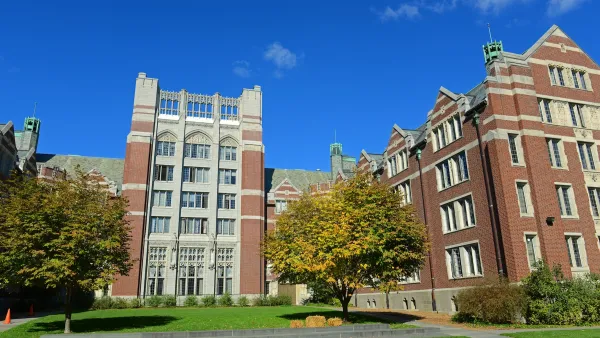
Wellesley sues state over proposed housing on state-owned parking lot
The college town opposes a 180-unit development that it says creates too much density for the area.

Louisville Launches ‘Anti-Displacement Tool’
After a years-long, tenant-led effort, Louisville will use a new tool to analyze whether a proposed housing development can meet a neighborhood’s housing needs and income levels. If it doesn’t, the city won’t subsidize it.

Planetizen Federal Action Tracker
A weekly monitor of how Trump’s orders and actions are impacting planners and planning in America.

‘Going backwards:’ Baltimore mayor, students rally against state's transit funding plan
Maryland's proposed six-year plan provides no funding for Baltimore’s BMORE bus program and reduces its road maintenance funding.

Detroit to transform waterfront with $2.2 billion investment
Developers will convert about 18 acres of unused parking lot space into civic spaces.

HUD, USDA agree on framework to simplify housing environmental review standards
Their agreement is a requirement of the 21st Century ROAD to Housing Act.

Cost of water rising at a faster pace than inflation, median household income
California and Maryland residents have seen their water bills grow especially high.

NYC building owners overwhelmingly comply with new emissions limits
The New York City Department of Buildings is fining owners who did not file emissions reports.

FREE Course: Walkable City 1: Why Walkability?
After describing his path towards focusing on walkability as the essence of good planning, Jeff Speck marches through his five principal reasons for making more walkable places.
Reinventing Malls: Planning Alchemy—Turning Gray Fields Into Gold
The course focuses on the opportunities and imperatives that shape reinvention of mall sites.

City of Thousand Oaks
City of Wisconsin Rapids
Harvard University Graduate School of Design
The Architects Foundation
University of Cincinnati Online
Northern Illinois Transit Authority (NITA)
The Pocatello Development Authority
The Urban Renewal Agency of the City of Pocatello