Alan Mallach describes the decline of and need for homeownership in urban neighborhoods.



At a conference I attended last week, one of the speakers, a colleague whose judgment and knowledge I respect, offered his take on the future of urban single family neighborhoods. The lower income families who have the credit and can get together the down payment to become homeowners are buying in the suburbs. People working in urban neighborhoods, he said, (more or less in these words), are going to have to “get over homeownership." Putting aside his conclusion for a moment, the underlying facts tend to bear him out.
While homeownership has declined all over the country since the end of the housing bubble, it has dropped much faster in urban areas, not only distressed Rustbelt cities, but Sunbelt cities as well. Let’s look at a few numbers...
Read the full story: Do Urban Neighborhoods Need Homeowners?

Renters Are Not the Problem
A few weeks ago, Alan Mallach asked the question, "do urban neighborhoods need homeowners?" Tony Roshan Samara challenges his answer.
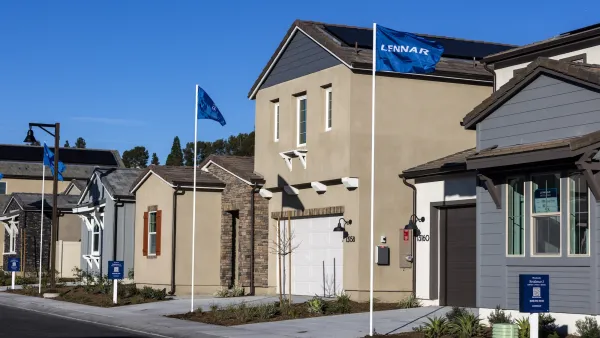
Just 17% of San Diego households can afford the city's $1M+ median home prices
The city is becoming increasingly unaffordable to prospective homebuyers.
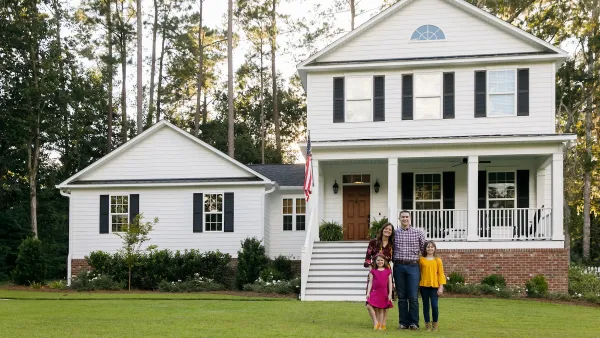
Report: Housing is becoming an 'inherited advantage'
As housing costs soar, buying a home is becoming unaffordable to a large swath of American families.

Planetizen Federal Action Tracker
A weekly monitor of how Trump’s orders and actions are impacting planners and planning in America.

‘Going backwards:’ Baltimore mayor, students rally against state's transit funding plan
Maryland's proposed six-year plan provides no funding for Baltimore’s BMORE bus program and reduces its road maintenance funding.

Detroit to transform waterfront with $2.2 billion investment
Developers will convert about 18 acres of unused parking lot space into civic spaces.

HUD modernizes 50-year-old manufactured housing framework
The Next Generation Manufactured Housing Action Plan establishes new energy-efficiency standards for manufactured homes, and new guidelines for anchoring them.

New CA housing laws tear down development red tape
Recently-signed legislation makes building starter homes and ADUs cheaper and faster in California.

Metrolink finishes first expansion in 20 years
The transit agency is now one of very few in the United States to connect two major airports.

FREE Course: Walkable City 1: Why Walkability?
After describing his path towards focusing on walkability as the essence of good planning, Jeff Speck marches through his five principal reasons for making more walkable places.
Reinventing Malls: Planning Alchemy—Turning Gray Fields Into Gold
The course focuses on the opportunities and imperatives that shape reinvention of mall sites.

One Hundred Miles
County of Mendocino
planning NEXT
The Architects Foundation
University of Cincinnati Online
Montrose County
Northern Illinois Transit Authority (NITA)
The Pocatello Development Authority