Dan Reed examines the Green Line in Minneapolis near the campus of the University of Minnesota as a case study of how transit can improve streets.


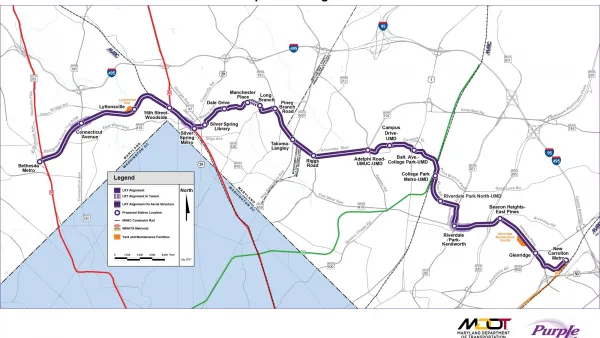
Dan Reed presents the case study of the Green Line following a visit to the Twin Cities as part of the Rail-volution conference in the hopes of informing planning decisions made in connection to the Purple Line near Washington D.C. The most salient lesson for planners in Montgomery and Prince George's counties, according to Reed, is how the Green Line interacts with the University of Minnesota.
"The U's cooperation with the Metropolitan Council meant that the Green Line could transform Washington Avenue from a traffic sewer to a gathering place. Today, the street feels like a natural extension of the campus. Trains run down the middle of the street, and there are shared bus and bike lanes on either side. The sidewalks are wider, and the crosswalks have special paving materials to make them more visible."
Reed's analysis includes traffic impacts, resulting development, and transit ridership, among the other effects of the Green Line.
Read the full story: Making room for transit can make better streets for everyone
Maryland's Purple Line Gets the Green Light Again
The public-private partnership behind the Purple Line light rail project in Maryland fell apart in September, and has this past week been revived.
Purple Line Construction Halts in Maryland as Contractor Woes Deepen
Purple Line Transit Partners, the contractors managing construction of the beleaguered Purple Line in Maryland, have begun to walk off the job as a dispute about cost overruns brings the project to a screeching halt.

Preserving Affordable Housing Along Maryland Light Rail Line
A new plan lays out strategies to keep housing affordable for low- and moderate-income residents along the corridor of Maryland’s new Purple Line.

Planetizen Federal Action Tracker
A weekly monitor of how Trump’s orders and actions are impacting planners and planning in America.

California plans to bury El Niño’s downpour
If the state plays its cards right, it may be able to store a billion acre-feet of El Niño’s water in aquifers.

Desperate measures: Advocates weigh draining Lake Powell to fill Colorado River
Draining the reservoir could reduce evaporation losses by a couple hundred thousand acre-feet.

Chicago voters approve permanent festival grounds, penalty for vacant property owners
Currently, major summer and fall festivals take over public parks for weeks at a time, drawing criticism from nearby residents

NYC votes to cut outdoor dining red tape, speed up permitting
New York City also voted to allow the Department of Transportation to begin work on urgent projects before notifying elected officials.

California appears to reject Prop. 45
The proposition would have expanded the projects that qualify for a streamlined environmental review, effectively paring down the California Environmental Quality Act.

FREE Course: Walkable City 1: Why Walkability?
After describing his path towards focusing on walkability as the essence of good planning, Jeff Speck marches through his five principal reasons for making more walkable places.
Reinventing Malls: Planning Alchemy—Turning Gray Fields Into Gold
The course focuses on the opportunities and imperatives that shape reinvention of mall sites.

City of Rosemead
Rutgers University, Edward J. Bloustein School of Planning and Public Policy
One Hundred Miles
Hunter College, City University of New York (CUNY)
The Architects Foundation
University of Cincinnati Online
City of Cambridge
Montrose County
The Pocatello Development Authority