From the never built files (except this time for good reason): A proposal not endorsed during a 19070s expansion plan for the Getty Villa in the Pacific Palisades was a recreation of Mount Vesuvius.


In a 1977 report on the "Future Development" on the J Paul Getty Museum, architect Stephen Garrett outlines many of the ideas and proposals regarding the expansion and future development of the Getty Museum, located in the Pacific Palisades. Garrett focuses on the potentials within the Getty Villa, a large villa inspired by the design of the Villa de Papiri at Herculaneum, the largest and most luxuriously furnished seaside villa found buried in the ash of Mount Vesuvius in Italy in the 1700s.
In the spirit of transplanting visitors of the Getty Villa to Italy, one suggestion posited to Garrett was to re-construct Mount Vesuvius on the hill behind the museum. The famed Italian volcano that buried the cities of Pompeii and Herculaneum and froze its residents in ash did not resonate with Garrett, however. According to the report, “at midday each day it would erupt, sending a light shower of (plastic) lava over the visitors below.” Perhaps Garrett saw it as gaudy or garish (he did not elaborate), but regardless it would have added a unique touch to the estate.
H/T to Christopher Hawthorne for the article.
FULL STORY: Never-Built Malibu: The Getty Volcano

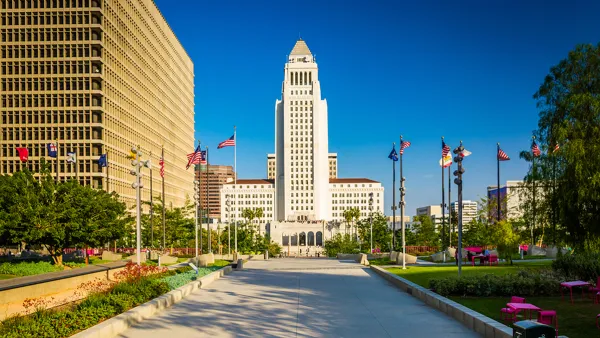
From Architecture Critic to 'Chief Design Officer'
Christopher Hawthorne, the Los Angeles Time architecture critic whose broad role at the paper included much needed focus on streets and the public realm, has announced that he will be joining the staff at City Hall.
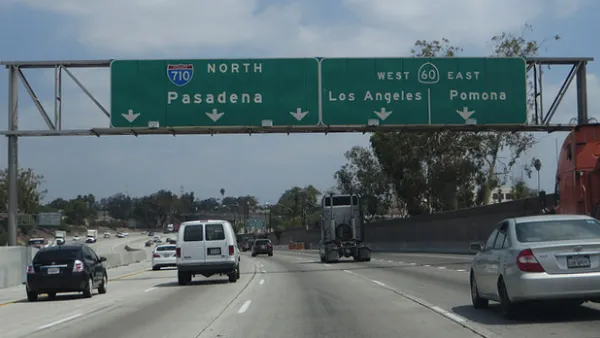
A Traffic Solution 'Straight Out of the 1950s'
That's how the Los Angeles Times editorial board characterized the $6 billion plan by Los Angeles Metro to widen the 710 freeway. "A waste of money," they assert. Key to the solution is how to deal with goods movement from the seaport complex.
Ada Louise Huxtable Remembered at Metropolitan Museum of Art Tribute
Architects and architecture critics from across the nation gathered in New York last week to remember the first lady of architecture criticism, Ada Louise Huxtable, who died in January.

Planetizen Federal Action Tracker
A weekly monitor of how Trump’s orders and actions are impacting planners and planning in America.

The state-sanctioned urbicide of Austin
People don’t kill cities. Freeways do.

US to reduce Colorado River water deliveries to Mexico
A new Colorado Treaty amendment reduces Mexico’s Colorado River water allocation by 250,000 acre feet.

5 New England states march closer to 800 megawatt wind energy project
Securing federal approval for the project may be complicated under the Trump administration, which has historically been hostile towards domestic wind power.

Baltimore to break ground on $50 million Transit Priority Project
The project will bring faster bus trips, safer streets and better bike connections to Baltimore.

Airbnb launches $250 million 'last-dollar financing' housing accelerator, makes first investment in Austin
The company will put $6.4 million towards affordable housing development in Texas’ capital.

FREE Course: Walkable City 1: Why Walkability?
After describing his path towards focusing on walkability as the essence of good planning, Jeff Speck marches through his five principal reasons for making more walkable places.
Reinventing Malls: Planning Alchemy—Turning Gray Fields Into Gold
The course focuses on the opportunities and imperatives that shape reinvention of mall sites.

Eagle County Government
Harvard University Graduate School of Design
Nashville Planning Department
The Architects Foundation
University of Cincinnati Online
The Pocatello Development Authority
The Urban Renewal Agency of the City of Pocatello
Journal of the American Planning Association