According to Kaid Benfield of the Natural Resource Defense Council, the best way to save our natural wonders is by living and investing in cities.



As Kaid Benfield wrote in a recent post on Switchboard, the Natural Resource Defense Council staff blog, "there is simply no way we can protect and maintain a beautiful, thriving, natural and rural landscape outside of cities if we continue to spread highways and suburban sprawl across the countryside. Healthy, robust, beautiful cities where people want to live are critical to the protection of nature"
Indeed, Benfield lays out how many of the problems we view as strictly urban issues, such as education, affordable housing, and public safety, are actually environmental issues. These issues, which affect individual's spatial locations, influence their environmental impact and thus become problems relating to natural protection and preservation.
As stated by the federal Wilderness Act of 1964, a wilderness "is hereby recognized as an area where the earth and community of life are untrammeled by man, where man himself is a visitor who does not remain." With these words in mind, Benfield discusses how "natural habitat needs a corresponding strong 'people habitat,' so that people are drawn to our own places, and enjoy but do not permanently infringe upon those extraordinary places where humans remain secondary to other parts of nature."
Read the full story: City issues are environmental issues. Here's why.
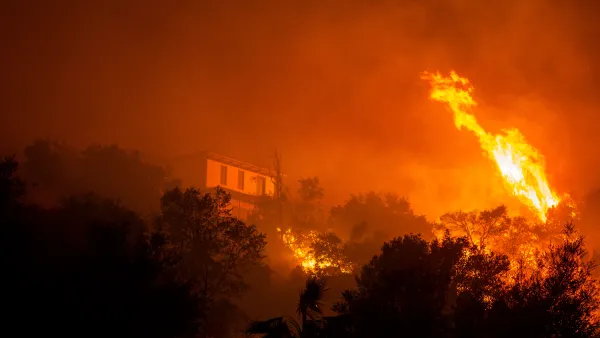
Wildfires are coming for America’s suburbs
Buying land in between paved cities and forests has become increasingly popular, but those same areas are naturally fire prone.
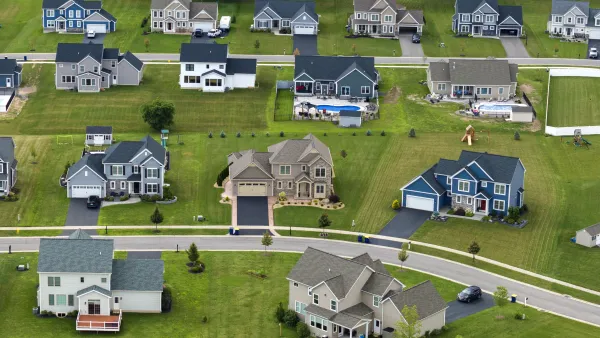
Johns Hopkins updates their sprawl database
In a follow up to their 2014 study, Johns Hopkins has released new data on urban sprawl in the U.S. and new findings on its health and wellbeing impacts.
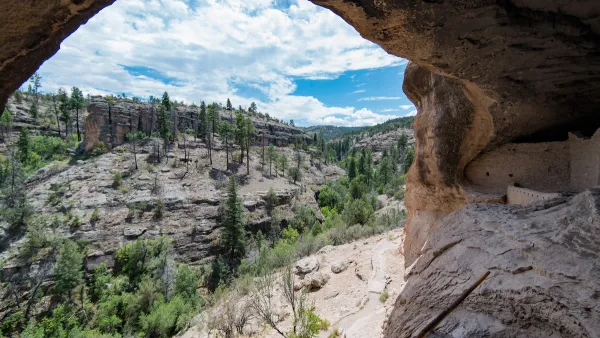
The Changing Nature of Wilderness
U.S. public lands management is undergoing a slow but significant shift.

Planetizen Federal Action Tracker
A weekly monitor of how Trump’s orders and actions are impacting planners and planning in America.

California plans to bury El Niño’s downpour
If the state plays its cards right, it may be able to store a billion acre-feet of El Niño’s water in aquifers.

Desperate measures: Advocates weigh draining Lake Powell to fill Colorado River
Draining the reservoir could reduce evaporation losses by a couple hundred thousand acre-feet.

Chicago voters approve permanent festival grounds, penalty for vacant property owners
Currently, major summer and fall festivals take over public parks for weeks at a time, drawing criticism from nearby residents

NYC votes to cut outdoor dining red tape, speed up permitting
New York City also voted to allow the Department of Transportation to begin work on urgent projects before notifying elected officials.

California appears to reject Prop. 45
The proposition would have expanded the projects that qualify for a streamlined environmental review, effectively paring down the California Environmental Quality Act.

FREE Course: Walkable City 1: Why Walkability?
After describing his path towards focusing on walkability as the essence of good planning, Jeff Speck marches through his five principal reasons for making more walkable places.
Reinventing Malls: Planning Alchemy—Turning Gray Fields Into Gold
The course focuses on the opportunities and imperatives that shape reinvention of mall sites.

City of Rosemead
Rutgers University, Edward J. Bloustein School of Planning and Public Policy
One Hundred Miles
Hunter College, City University of New York (CUNY)
The Architects Foundation
University of Cincinnati Online
City of Cambridge
Montrose County
The Pocatello Development Authority