An influx of new residents has also meant an influx of residential parking passes in the Southie neighborhood of Boston. Can a pilot program to extend residential parking restrictions (from four nights a week to seven) quell the "crisis"?


"City officials are preparing to launch a 90-day experiment in roughly one-third of the neighborhood that would expand resident-only overnight parking from four to seven evenings a week," reports Andrew Ryan.
"Bill Linehan, City Council president, said the 90-day trial is an attempt to address complaints about the scarcity of parking on weekends, when an influx of young professionals now living in the neighborhood attracts droves of visitors."
The data backs up the narrative that more people are trying to park in Southie: "The number of resident parking stickers has increased by 10 percent in the last three years, jumping to nearly 18,258 from 16,636 in 2011, according to the city Transportation Department."
Meanwhile the pilot program is highly controversial, called a band-aid in need of a tourniquet, and with opposition from both sides—residents who say the restrictions aren't enough and by residents who are concerned about access to the neighborhood by out-of-town visitors.
Read the full story: South Boston skeptical of parking changes

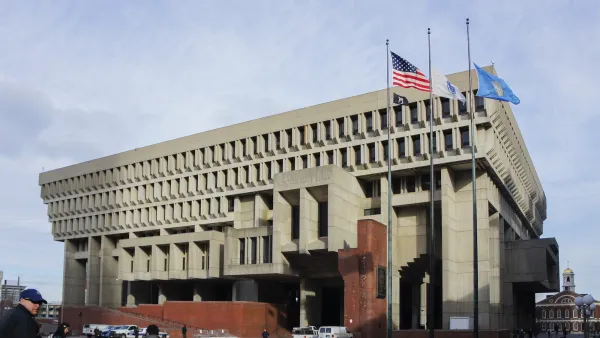
Boston Considers Eliminating Parking Requirements
Boston could join other major cities in eliminating outdated parking regulations that drive up the cost of housing.
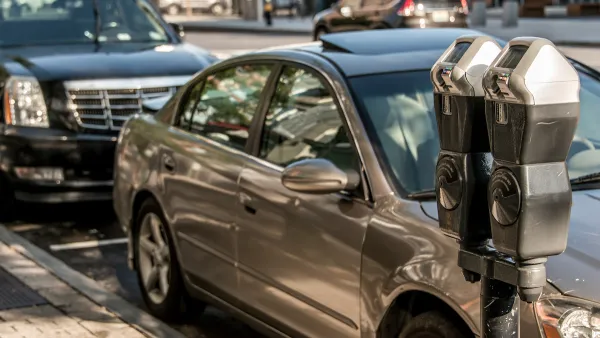
Boston Could Introduce Parking Benefit Districts
The approach offers a way for cities to free up curb parking space while boosting revenue for local infrastructure.
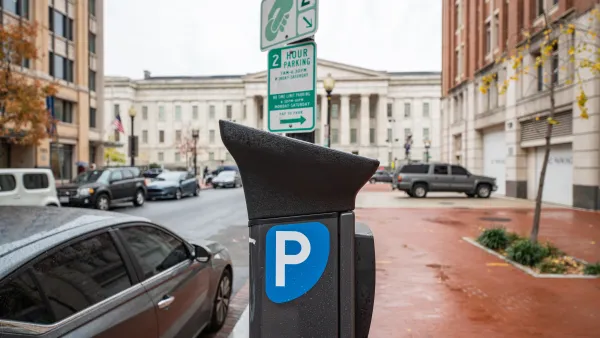
D.C. Residents Heavily Subsidize Residential Parking
The District is losing out on hundreds of thousands in potential revenue while encouraging residents to store cars on valuable public land.

Planetizen Federal Action Tracker
A weekly monitor of how Trump’s orders and actions are impacting planners and planning in America.

Chicago breaks ground on $3 billion megadevelopment
The new neighborhood, titled Foundry Park, will one day host 3,700 residences.

This MA town is drowning in its own sewage — and residents like it that way
Susan Murcott, a waste water expert, said if Carlisle didn't address their leaking sewage, the problem could turn “deadly.”

Feds to more closely scrutinize proposed Amtrak facility’s environmental impact
The Federal Railroad Administration had initially said the facility qualified for a less extensive environmental review.

Boston is hard to build housing in: its chief of planning wants to keep it that way
Chief of Planning Kairos Shen said she would not make changes to Boston’s affordability requirements for new housing, which critics say have slowed down development.

California plans to bury El Niño’s downpour
If the state plays its cards right, it may be able to store a billion acre-feet of El Niño’s water in aquifers.

FREE Course: Walkable City 1: Why Walkability?
After describing his path towards focusing on walkability as the essence of good planning, Jeff Speck marches through his five principal reasons for making more walkable places.
Reinventing Malls: Planning Alchemy—Turning Gray Fields Into Gold
The course focuses on the opportunities and imperatives that shape reinvention of mall sites.

City of Rosemead
Rutgers University, Edward J. Bloustein School of Planning and Public Policy
One Hundred Miles
Hunter College, City University of New York (CUNY)
The Architects Foundation
University of Cincinnati Online
Montrose County
The Pocatello Development Authority
The Urban Renewal Agency of the City of Pocatello