Braden Lammers provides a dispatch from the Kentucky Chamber of Commerce Business Summit and Annual Meeting, sharing the testimony of one business leader on the state's work force challenges.


Lammers's dispatch focuses on the presentation of Ted Abernathy, managing partner of Economic Leadership LLC, who "provided some insight on how Kentucky's work force can keep up with the rest of the country and world."
For instance, compared with the rest of the country—where 80 percent of the U.S. population lives in urban areas and where 90 percent of the country's jobs are located—Kentucky is "behind…with about 59 percent of the state's population still living in small cities and rural areas."
"A global economy is a space in which Kentucky appears to be succeeding," however. "Abernathy said there is a strong international presence in Kentucky with 30 percent growth in exports per capita during the last few years."
Read the full story: How can Kentucky's work force keep up with the rest of the world?


The Superstar Metro Argument... And Why It Fails
One argument against solving the housing shortage in large, expensive cities is that growth in those cities will drain people and wealth from declining areas. Data does not agree.

Is the Urban Form Sustainable?
One author offers a framework for resilience that rethinks common assumptions about the inevitability of cities as we know them.
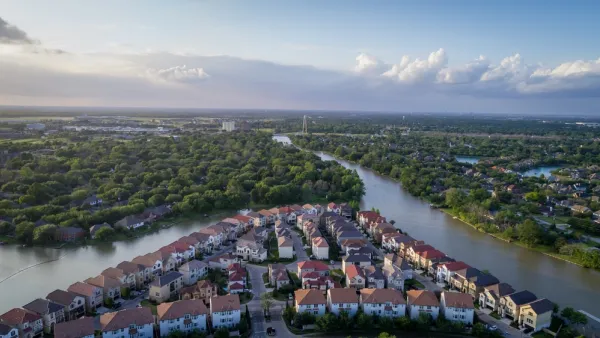
A Rapidly Urbanizing Texas County Gets in Touch With its Agricultural Roots
Developers in Fort Bend County are drawing inspiration from ‘agrihoods’ to build car-light communities in one of the nation’s fastest-growing areas.

Planetizen Federal Action Tracker
A weekly monitor of how Trump’s orders and actions are impacting planners and planning in America.

Chicago breaks ground on $3 billion megadevelopment
The new neighborhood, titled Foundry Park, will one day host 3,700 residences.

This MA town is drowning in its own sewage — and residents like it that way
Susan Murcott, a waste water expert, said if Carlisle didn't address their leaking sewage, the problem could turn “deadly.”

Iowa taxpayers are paying thousands to clean manure out of their water
While the Clean Water Act makes states responsible for regulating factory farms that discharge pollutants, Iowa has turned a blind eye to the polluting farms.

Amtrak cuts ribbon on Seattle Airo maintenance facility
The $250 million, nearly 100,000-square-foot building can house an entire Cascades Airo trainset.

To power data centers, Google seeks autonomous control of thousands of homes’ electricity
The tech company has signed a deal to indirectly pay Mid-Atlantic residents to reduce their power demand when the grid is strained.

FREE Course: Walkable City 1: Why Walkability?
After describing his path towards focusing on walkability as the essence of good planning, Jeff Speck marches through his five principal reasons for making more walkable places.
Reinventing Malls: Planning Alchemy—Turning Gray Fields Into Gold
The course focuses on the opportunities and imperatives that shape reinvention of mall sites.

City of Rosemead
Rutgers University, Edward J. Bloustein School of Planning and Public Policy
One Hundred Miles
The Architects Foundation
University of Cincinnati Online
Montrose County
The Pocatello Development Authority
The Urban Renewal Agency of the City of Pocatello