Digging further into a recent report from the Pew Research Center that finds growing political polarization among Americans, Emily Badger finds use of public transit runs along ideological lines.


According to Badger's analysis of the Pew Research Center's study, liberals are more likely to use public transit than conservatives.
Those findings, however, should be taken with the following grains of salt:
- "First, regular public transit ridership is meager even among the groups most likely to use it. It's not as if a majority of 'solid liberals' get to work every day by subway, while steadfast conservatives wholly disdain it. The difference between the two poles in using transit 'at least once a week' is just 17 percentage points."
- "But this may tell us as much about where all these people live as how they really feel about transit. Liberals are more likely to be clustered in cities, where transit is most common."
- "What the above data doesn't tell us is whether liberals and conservatives have different preferences for public transit when they live in the same place."
Read the full story: Liberals are more likely to use public transit than conservatives

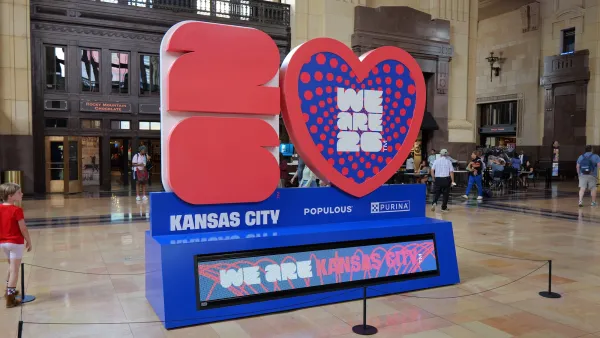
World Cup crowds offer 'stress test' for Kansas City transit planners
Transportation officials are closely monitoring travel patterns during the World Cup to understand how the city's transit system can be improved as the population grows.
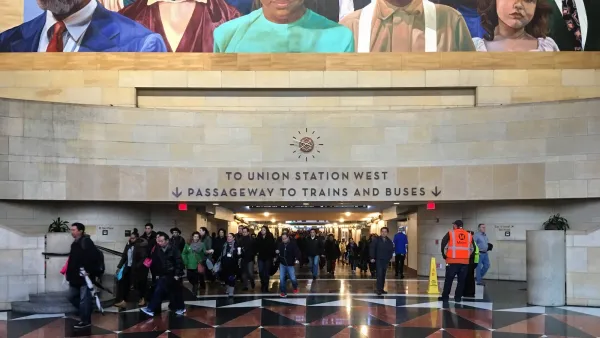
Weekend ridership on LA's D Line surged 80% after extension opened
World Cup attendees took roughly 45,000 rides to and from the first two games at the Los Angeles Stadium.
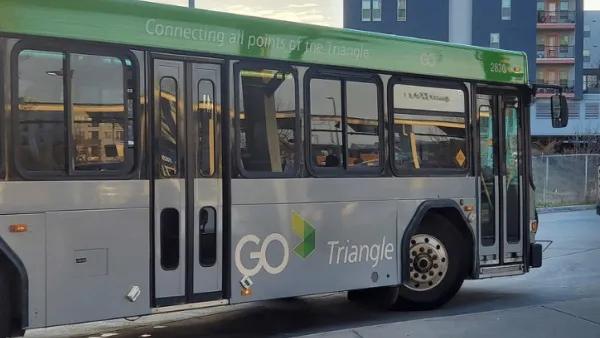
North Carolina Triangle transit ridership jumped 32% in April
Rising gas prices are prompting more Americans to consider public transit, where it's available.

Planetizen Federal Action Tracker
A weekly monitor of how Trump’s orders and actions are impacting planners and planning in America.

‘Going backwards:’ Baltimore mayor, students rally against state's transit funding plan
Maryland's proposed six-year plan provides no funding for Baltimore’s BMORE bus program and reduces its road maintenance funding.

Detroit to transform waterfront with $2.2 billion investment
Developers will convert about 18 acres of unused parking lot space into civic spaces.

U.S.-Iran war may have ‘devastating’ impact on cost to warm homes
Vermont and Maine residents may see a 76% increase in the cost of warming their homes this winter.

Senate bill would ‘overhaul’ environmental permitting laws
Under the proposed act, government agencies would also not be able to suspend or rescind permits after granting them.

Exemption applications for NYC’s pied-à-terre tax see 55% success rate
The city sent nearly 40% of its initial pied-à-terre tax warnings erroneously.

FREE Course: Walkable City 1: Why Walkability?
After describing his path towards focusing on walkability as the essence of good planning, Jeff Speck marches through his five principal reasons for making more walkable places.
Reinventing Malls: Planning Alchemy—Turning Gray Fields Into Gold
The course focuses on the opportunities and imperatives that shape reinvention of mall sites.

One Hundred Miles
County of Mendocino
planning NEXT
The Architects Foundation
University of Cincinnati Online
Montrose County
Northern Illinois Transit Authority (NITA)
The Pocatello Development Authority