After the New Cities Summit last week, and the U.S. Conference of Mayors this week, Dallas has been the location of a lot of recent discussion about the future of cities.


In summing up last week's New Cities Summit, Brandon Formby notes that "even though the country predominantly moves by automobile, many of the conversations focused on public transit and biking." Formby then goes on to provide some insight into discussions on bike lanes, automated cars, and streetcar projects, among other questions of alternative transportation.
In an earlier article, David Flick explains the New Cities Summit's focus on global cities: "Cities, [conference participants] said, must find a way to deal with growing economic inequality and climate change. They must connect with their residents and help them connect with each other. And they must regard culture as more than a luxury."
And in another article, David Mosier describes the reactions of conference attendees to their host city of Dallas:
"Visitors in Dallas for the international New Cities Summit found a strange place that mirrored neither the Texas cliche of cattle and oil nor expectations of a bustling new metropolis."
"Instead, many found an optimistic, spirited city but also one with empty sidewalks, impossibly wide roads, an unhealthy attachment to their cars and not enough vibrancy for a population of more than 1.2 million. Some also saw a place embracing sustainable development and trying to roll back decades of old-fashioned urban planning."
Read the full story: Transportation trends, challenges emerge at Dallas conferences

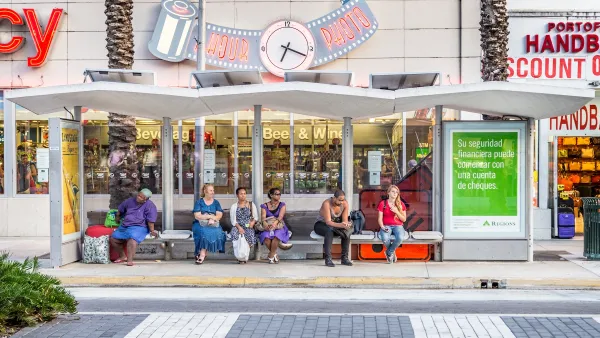
Report: Just 10% of US households live near 'frequent, reliable' transit
The analysis highlights how sprawl and a lack of transit investment perpetuate car dependency for most Americans.
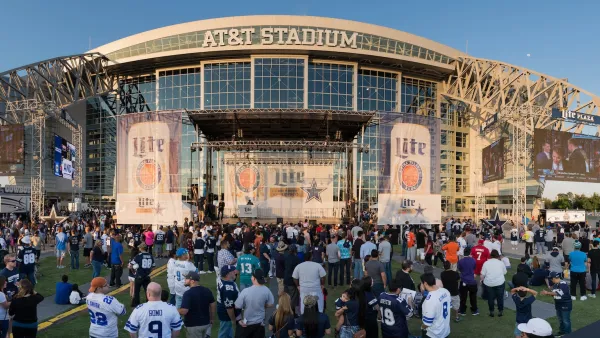
Dallas area transit prepares for World Cup, asks locals to drive
DART is adding a special shuttle service and creating back-up mechanisms to ensure it can serve all of this summer's World Cup attendees.
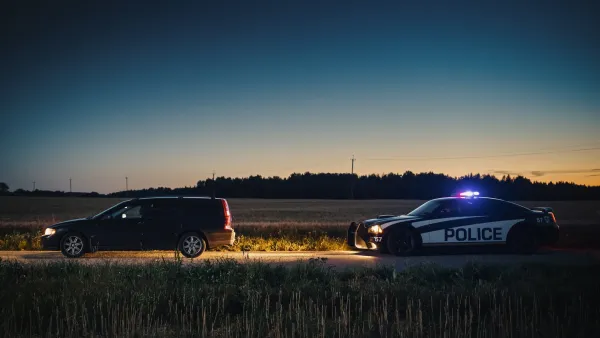
Yes, another thing that car dependency makes worse: DUIs
In the land of the free (and the cars), design incites drinking and driving.

Planetizen Federal Action Tracker
A weekly monitor of how Trump’s orders and actions are impacting planners and planning in America.

Amtrak, CN end decades-long dispute with eight-year agreement
The new operating agreement establishes an updated framework for the companies to work together, including processes to resolve disputes.

Judges permit Denver to divert 77,000 acre feet from the Colorado River for reservoir expansion
Overuse and climate change have caused the Colorado River’s water levels to plummet.

Atlanta City Council unanimously backs $3.5 billion Beltline light rail project
The resolution was drafted after Atlanta Mayor Andre Dickens pulled support for the Atlanta Streetcar extension last year.

SEPTA to bring nearby frequent transit to over 1 million new riders as part of decade-long plan
The agency's Accelerate plan will also bring frequent transit to twice the amount of jobs that are currently located near it.

NYC plants over 18,000 trees, the most new foliage in a decade
Many of the trees were planted in communities vulnerable to extreme heat.

FREE Course: Walkable City 1: Why Walkability?
After describing his path towards focusing on walkability as the essence of good planning, Jeff Speck marches through his five principal reasons for making more walkable places.
Reinventing Malls: Planning Alchemy—Turning Gray Fields Into Gold
The course focuses on the opportunities and imperatives that shape reinvention of mall sites.

City of Thousand Oaks
City of Wisconsin Rapids
Harvard University Graduate School of Design
The Architects Foundation
University of Cincinnati Online
The Pocatello Development Authority
The Urban Renewal Agency of the City of Pocatello