A citizen-led initiative to rethink the land around North Lake Shore Boulevard in the neighborhood of Streeterville produced ambitious designs that would create additional shoreline, baldy-needed open space, and a tunnel for Lake Shore Drive.


"An ambitious $177 million proposal to overhaul the lakefront from Olive Park to North Avenue Beach includes creating a new offshore island, straightening the S-curve and burying part of Lake Shore Drive underground," reports Lizzie Schiffman.
A group of Streeterville neighborhood residents commissioned VOA Associates to design the plan. The plan also "calls for expanding beaches at Ohio and Oak streets and adding 60 acres of parkland to the lakefront." Moreover, "[a] nearly 745,000-square-foot coastal island would provide additional protection to the lakeshore," and "[the] project would create 1.2 miles of additional shoreline."
Similar to the "Our Lakefront" plan proposed in 2013, the current proposal grew out of a response to the city's efforts to rethink Lake Shore Drive. Whether this type of neighborhood-sourced, ground up designing and planning is possible in Chicago remains to be seen.
Read the full story: Lake Shore Drive Island? $177M Plan Aims to Embrace Burnham's Vision
A Call for Local Architects to 'Redefine the Drive' in Chicago
A local architect produced a DIY design to push the Illinois Department of Transportation to think big with the "Redefine the Drive" project on North Lake Shore Drive. With the proposal: invitations for more local designers to participate.
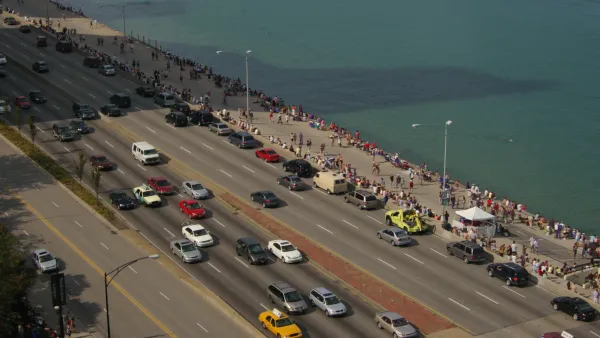
Bus Lanes, Desired by Advocates for Chicago's Lake Shore Drive Project, Back on the Table
After releasing a list of project alternatives that didn't include new bus lanes in the existing roadway, the Illinois Department of Transportation (IDOT) has changed its mind.
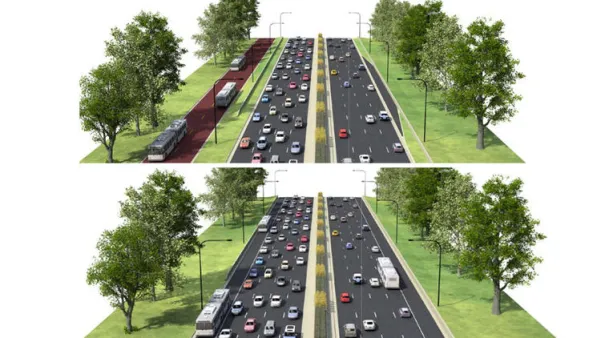
North Lake Shore Drive Redo Falls Short of Bus Priority Expectations
Strong criticisms of the project alternatives under consideration by the Illinois Department of Transportation for the closely watched North Lake Shore Drive project.

Planetizen Federal Action Tracker
A weekly monitor of how Trump’s orders and actions are impacting planners and planning in America.

California plans to bury El Niño’s downpour
If the state plays its cards right, it may be able to store a billion acre-feet of El Niño’s water in aquifers.

Desperate measures: Advocates weigh draining Lake Powell to fill Colorado River
Draining the reservoir could reduce evaporation losses by a couple hundred thousand acre-feet.

Housing is the top priority of Seattle’s sole new councilmember
Jenks campaigned on building 1,000 new units of affordable housing.

New tax cuts may slash $1.5 billion in funding for Miami transit, public parks
Amendment 3 will save Miami-Dade homeowners $2,700 in 2028.

Arizona, Wisconsin, Pennsylvania hope to finally advance climate goals post-midterms
The three states have spent years under Republican or divided control.

FREE Course: Walkable City 1: Why Walkability?
After describing his path towards focusing on walkability as the essence of good planning, Jeff Speck marches through his five principal reasons for making more walkable places.
Reinventing Malls: Planning Alchemy—Turning Gray Fields Into Gold
The course focuses on the opportunities and imperatives that shape reinvention of mall sites.

City of Rosemead
Rutgers University, Edward J. Bloustein School of Planning and Public Policy
One Hundred Miles
University of Michigan School for Environment and Sustainability (SEAS)
Hunter College, City University of New York (CUNY)
The Architects Foundation
City of Cambridge
Montrose County
The Pocatello Development Authority