Move over Panama Canal, there’s another waterway that connects one side of the continent to the other. These waters part ways in Wyoming.


Jesus Diaz shares knowledge of the geographic point of interest known as “Parting of the Waters,” found in the Teton Wilderness Area of the Bridger-Teton National Forest in Wyoming. There, a mountain stream called North Two Ocean Creek meets the Continental Divide and splits into two streams headed opposite directions. One of the streams becomes Atlantic Creek, flowing 3,488 miles east and then south and joining the Yellowstone, Missouri and Mississippi rivers—finally culminating in the Gulf of Mexico. The other stream becomes Pacific Creek, flowing 1,353 miles west and joining the Snake and Columbia rivers—eventually spilling into the Pacific Ocean.
The MyWyoming tourism site has more on the experience of standing one foot in the Pacific and one foot in the Atlantic.
In case you're curious for more waterway-related nomenclature, the streams flowing away from each other are called distributaries—Parting of the Waters just happens to occur at the Continental Divide. For another famous example, reference the Casiquiare River in South America, which flows away from the Orinoco River toward the Rio Negro, a tributary of the Amazon.
And Wyoming includes another place where distributaries split to eventually find very different bodies of water, according to the MyWyoming tourism site: “[at] Three Waters Mountain, near Union Pass, water wends its way to three different major bodies of water, the Gulf of California (the drop travels 1,300 miles), the Pacific (a 1,400-mile trip), and the Gulf of Mexico (3,000-miles distant).”
Read the full story: This creek divides the US connecting the Atlantic and Pacific oceans

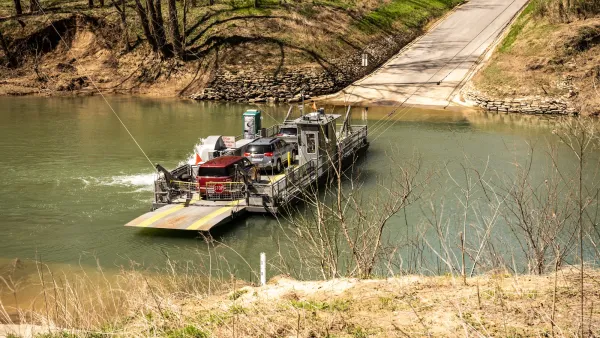
Nation’s Shortest Car Ferry Travels Just 200 Feet in a National Park
The Green River Ferry shuttles cars in a 30-second trip.
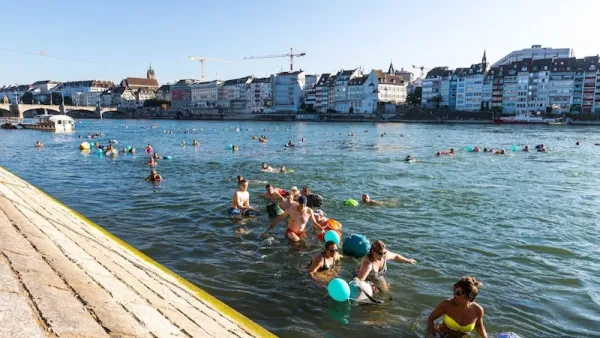
Is Your City Swimmable?
An interview with organizers of the inaugural Swimmable Cities Summit, which took place this June 22-24 in Rotterdam, NL.

River Seine ‘Teeming’ With Life
Decades of restoration efforts are yielding positive results as dozens of species of fish return to the once-polluted waterway.

‘Going backwards:’ Baltimore mayor, students rally against state's transit funding plan
Maryland's proposed six-year plan provides no funding for Baltimore’s BMORE bus program and reduces its road maintenance funding.

Detroit to transform waterfront with $2.2 billion investment
Developers will convert about 18 acres of unused parking lot space into civic spaces.

HUD modernizes 50-year-old manufactured housing framework
The Next Generation Manufactured Housing Action Plan establishes new energy-efficiency standards for manufactured homes, and new guidelines for anchoring them.

After $600,000 wasted, CA high-speed rail board limits CEO’s power
Ian Choudri will no longer be able to sign, change or manage contracts.

Lithium mines leech water from surrounding communities. Soon, they’ll run dry
Researchers concluded that most lithium mines won't have enough water to meet industry demands by 2050.

El Niño takes lives, infrastructure as U.S. storm systems prove ill-prepared
About two-thirds of America's culverts are in states with outdated design standards.

FREE Course: Walkable City 1: Why Walkability?
After describing his path towards focusing on walkability as the essence of good planning, Jeff Speck marches through his five principal reasons for making more walkable places.
Reinventing Malls: Planning Alchemy—Turning Gray Fields Into Gold
The course focuses on the opportunities and imperatives that shape reinvention of mall sites.

One Hundred Miles
County of Mendocino
planning NEXT
The Architects Foundation
University of Cincinnati Online
Montrose County
Northern Illinois Transit Authority (NITA)
The Pocatello Development Authority