One of the unanswered questions of Detroit’s post-bankruptcy future is what will happen with the Detroit Water and Sewerage Department, especially after negotiations to create a regional authority ended in failure this week.


“The City of Detroit has ended negotiations with Wayne, Oakland and Macomb counties over the potential spinoff of the city’s water department as a regional authority, but the city and counties signaled they haven’t ruled out a deal entirely,” report Nathan Bomey, Christina Hall, and Bill Laitner.
The end of the negotiations “follows months of finger-pointing between the municipalities with the counties recoiling at the prospect of endorsing a regional water authority that would pay $47 million per year for 40 years in lease payments to Detroit. Wayne had signaled a willingness to consider a deal.”
Although officials from the city and the counties in question left a slim chance open that mediation or some other deus ex machina could save the proposal, the city has stated its intention to “consider bids from private water companies to acquire or lease the Detroit Water and Sewerage Department.”
Read the full story: Detroit: Bankruptcy water deal with suburbs is dead, unless court orders mediation
Detroit Bankruptcy Breakthrough: Regional Water Authority Moves Forward
One of the most politically treacherous proposals of Detroit's bankruptcy plan has finally gained approval—a regional water authority.
Metro Detroit's Millage Tax Comes Within Half a Percentage Point of Passing
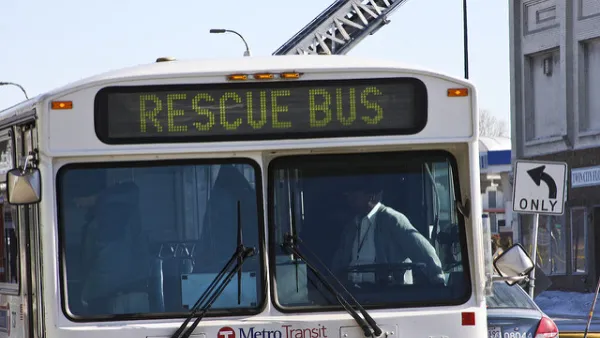
A $4.6 billion transit plan proposed by the Regional Transit Authority of Southeast Michigan received 49.5 percent of the vote on November 8. The millage tax would have funded bus rapid transit and regional rail within a four-county region.
Detroit's Failed Regional Transit Plan Strikes a Blow to the City's Revival
Voters in the Detroit region had a chance to reverse 40 years of neglect for regional transit. Instead, they kicked the can down the road.

Desperate measures: Advocates weigh draining Lake Powell to fill Colorado River
Draining the reservoir could reduce evaporation losses by a couple hundred thousand acre-feet.

Eastern Nebraska is running out of electricity
Data centers and electrification are straining eastern Nebraska’s grid, throttling economic development.

Malls are becoming the midtowns of the future
Mall and office park redevelopments are a generational opportunity to create new nodes of urbanity.

NYC breaks ground on anti-flooding infrastructure project
New York City's new system will reduce stormwater flows to local sewers by 90%.

One Kentucky town’s secret to affordable housing
The Smoketown Community Land Trust has already built seven affordable homes for community members.

Houston gains petal-shaped cooling infrastructure to make streets more ‘delightful’
The city has installed the pavilions along 15 blocks in Houston.

FREE Course: Walkable City 1: Why Walkability?
After describing his path towards focusing on walkability as the essence of good planning, Jeff Speck marches through his five principal reasons for making more walkable places.
Reinventing Malls: Planning Alchemy—Turning Gray Fields Into Gold
The course focuses on the opportunities and imperatives that shape reinvention of mall sites.

City of Rosemead
Rutgers University, Edward J. Bloustein School of Planning and Public Policy
One Hundred Miles
University of Michigan School for Environment and Sustainability (SEAS)
Hunter College, City University of New York (CUNY)
The Architects Foundation
City of Cambridge
Montrose County
The Pocatello Development Authority