Are your local planning tools supporting a thriving and resilient future? Andrew von Maur shares a little inspiration from Las Cruces, New Mexico.


"Crossing Campo Street from downtown Las Cruces into the Mesquite Historic District is like crossing between two urban worlds that are often misunderstood."
"To the west is one of the country’s textbook examples of everything that could go wrong with federally subsidized Urban Renewal, including the obligatory seas of parking, corporate CBD architecture, vacant properties, and a one-way loop that locals derisively refer to as “the race track.” The stunning aerial view from 1974 shows the city after its failed open-heart surgery. Even today, after a heroic struggle to dismantle the virtually abandoned pedestrian mall and reinstitute automobile-access on Main Street, the pain of this flattening experience lingers on. The place is deserted on a beautiful September evening."
"To the east, Mesquite escaped most of the bulldozers and still faces Campo Street with modest but charming one-story adobes. It is the original town site along the Camino Real and was platted in 1849 by New Mexicans from nearby Doña Ana — a truly traditional neighborhood lived in by more than twenty of the original settler families. In contrast to downtown, the streets here are narrow with few parking lots, lined by modest one-room-wide adobe boxes with portales, small shop fronts, and garden walls. Age has given it character — at times picturesque, at times desperate for care. But unlike the city center, Mesquite is alive."
Von Maur goes on to share key insights to resilient urbanism, along with an inspiring photo journal of Mesquite.
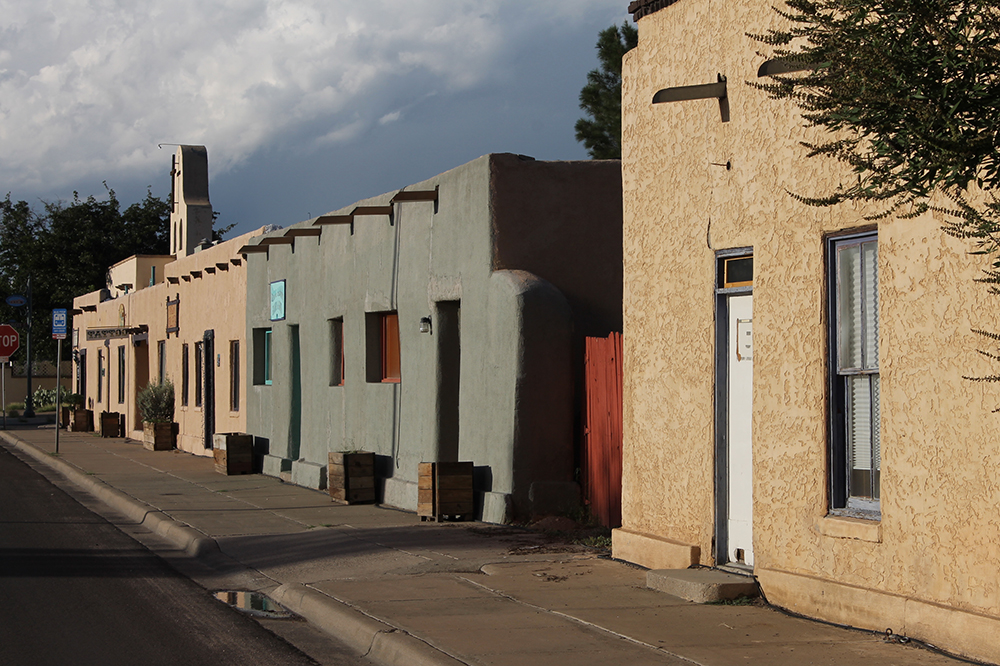
Mesquite Neighborhood in Las Cruces, New Mexico. Image credit: Andrew von Maur, Creative Commons ShareAlike Licensing
Read the full story: Let Love Rule: Resilience in Mesquite

Nevada sues feds to block Colorado River cuts
The federal government’s newly released plan for managing the Colorado River’s dwindling water supply could cause Nevada to lose over 70% of its allocated water.
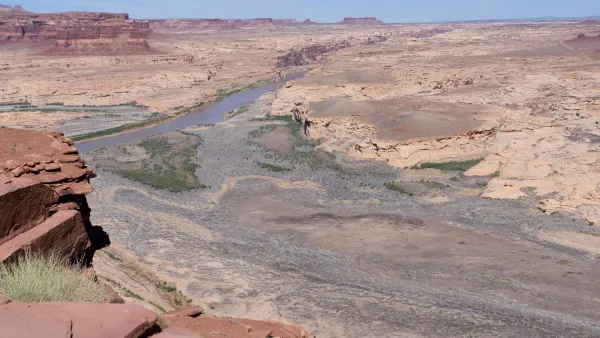
Feds say Arizona, California and Nevada must cut Colorado River water use by 1.25 million acre-feet
The new plan does not apply mandatory cuts to any of the river’s upper basin states.
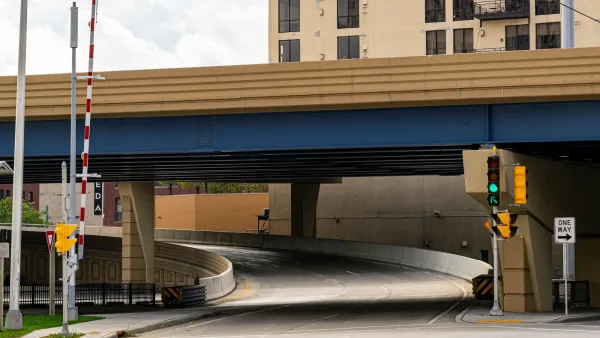
Milwaukee mayor abandons highway removal plan
Mayor Johnson spoke in opposition to a proposed plan to turn part of I-794 into an at-grade boulevard, expressing concerns about traffic.

Desperate measures: Advocates weigh draining Lake Powell to fill Colorado River
Draining the reservoir could reduce evaporation losses by a couple hundred thousand acre-feet.

Eastern Nebraska is running out of electricity
Data centers and electrification are straining eastern Nebraska’s grid, throttling economic development.

Move over, LA: St. Louis gears up for Olympics, invests millions in downtown redevelopment
The Missouri city will host the 2028 Olympic soccer group stage and knockout matches.

California, Hawaii, Rhode Island approve housing propositions
Hawaii and Rhode Island each approved their sole proposition, while California approved two of its three.

Officials claim feds 'rushed' Amtrak environmental review
Amtrak plans to move their Chicago maintenance facility from an industrial area to a residential one.

NYC breaks ground on anti-flooding infrastructure project
New York City's new system will reduce stormwater flows to local sewers by 90%.

FREE Course: Walkable City 1: Why Walkability?
After describing his path towards focusing on walkability as the essence of good planning, Jeff Speck marches through his five principal reasons for making more walkable places.
Reinventing Malls: Planning Alchemy—Turning Gray Fields Into Gold
The course focuses on the opportunities and imperatives that shape reinvention of mall sites.

City of Rosemead
Rutgers University, Edward J. Bloustein School of Planning and Public Policy
One Hundred Miles
University of Michigan School for Environment and Sustainability (SEAS)
Hunter College, City University of New York (CUNY)
The Architects Foundation
City of Cambridge
Montrose County
The Pocatello Development Authority