A recent article surveys a few examples of residents in cities around the country employing tactical urbanism. As tactical urbanism has been adopted in different ways in different cities, so to have the reactions of city leaders varied.


An article by J.B. Wogan samples examples from around the country of residents who have taken to implementing traffic calming measures in their neighborhoods. Residents in cities as distinct as Baltimore, Maryland, and New Haven, Connecticut, have recently undertaken actual urbanism efforts.
But some cities haven’t reacted well to outbreaks of tactical urbanism. For example, “Muncie, Ind., in 2008 and Vallejo, Calif., last year, have arrested people who painted crosswalks without permission,” writes Wogan.
Read the full story: Fighting Traffic One Paint Brush at a Time
Sick of Speeding, Baltimoreans Deploy DIY Traffic Calming
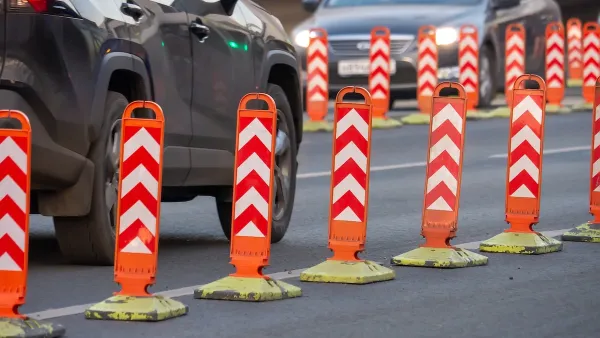
Fed up with speeding cars, and a city bureaucracy seen as slow to respond to their complaints, residents and artists in Baltimore have taken it upon themselves to remedy the situation by creating their own traffic calming measures.

Minneapolis Activists Use DIY Traffic Circles to Identify, Slow ICE
Residents are using the pop-up roundabouts to slow traffic and make their presence known on Minneapolis streets.
Indianapolis Encourages Tactical Urbanism With Lending Library, Grant Program
Residents can apply to receive assistance with traffic calming projects that can provide valuable data and lead to permanent changes.

Desperate measures: Advocates weigh draining Lake Powell to fill Colorado River
Draining the reservoir could reduce evaporation losses by a couple hundred thousand acre-feet.

Eastern Nebraska is running out of electricity
Data centers and electrification are straining eastern Nebraska’s grid, throttling economic development.

Malls are becoming the midtowns of the future
Mall and office park redevelopments are a generational opportunity to create new nodes of urbanity.

NYC breaks ground on anti-flooding infrastructure project
New York City's new system will reduce stormwater flows to local sewers by 90%.

One Kentucky town’s secret to affordable housing
The Smoketown Community Land Trust has already built seven affordable homes for community members.

Houston gains petal-shaped cooling infrastructure to make streets more ‘delightful’
The city has installed the pavilions along 15 blocks in Houston.

FREE Course: Walkable City 1: Why Walkability?
After describing his path towards focusing on walkability as the essence of good planning, Jeff Speck marches through his five principal reasons for making more walkable places.
Reinventing Malls: Planning Alchemy—Turning Gray Fields Into Gold
The course focuses on the opportunities and imperatives that shape reinvention of mall sites.

City of Rosemead
Rutgers University, Edward J. Bloustein School of Planning and Public Policy
One Hundred Miles
University of Michigan School for Environment and Sustainability (SEAS)
Hunter College, City University of New York (CUNY)
The Architects Foundation
City of Cambridge
Montrose County
The Pocatello Development Authority