Researchers at the Lawrence Berkeley National Laboratory recently completed an economic analysis of white roofs versus their green and black counterparts. The debate over the relative merits of white versus green roofs is far from over, however.


Lidija Grozdanic shares news of a study published in the Energy and Buildings Journal that “compared three types of roofs – green, black and white – and came to the conclusion that white roofs have great economic benefits, and they are also three times more effective than the other two at fighting climate change.”
Among the findings of the report:
- Green roofs’ high installation/replacement costs outweigh their long service lives.
- Per unit area, white roofs cool the globe 3× more effectively than green roofs.
Still, earlier studies conflict with the results of the new study, as noted by Grozdanic: “Although we are excited to find out how different roofing strategies may affect climate change, one should be aware of the fact that these investigations involve a wide spectrum of factors and potential consequences far too complex for a hotheaded (pun intended) thumbs-up verdict.”
Read the full story: New Study Shows White Roofs are Three Times More Effective than Green Roofs at Fighting Climate Change Read more: New Study Sho
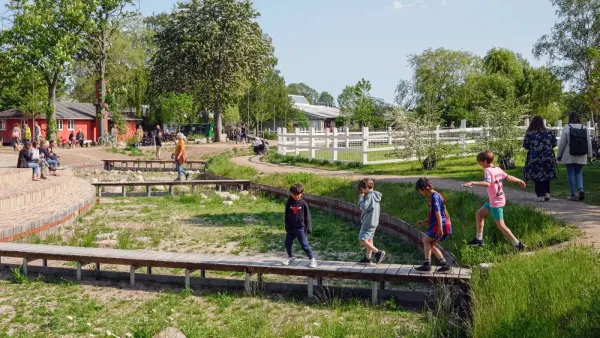
Copenhagen is losing its cool
In a city long designed to maximize light during dark Scandinavian winters, climate change is forcing the Danish capital to rethink its relationship with the sun.
Improving South Los Angeles Through Strategic Tree Planting
The University of Southern California Urban Trees Initiative is planting 250 trees in South L.A. neighborhoods to improve shade, combat climate change, and enhance community well-being through collaboration and data-driven approaches.
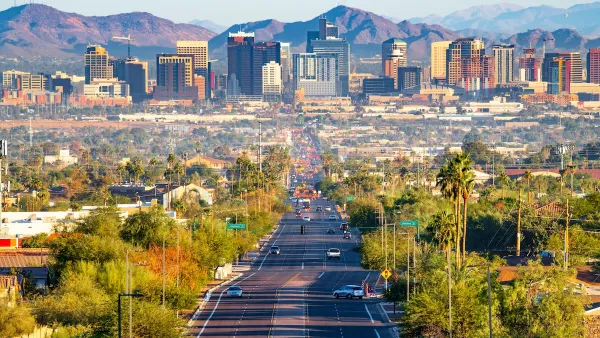
Phoenix Announces Shade Action Plan
The city has outlined 11 strategic priorities aimed at addressing the risks of extreme heat and protecting vulnerable residents from its impacts.

Desperate measures: Advocates weigh draining Lake Powell to fill Colorado River
Draining the reservoir could reduce evaporation losses by a couple hundred thousand acre-feet.

Eastern Nebraska is running out of electricity
Data centers and electrification are straining eastern Nebraska’s grid, throttling economic development.

Malls are becoming the midtowns of the future
Mall and office park redevelopments are a generational opportunity to create new nodes of urbanity.

NYC breaks ground on anti-flooding infrastructure project
New York City's new system will reduce stormwater flows to local sewers by 90%.

One Kentucky town’s secret to affordable housing
The Smoketown Community Land Trust has already built seven affordable homes for community members.

Houston gains petal-shaped cooling infrastructure to make streets more ‘delightful’
The city has installed the pavilions along 15 blocks in Houston.

FREE Course: Walkable City 1: Why Walkability?
After describing his path towards focusing on walkability as the essence of good planning, Jeff Speck marches through his five principal reasons for making more walkable places.
Reinventing Malls: Planning Alchemy—Turning Gray Fields Into Gold
The course focuses on the opportunities and imperatives that shape reinvention of mall sites.

City of Rosemead
Rutgers University, Edward J. Bloustein School of Planning and Public Policy
One Hundred Miles
University of Michigan School for Environment and Sustainability (SEAS)
Hunter College, City University of New York (CUNY)
The Architects Foundation
City of Cambridge
Montrose County
The Pocatello Development Authority