The U.S. Secretary of Commerce has declared the Fraser River sockeye salmon run a “fishery disaster.” The declaration will produce funding to offset the impacts for nine tribes and non-tribal fishers in Washington state.


A year after closing the Fraser River salmon fishery altogether, the U.S. Secretary of Commerce has declared a “fishery disaster” for the river’s sockeye salmon run, “a key resource for the state and tribal fishing industries in Washington.”
Ashley Hearn reports on the economic impact of the ongoing environmental disaster: “The Fraser River sockeye salmon runs are worth more than $4 million each year, and they’ve been in decline for 30 years.”
As for what is causing the ongoing threat to the vital food stock: “Fisheries managers blame the decline on poor ocean conditions, warm river temperatures and habitat decline, among other things.”
The disaster declaration makes funding available for the tribes and commercial fishers to offset the impacts of their losses. Congress must still decide the funding amount of the allocation.
Read the full story: Feds Declare Salmon Fishery Disaster For Washington Tribes

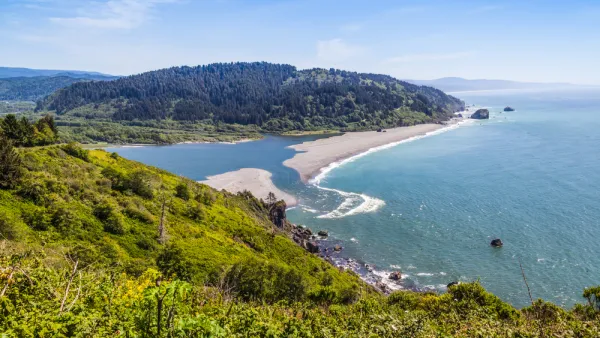
Dams on the Way Out on Two California Rivers
The largest dam removal project in U.S. history is about to commence on the Klamath River. Due to a recent development, a dam on the Eel River is also on expected for decommission.
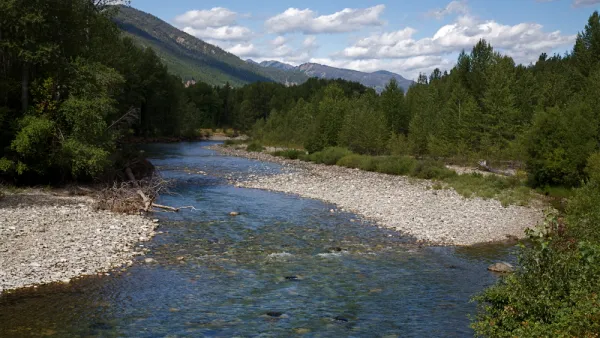
Court Decision Makes it Final: Washington State Owes $2 Billion for Culvert Repairs
When it refused to reconsider a 2016 ruling that mandated the state of Washington to broken culverts around the state, the 9th U.S. Circuit of Appeals put to rest a legal controversy ongoing since 2001.
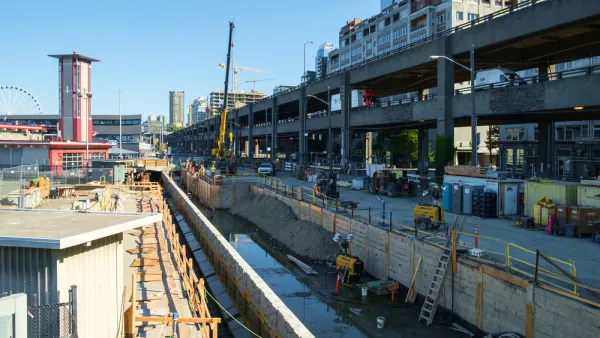
Seattle's New Seawall: An Experiment in Climate Adaptation and Habitat Restoration
Engineers and scientists in Seattle are testing a new generation of shoreline infrastructure that hopefully can do a better job of letting people and wild animals—in this case salmon—coexist.

Planetizen Federal Action Tracker
A weekly monitor of how Trump’s orders and actions are impacting planners and planning in America.

Amtrak, CN end decades-long dispute with eight-year agreement
The new operating agreement establishes an updated framework for the companies to work together, including processes to resolve disputes.

Judges permit Denver to divert 77,000 acre feet from the Colorado River for reservoir expansion
Overuse and climate change have caused the Colorado River’s water levels to plummet.

Atlanta City Council unanimously backs $3.5 billion Beltline light rail project
The resolution was drafted after Atlanta Mayor Andre Dickens pulled support for the Atlanta Streetcar extension last year.

SEPTA to bring nearby frequent transit to over 1 million new riders as part of decade-long plan
The agency's Accelerate plan will also bring frequent transit to twice the amount of jobs that are currently located near it.

NYC plants over 18,000 trees, the most new foliage in a decade
Many of the trees were planted in communities vulnerable to extreme heat.

FREE Course: Walkable City 1: Why Walkability?
After describing his path towards focusing on walkability as the essence of good planning, Jeff Speck marches through his five principal reasons for making more walkable places.
Reinventing Malls: Planning Alchemy—Turning Gray Fields Into Gold
The course focuses on the opportunities and imperatives that shape reinvention of mall sites.

City of Wisconsin Rapids
Harvard University Graduate School of Design
KFH Group Inc.
The Architects Foundation
University of Cincinnati Online
The Pocatello Development Authority
The Urban Renewal Agency of the City of Pocatello