In Philadelphia, an alliance of unusual suspects worked together to convince the city to create the land bank. The law isn't perfect but the new land bank will significantly improve the city’s vacant property process.


Philadelphia is about to become the largest city in the country with a land bank.
A land bank is a nonprofit or government agency whose sole function is to efficiently maintain, clear title to, assemble, and market vacant property in order to transfer it to responsible new owners for productive reuse. On December 12, 2013, after many years of organizing, negotiating, and compromising, the Philadelphia City Council finally passed an ordinance establishing one for the city. Mayor Michael Nutter signed the law on January 11, 2014, calling it “the start of a new era in Philadelphia.” City Council President Darrell Clarke told the large crowd of advocates at the signing ceremony, “I hear you. The city will get properties back online.”
This article describes the collaboration and compromise that caused this achievement and charts out next steps.
Read the full story: Philadelphia Achieves Land Bank Through Compromise

Keys to a Successful Land Bank
Philadelphia recently became the largest U.S. city to create a “land bank.” As new land banks spring up across the country, it is important to take a close look at what needs to accompany them if we want to have real impact.
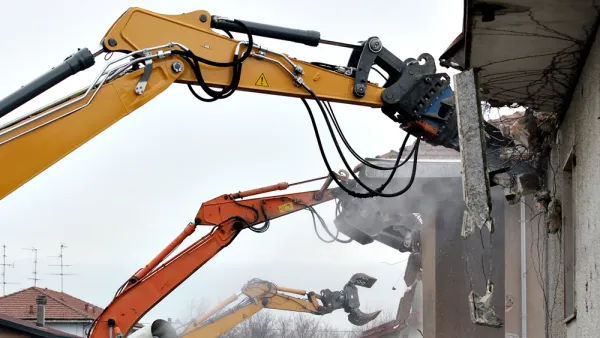
$160 Million in Bond Funding for Demolitions on the Ballot in Detroit
Proposal N, on the ballot for Detroit voters next week, will provide $160 million in bond funding for demolitions and $90 million to mothball homes for future rehab, but, according to this opinion, it won't solve the city's blight challenges.
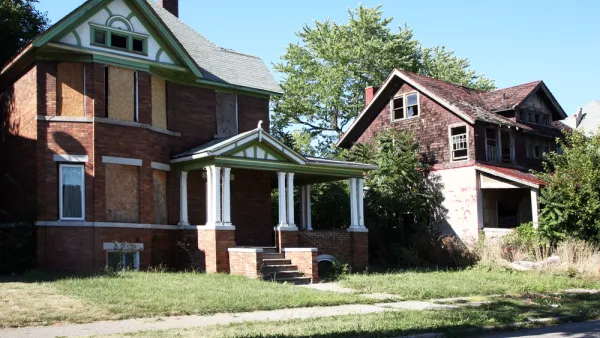
Detroit Continues Demolition Program After Lead Risks Revealed
The city of Detroit said it would halt a demolition program after a report revealed the amount of lead released by demolitions into the environment, risking the health of children and other local residents.

Planetizen Federal Action Tracker
A weekly monitor of how Trump’s orders and actions are impacting planners and planning in America.

Amtrak, CN end decades-long dispute with eight-year agreement
The new operating agreement establishes an updated framework for the companies to work together, including processes to resolve disputes.

Northwest rail fans eager for Sept. 30 debut of Amtrak’s Airo fleet
Get ready for that new train smell and more seats. But they won’t go faster or run more frequently on the Cascades route in Washington and Oregon.

NYC to turn city-owned property into thousands of homes
The city has scheduled a public hearing regarding the development for October.

Buses travel at 5mph along this route in NYC. The Bronx's first-ever busway looks to change that
Prior to the busway, buses on the Bx36 route traveled as slowly as 5 miles per hour.

Pittsburg launches 'EZ permits,' aims for one-day turnaround for low-risk permits
The pilot ‘fast lane’ for permits is part of a bundle of modernization efforts for Pittsburg’s permitting process.

FREE Course: Walkable City 1: Why Walkability?
After describing his path towards focusing on walkability as the essence of good planning, Jeff Speck marches through his five principal reasons for making more walkable places.
Reinventing Malls: Planning Alchemy—Turning Gray Fields Into Gold
The course focuses on the opportunities and imperatives that shape reinvention of mall sites.

City of Thousand Oaks
City of Wisconsin Rapids
Harvard University Graduate School of Design
The Architects Foundation
University of Cincinnati Online
The Pocatello Development Authority
The Urban Renewal Agency of the City of Pocatello