Led by the nonprofit David Suzuki Foundation, a volunteer workforce of "park rangers" is deploying creative green interventions along private properties and public spaces throughout Toronto to create a citywide green corridor.


"Inspired by an idea from Richard Louv--an author known for coining the phrase 'nature deficit disorder'--the Homegrown National Park Project is spearheaded by the David Suzuki Foundation, an environmental nonprofit based in Toronto," writes Adele Peters. Working with 21 volunteer Neighbourhood Park Rangers and 14 partner organizations, the foundation began an ambitious plan to establish a green corridor along the former path of Garrison Creek last year.
Over the summer, "the volunteers did everything from planting a network of flowers that would support pollinating insects to building park benches in front of their homes," adds Peters. "Someone turned a persistent pothole in their street into a mini-garden. Others added rearrangeable words to a chain link fence. Not all of the projects were strictly environmental, since part of the plan was simply to help create a sense of community."
"Next year, a new class of volunteers will continue adding more projects, and by 2015, the Suzuki Foundation hopes to have homegrown park rangers in each of the city’s 44 wards, helping stitch together green space that connects all 3 million residents."
Read the full story: How The Homegrown National Park Project Is Greening Toronto

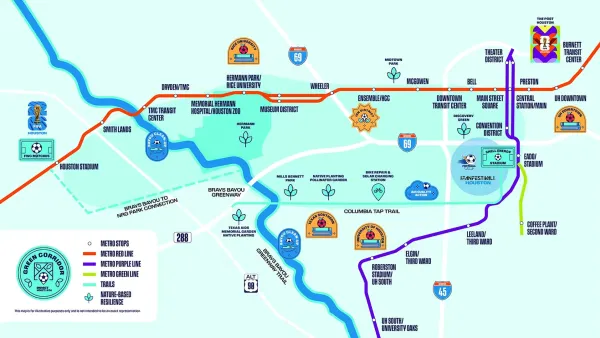
Houston improved walkability ahead of the World Cup. Will it last?
Some mobility advocates say the city's 'Green Corridor' amounts to 'lipstick on a pig' rather than a true commitment to better transit and walking infrastructure.
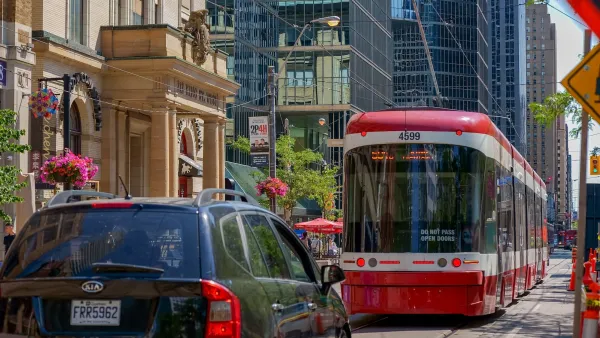
Toronto Man Beats Streetcar on Foot to Highlight Traffic Delays
Runner Mac Bauer says he hopes his project spurs the city to improve transit speed and reliability.

Ontario Judge Saves Toronto Bike Lanes
A court order bars the provincial government from removing bike lanes, saying the decision would make roads more dangerous and fail to reduce congestion.

Planetizen Federal Action Tracker
A weekly monitor of how Trump’s orders and actions are impacting planners and planning in America.

California plans to bury El Niño’s downpour
If the state plays its cards right, it may be able to store a billion acre-feet of El Niño’s water in aquifers.

Chicago breaks ground on $3 billion megadevelopment
The new neighborhood, titled Foundry Park, will one day host 3,700 residences.

This road in NYC is infamously dangerous — and Mamdani can't fix it
New York City's Ocean Parkway is known for reckless driving, but the power to implement safety measures lies with the state rather than the city.

One of Denver’s busiest corridors to gain BRT
The project will span 18 miles and contain 74 bus rapid transit stations.

275,000 bus trips are at stake on Seattle's ballot
If passed, the Seattle Transit Measure would trigger a 0.3% sales tax and raise an average of $138 million per year to maintain and expand Seattle’s bus services.

FREE Course: Walkable City 1: Why Walkability?
After describing his path towards focusing on walkability as the essence of good planning, Jeff Speck marches through his five principal reasons for making more walkable places.
Reinventing Malls: Planning Alchemy—Turning Gray Fields Into Gold
The course focuses on the opportunities and imperatives that shape reinvention of mall sites.

City of Rosemead
Rutgers University, Edward J. Bloustein School of Planning and Public Policy
One Hundred Miles
Hunter College, City University of New York (CUNY)
The Architects Foundation
University of Cincinnati Online
City of Cambridge
Montrose County
The Pocatello Development Authority