This week, the Montgomery County Council approved an ambitious, but controversial, plan to create a 10-route, 81-mile Bus Rapid Transit network in D.C.'s northern suburbs to meet the area's mobility needs and support its sustainable growth.


After five years of work, Montgomery County has decided that a vast BRT network is the best way to improve accessibility and mobility throughout the largely suburban county, reports Dan Reed. However, he notes, "The plan has been controversial."
"While many civic, environmental, activist, and business groups endorsed BRT, a vocal minority in neighborhoods like Four Corners and Chevy Chase West fought the plan based on claims that it would take their property or endanger their children." Though the plan passed the County Council unanimously, it sounds like some members are reluctant supporters.
"It's true that this plan won't solve all of the county's transportation issues, as skeptics and opponents frequently point out," accedes Reed. "But the alternatives, whether it's improving existing bus service, building more highways, or extending Metro, are either too small, too destructive, or too expensive to really make a difference."
Read the full story: Montgomery approves countywide BRT plan
Montgomery County BRT Could Change Life for Commuters Around D.C.
Montgomery County has been considering a Bus Rapid Transit System for close to a decade, a study released this year details the improvements the system promises to bring.
Funding Questions Loom for Montgomery County's BRT Plans
Even when a community has thrown its full support behind a transit project, questions of funding and operations can create controversy. The next few months will be worth watching for Montgomery County, Maryland's proposed BRT system.
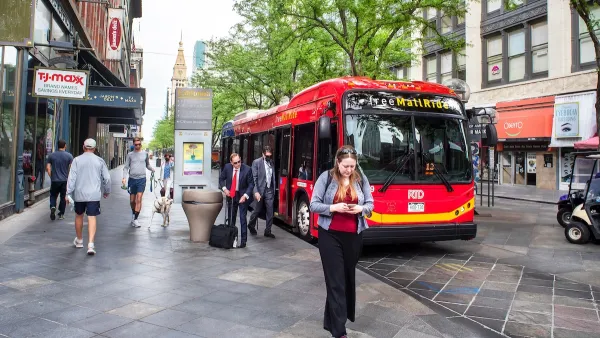
One of Denver’s busiest corridors to gain BRT
The project will span 18 miles and contain 74 bus rapid transit stations.

Desperate measures: Advocates weigh draining Lake Powell to fill Colorado River
Draining the reservoir could reduce evaporation losses by a couple hundred thousand acre-feet.

Eastern Nebraska is running out of electricity
Data centers and electrification are straining eastern Nebraska’s grid, throttling economic development.

Malls are becoming the midtowns of the future
Mall and office park redevelopments are a generational opportunity to create new nodes of urbanity.

NYC breaks ground on anti-flooding infrastructure project
New York City's new system will reduce stormwater flows to local sewers by 90%.

One Kentucky town’s secret to affordable housing
The Smoketown Community Land Trust has already built seven affordable homes for community members.

Houston gains petal-shaped cooling infrastructure to make streets more ‘delightful’
The city has installed the pavilions along 15 blocks in Houston.

FREE Course: Walkable City 1: Why Walkability?
After describing his path towards focusing on walkability as the essence of good planning, Jeff Speck marches through his five principal reasons for making more walkable places.
Reinventing Malls: Planning Alchemy—Turning Gray Fields Into Gold
The course focuses on the opportunities and imperatives that shape reinvention of mall sites.

City of Rosemead
Rutgers University, Edward J. Bloustein School of Planning and Public Policy
One Hundred Miles
University of Michigan School for Environment and Sustainability (SEAS)
Hunter College, City University of New York (CUNY)
The Architects Foundation
City of Cambridge
Montrose County
The Pocatello Development Authority