A new study appearing in the journal Science details the devastating loss of 1.5 million million square kilometers of forest across the globe between 2000 and 2012 and presents a stunning visualization of the data using high-resolution maps.


A new study published this week in the journal Science is "the first effort to quantify in detail how forests are changing and disappearing over the past decade," reports Brad Plumer. "The research team, led by the University of Maryland, used Landsat satellite images and Google's Earth Engine to assemble detailed new maps."
"'Changes in forest cover affect the delivery of important ecosystem services, including biodiversity richness, climate regulation, carbon storage, and water supplies,' the researchers note. But, they add, until now, there hasn't been great data on how that forest cover is actually changing."
Read the full story: These maps show where the Earth’s forests are vanishing


The Year in Good Climate News
Despite the ups and downs, there are reasons to feel optimistic.

Land Use the Subject of Latest IPCC Report
Not urban land use, but in the literal sense: land used to produce food, graze livestock, supply drinking water, grow trees, and sequester carbon. As the climate warms and the population grows, crop yields will decrease and land will be degraded.
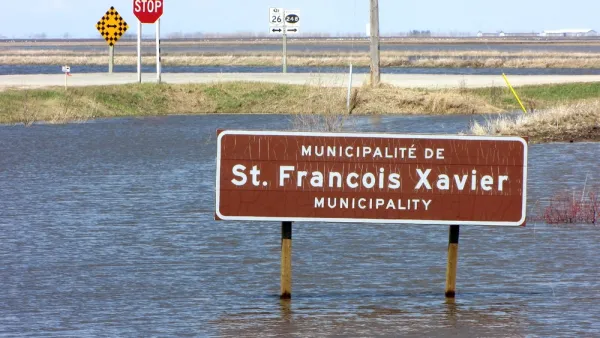
Five Canadian Cities Already Facing Climate Change
The CBC produced an interactive feature about the dangers of climate change in Canada, focusing on five cities threatened by environmental factors like sea-level rise, flooding, and wildfires.

Planetizen Federal Action Tracker
A weekly monitor of how Trump’s orders and actions are impacting planners and planning in America.

‘Going backwards:’ Baltimore mayor, students rally against state's transit funding plan
Maryland's proposed six-year plan provides no funding for Baltimore’s BMORE bus program and reduces its road maintenance funding.

Detroit to transform waterfront with $2.2 billion investment
Developers will convert about 18 acres of unused parking lot space into civic spaces.

Newsom vetoes high-speed rail supervision bill after agency receives condemnatory audit
The audit found the CHSRA approved almost $600,000 in unallowable travel expenses.

Nation sees first electric plane-boat hybrid take off in public demo
The Viceroy Seaglider can fly at speeds of 180mph for up to 180 miles.

One of nation’s poorest counties to receive $6 billion data center
The developers estimate the project will create 200 permanent jobs and 1,000 temporary construction jobs.

FREE Course: Walkable City 1: Why Walkability?
After describing his path towards focusing on walkability as the essence of good planning, Jeff Speck marches through his five principal reasons for making more walkable places.
Reinventing Malls: Planning Alchemy—Turning Gray Fields Into Gold
The course focuses on the opportunities and imperatives that shape reinvention of mall sites.

City of Thousand Oaks
City of Wisconsin Rapids
Harvard University Graduate School of Design
The Architects Foundation
University of Cincinnati Online
Northern Illinois Transit Authority (NITA)
The Pocatello Development Authority
The Urban Renewal Agency of the City of Pocatello