Might a recent agreement to fund water projects pave the way for more transportation spending? That's what positive signals out of Washington seem to indicate. Just one small obstacle stands in the way: how to finance road and bridge projects.


"In a Congress bitterly divided over budget and health policy, some lawmakers are optimistic that infrastructure funding could offer a small patch of common ground," reports Kristina Peterson. "Even lawmakers with clashing ideas over the appropriate size of the federal government have agreed recently that it has a role to play in building and maintaining the nation's roads, bridges and ports."
The next phase of sequestration cuts, which are set to take effect in January, may provide the impetus for finding common ground. "A bipartisan agreement that more spending is needed on infrastructure projects might give both parties an incentive to ease the sequester cuts," writes Peterson.
How would the government fund such improvements as the Highway Trust Fund nears insolvency? That's were agreement breaks down.
FULL STORY: Push for Transportation Funding Gains Steam

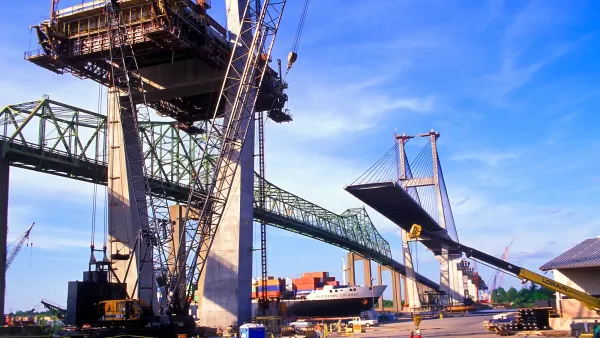
Five reasons infrastructure costs are spiking
State DOTs face a $86 billion shortfall over the next 10 years.
Cities After President Trump
Urbanists consider what the administration of President-elect, Donald Trump, will mean for cities.
Analysis: What does America want from surface transportation reauthorization?
Over 13,000 comments were submitted in the federal Request for Information on surface transportation reauthorization. We analyzed all of them.

Planetizen Federal Action Tracker
A weekly monitor of how Trump’s orders and actions are impacting planners and planning in America.

The state-sanctioned urbicide of Austin
People don’t kill cities. Freeways do.

US to reduce Colorado River water deliveries to Mexico
A new Colorado Treaty amendment reduces Mexico’s Colorado River water allocation by 250,000 acre feet.

5 New England states march closer to 800 megawatt wind energy project
Securing federal approval for the project may be complicated under the Trump administration, which has historically been hostile towards domestic wind power.

Baltimore to break ground on $50 million Transit Priority Project
The project will bring faster bus trips, safer streets and better bike connections to Baltimore.

Airbnb launches $250 million 'last-dollar financing' housing accelerator, makes first investment in Austin
The company will put $6.4 million towards affordable housing development in Texas’ capital.

FREE Course: Walkable City 1: Why Walkability?
After describing his path towards focusing on walkability as the essence of good planning, Jeff Speck marches through his five principal reasons for making more walkable places.
Reinventing Malls: Planning Alchemy—Turning Gray Fields Into Gold
The course focuses on the opportunities and imperatives that shape reinvention of mall sites.

Eagle County Government
Harvard University Graduate School of Design
Nashville Planning Department
The Architects Foundation
University of Cincinnati Online
The Pocatello Development Authority
The Urban Renewal Agency of the City of Pocatello
Journal of the American Planning Association