A new study observes the growing economic and income divide’s impact on America’s neighborhoods. Researchers have found the proportion of Americans living in 'middle class' neighborhoods declining, while 'rich' and 'poor' neighborhoods are growing.


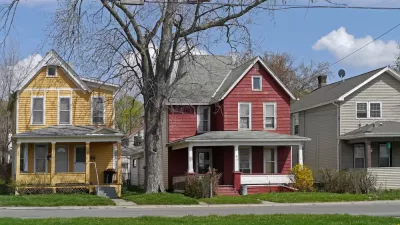
“[The] growing physical separation of the rich and poor is hastening the decline of middle-class neighborhoods," writes Maxwell Strachan "and could make income inequality even worse.”
A recent study by Kendra Bischoff of Cornell University and Sean F. Reardon of Stanford University warns that "the ‘segregation of families by socioeconomic status’ -- i.e., the rich living among the rich and the poor living among the poor -- has increased at a rapid clip in recent decades," continues Strachan.
“The growing divide has been especially striking in the country’s black and Hispanic communities, where the rich and poor of each racial group are dividing from one another at a pace far quicker than in the white community.”
Read the full story: Dying Middle-Class Neighborhoods Being Replaced By A Segregated Society: Study

The Story Behind Stanford's Withdrawl from NYC Tech Campus Competition
Did it seem odd when Stanford University withdrew from a competition to build a new $2 billion Applied Sciences and Engineering campus in New York City just as officials were about to decide the winner, and Stanford was the perceived front-runner?
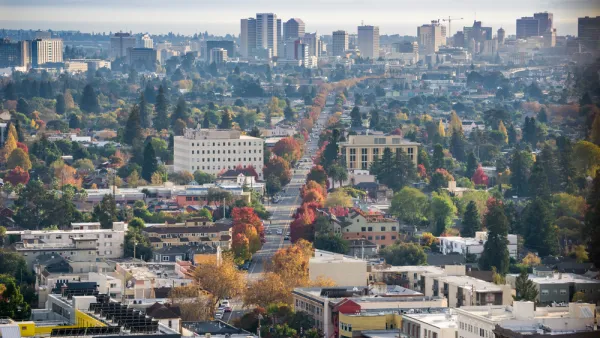
California Exodus: Population Drops Below 39 Million
Never mind the 40 million that demographers predicted the Golden State would reach by 2018. The state's population dipped below 39 million to 38.965 million last July, according to Census data released in March, the lowest since 2015.
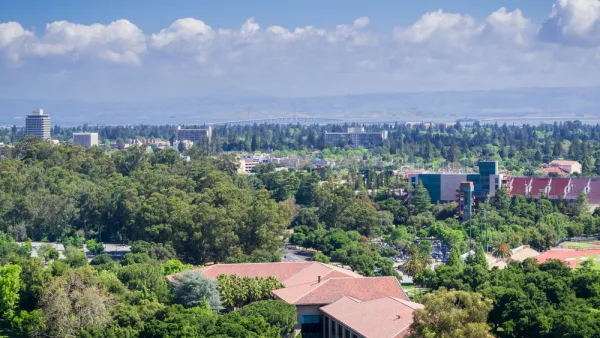
Stopping Climate Change Requires Doing, Not Studying
A $1.1 billion donation to Stanford seeks to mitigate climate change. As impressive as that gesture is, the real solutions to climate change lie in hearts and minds around the world—and not in Palo Alto, California.

Planetizen Federal Action Tracker
A weekly monitor of how Trump’s orders and actions are impacting planners and planning in America.

‘Going backwards:’ Baltimore mayor, students rally against state's transit funding plan
Maryland's proposed six-year plan provides no funding for Baltimore’s BMORE bus program and reduces its road maintenance funding.

Detroit to transform waterfront with $2.2 billion investment
Developers will convert about 18 acres of unused parking lot space into civic spaces.

U.S.-Iran war may have ‘devastating’ impact on cost to warm homes
Vermont and Maine residents may see a 76% increase in the cost of warming their homes this winter.

Senate bill would ‘overhaul’ environmental permitting laws
Under the proposed act, government agencies would also not be able to suspend or rescind permits after granting them.

Exemption applications for NYC’s pied-à-terre tax see 55% success rate
The city sent nearly 40% of its initial pied-à-terre tax warnings erroneously.

FREE Course: Walkable City 1: Why Walkability?
After describing his path towards focusing on walkability as the essence of good planning, Jeff Speck marches through his five principal reasons for making more walkable places.
Reinventing Malls: Planning Alchemy—Turning Gray Fields Into Gold
The course focuses on the opportunities and imperatives that shape reinvention of mall sites.

One Hundred Miles
County of Mendocino
planning NEXT
The Architects Foundation
University of Cincinnati Online
Montrose County
Northern Illinois Transit Authority (NITA)
The Pocatello Development Authority