Income Disparity
Twin Cities Metro Area Stands to Gain by Addressing Racial Disparities
While the Twin Cities area continues to rank highly among U.S. metro areas for impressive employment and homeownership rates and low poverty rate, it also has the nation’s largest disparities.

The False Choice in the Gentrification Debate
The income of original residents is more important to the gentrification debate than any opposition to luxury development or price controls. We need to begin to embed income inequality within the gentrification debate.
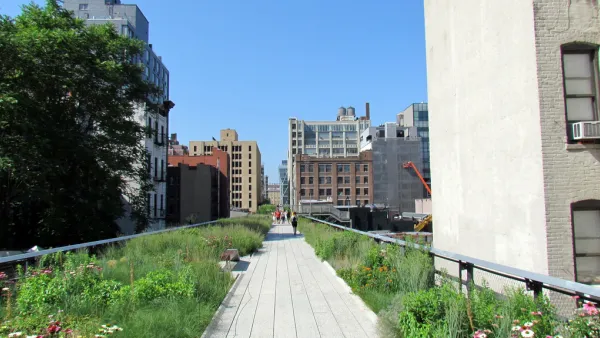
The High Line as Symbol of 'Severe Economic Inequality'
A recent article in Salon cites the High Line as perhaps the most conspicuous example of how municipal governments are subsidizing wealthy corporate or private interests while many citizens continue to suffer low wages and benefits.

A Tale of Two Chicagos
Acknowledging that many neighborhoods in Chicago have seen dramatic improvements in livability and income levels, one writer could still identify two Chicagos: “Global Chicago” and “Rust Belt Chicago.”
Life in the Bubble: D.C. Area Becomes "A Megalopolis of Eggheads"
Washington D.C.'s suburbs, where so-called "super zips" of highly educated and highly paid households abound, have become an extreme example of the growing physical segregation of American metros into areas of poverty and affluence.
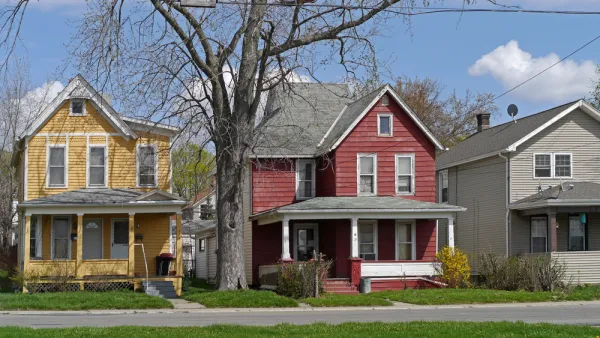
The Decline and Disappearance of the Middle Class Neighborhood
A new study observes the growing economic and income divide’s impact on America’s neighborhoods. Researchers have found the proportion of Americans living in 'middle class' neighborhoods declining, while 'rich' and 'poor' neighborhoods are growing.
Chief Chinese Economist Calls For "Two-Child" Policy
China's slowing economy has prompted calls from economists to reconsider the "one-child" policy that has contributed to a shrinking labor pool. It's annual population growth rate was .57% for 2000-2010. By comparison, the U.S. rate was .97%

FREE Course: Walkable City 1: Why Walkability?
After describing his path towards focusing on walkability as the essence of good planning, Jeff Speck marches through his five principal reasons for making more walkable places.
Reinventing Malls: Planning Alchemy—Turning Gray Fields Into Gold
The course focuses on the opportunities and imperatives that shape reinvention of mall sites.

City of Charlotte
City of Rosemead
Rutgers University, Edward J. Bloustein School of Planning and Public Policy
University of Michigan School for Environment and Sustainability (SEAS)
Hunter College, City University of New York (CUNY)
The Architects Foundation
University District Partnership









