As L.A.'s iconic Walt Disney Concert Hall celebrates its tenth anniversary, Sam Lubell ponders how its shimmering stainless steel skin reflects the city's approach to architecture and urban design.


"In October Frank Gehry’s Disney Hall turns 10, and it’s an exciting anniversary," writes Lubell. "The dazzling building has become an international icon for the city, and for its revitalized downtown . . . . But in many ways it represents what’s still wrong with LA’s approach to building and planning."
The tourists from around the world that come to the Hall daily for its free tours "are greeted with hot sun, glare, and a rather unfriendly grand stair," laments Lubell. "And the hall stands on a street that to this day does not welcome pedestrians."
"In celebrating this anniversary we need to embrace the kind of architectural innovation that Disney Hall represents, but demand equal urban innovation around it," he asserts. "In the next decade we need to ensure that world-class buildings continue to go up. But also that world-class urban life goes up around them."
Read the full story: DISNEY HALL AND THE CHARACTER OF LA

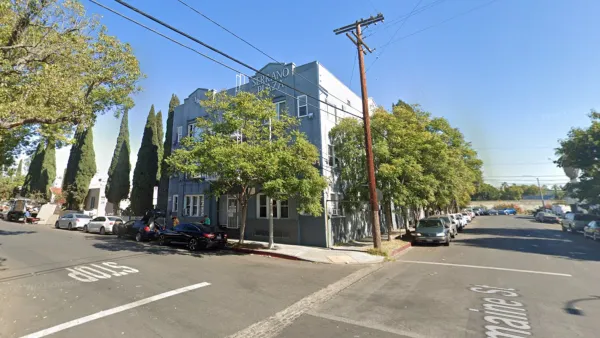
DIY Crosswalks Appear in Hollywood
A group claiming the city of Los Angeles fails to protect pedestrians is taking action on their own, painting a set of crosswalks at a busy residential intersection.

Draft Los Angeles River Master Plan Revealed
A new draft Los Angeles Master Plan, created by Frank Gehry's firm, lays out a more active, natural vision for the river, in addition to addressing concerns about displacement in communities along the river corridor.
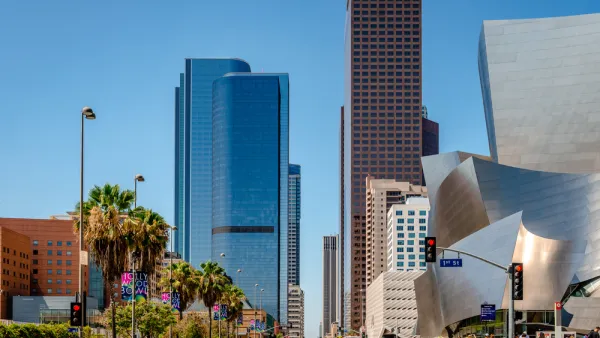
Gehry's Latest Downtown L.A. Project Rises While Workers Stay Home
A high-profile project in the heart of the cultural and civic center of Downtown Los Angeles is rising quickly, and practically in secret, as the area's daytime population stays home during the pandemic.

Planetizen Federal Action Tracker
A weekly monitor of how Trump’s orders and actions are impacting planners and planning in America.

‘Going backwards:’ Baltimore mayor, students rally against state's transit funding plan
Maryland's proposed six-year plan provides no funding for Baltimore’s BMORE bus program and reduces its road maintenance funding.

Detroit to transform waterfront with $2.2 billion investment
Developers will convert about 18 acres of unused parking lot space into civic spaces.

U.S.-Iran war may have ‘devastating’ impact on cost to warm homes
Vermont and Maine residents may see a 76% increase in the cost of warming their homes this winter.

Senate bill would ‘overhaul’ environmental permitting laws
Under the proposed act, government agencies would also not be able to suspend or rescind permits after granting them.

Exemption applications for NYC’s pied-à-terre tax see 55% success rate
The city sent nearly 40% of its initial pied-à-terre tax warnings erroneously.

FREE Course: Walkable City 1: Why Walkability?
After describing his path towards focusing on walkability as the essence of good planning, Jeff Speck marches through his five principal reasons for making more walkable places.
Reinventing Malls: Planning Alchemy—Turning Gray Fields Into Gold
The course focuses on the opportunities and imperatives that shape reinvention of mall sites.

One Hundred Miles
County of Mendocino
planning NEXT
The Architects Foundation
University of Cincinnati Online
Montrose County
Northern Illinois Transit Authority (NITA)
The Pocatello Development Authority