A high-profile project in the heart of the cultural and civic center of Downtown Los Angeles is rising quickly, and practically in secret, as the area's daytime population stays home during the pandemic.


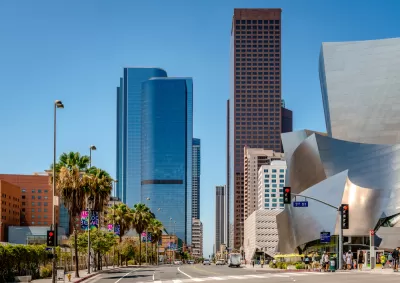
Roger Vincent reports on a long-awaited, game-changing development in Downtown Los Angeles, designed by Frank Gerhy and proceeding with construction at pace throughout the pandemic with high hopes for a recovery.
While the COVID-19 pandemic forces Americans to avoid each other and challenges the desirability of offices, museums and other shared institutions, the builders of a $1-billion project in downtown Los Angeles are betting that the city will revive and people will come together again in large numbers.
The project has stopped and started again numerous times since before the Great Recession, but unlike the last time around, it doesn't appear that the current economic downturn will derail progress on the project. Scheduled for delivery are a "towering collection of apartments, stores, restaurants, movie theaters and a luxury hotel," writes Vincent. Despite the construction occurring "a full city block across Grand Avenue from Gehry’s famed Walt Disney Concert Hall," the pandemic means "few are around to witness its creation."
"So in this uncertain time, the aptly named Grand has turned almost into a stealth project, an audacious potential landmark dreamed up by one of the world’s most famous architects coming together with all the fanfare of a five-story apartment building," writes Vincent.
Vincent notes the current status of construction on the big project, speaking with Gehry by teleconference, who at 91 has not been visiting the construction site. The outlier of the project's construction is also juxtaposed with data about high vacancy rates at hotels and office buildings downtown, shared in detail here by Vincent.
FULL STORY: The $1-billion bet that people will return to downtown L.A. after COVID


Planetizen Federal Action Tracker
A weekly monitor of how Trump’s orders and actions are impacting planners and planning in America.

The state-sanctioned urbicide of Austin
People don’t kill cities. Freeways do.

US to reduce Colorado River water deliveries to Mexico
A new Colorado Treaty amendment reduces Mexico’s Colorado River water allocation by 250,000 acre feet.

5 New England states march closer to 800 megawatt wind energy project
Securing federal approval for the project may be complicated under the Trump administration, which has historically been hostile towards domestic wind power.

Baltimore to break ground on $50 million Transit Priority Project
The project will bring faster bus trips, safer streets and better bike connections to Baltimore.

Airbnb launches $250 million 'last-dollar financing' housing accelerator, makes first investment in Austin
The company will put $6.4 million towards affordable housing development in Texas’ capital.

FREE Course: Walkable City 1: Why Walkability?
After describing his path towards focusing on walkability as the essence of good planning, Jeff Speck marches through his five principal reasons for making more walkable places.
Reinventing Malls: Planning Alchemy—Turning Gray Fields Into Gold
The course focuses on the opportunities and imperatives that shape reinvention of mall sites.

Eagle County Government
Harvard University Graduate School of Design
Nashville Planning Department
The Architects Foundation
University of Cincinnati Online
The Pocatello Development Authority
The Urban Renewal Agency of the City of Pocatello
Journal of the American Planning Association