Advanced remote sensing technologies are providing cities and planners across the United States with new tools to assess urban tree canopy and develop more effective urban reforestation efforts.


"Researchers at the University of Vermont’s Spatial Analysis Lab and the USDA Forest Service’s Northern Research Station are working with cities to leverage existing terrain data gathered using LiDAR (light detection and ranging) technology in order to assess tree canopies," reports Liz McEnaney. "This LiDAR technology allows for an accuracy not provided by aerial and satellite images in which trees are frequently obscured by building shadows."
"These maps are overlaid with census reports, demographics, property records, and other datasets that allow cities and not-for-profits to prioritize tree-planting efforts and tree maintenance plans, but also to understand patterns of environmental justice and to justify budget increases for urban forestry programs."
Read the full story: PLANT BY NUMBERS

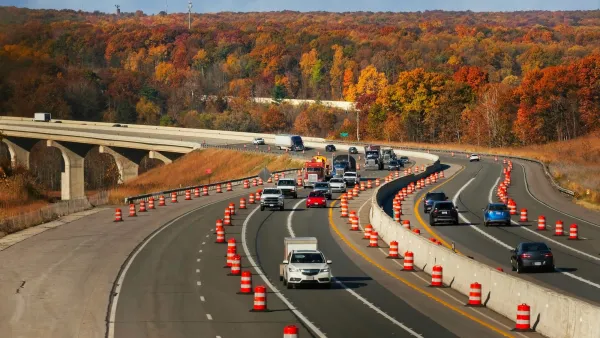
First-of-its-kind Ohio Pilot Used Car Sensors to Report Poor Road Conditions
Honda vehicles equipped with LiDAR and video sensors can flag road deficiencies such as emerging potholes, obstructed signs, and damaged guardrails.

‘Smart Surfaces’ Policy Guide Offers Advice for Building and Maintaining Urban Tree Canopies
Healthy, robust tree canopies can reduce the impacts of extreme heat and improve air quality.

Improving South Los Angeles Through Strategic Tree Planting
The University of Southern California Urban Trees Initiative is planting 250 trees in South L.A. neighborhoods to improve shade, combat climate change, and enhance community well-being through collaboration and data-driven approaches.

Planetizen Federal Action Tracker
A weekly monitor of how Trump’s orders and actions are impacting planners and planning in America.

Amtrak, CN end decades-long dispute with eight-year agreement
The new operating agreement establishes an updated framework for the companies to work together, including processes to resolve disputes.

Northwest rail fans eager for Sept. 30 debut of Amtrak’s Airo fleet
Get ready for that new train smell and more seats. But they won’t go faster or run more frequently on the Cascades route in Washington and Oregon.

Caltrain may slash over one-third of its stations
If Bay Area voters reject two transit tax measures, Caltrain, BART and AC Transit will see steep service cuts.

A 'dangerous' precedent: North Carolina successfully pressures communities into voting for toll roads
Two mayors resigned from the Charlotte Regional Transportation Planning Organization after it voted in favor of the toll roads.

Austin landlords only need to address mold when it covers 25 sqft. A resolution looks to change that
The city manager will propose updates to the city code regarding regulations around mold in May.

FREE Course: Walkable City 1: Why Walkability?
After describing his path towards focusing on walkability as the essence of good planning, Jeff Speck marches through his five principal reasons for making more walkable places.
Reinventing Malls: Planning Alchemy—Turning Gray Fields Into Gold
The course focuses on the opportunities and imperatives that shape reinvention of mall sites.

City of Thousand Oaks
City of Wisconsin Rapids
Harvard University Graduate School of Design
The Architects Foundation
University of Cincinnati Online
The Pocatello Development Authority
The Urban Renewal Agency of the City of Pocatello