What if the great adventurer and geographer John Wesley Powell had his way: That as the western states were brought into the union their shape would be dictated by watershed rather than political boundary? This blog - and map - depict this scenario.


"This story begins with John Wesley Powell, the great one-armed adventurer and geologist. He was made famous for his successful runs through the Colorado River in 1869 and 1872. But perhaps his most important legacy rests in a lesser known deed: Proposing in 1879 that as the western states were brought into the union they be formed around watersheds, rather than arbitrary political boundaries," writes planner John Lavey.
"What if the western states were formed around watershed as Powell envisioned? What would that look like and could we speculate on what that might mean for the functioning of modern communities? And since we’re going down that road, what if all of the American states were based around principal watershed, from coast to coast – something even Powell didn’t consider?"
This piece, which originally appeared on the Community Builders network, examines the implications of such a scenario, and gives readers a view into what the "Watershed States" might look like via a map created by Lavey.
FULL STORY: The United (Watershed) States of America

Watershed States
This post from GOOD points to an old map of the Western U.S. in which state lines are redrawn based on the locations of watersheds.
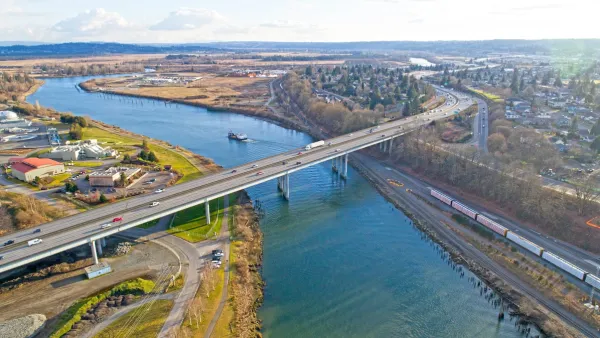
Snohomish River Gains Legal Rights
A new law in one Washington town enshrines the river’s legal right to “exist, regenerate, and flourish.”
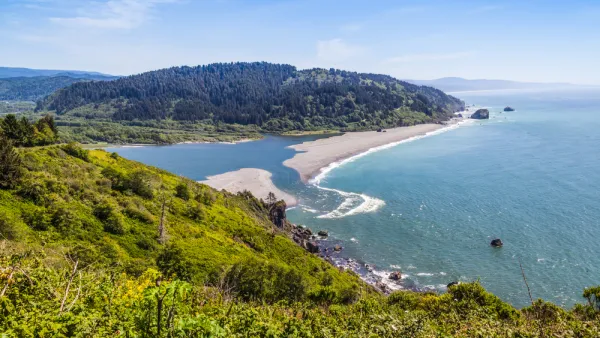
Dams on the Way Out on Two California Rivers
The largest dam removal project in U.S. history is about to commence on the Klamath River. Due to a recent development, a dam on the Eel River is also on expected for decommission.

The state-sanctioned urbicide of Austin
People don’t kill cities. Freeways do.

US to reduce Colorado River water deliveries to Mexico
A new Colorado Treaty amendment reduces Mexico’s Colorado River water allocation by 250,000 acre feet.

New Jersey’s second-largest city bans standalone data centers
Jersey City will continue to allow co-location facilities, such as those meant for research institutions that store their own data.

Amtrak not solely to blame for New Jersey commuter rail's unreliability, report finds
A new study from the Garden State Initiative found that NJ Transit’s budget grew 20% across a 4 year period, but reliability declined significantly over the same period.

EPA erases limits on planet-warming pollution from power plants
Under Monday’s plan, power plants would still have some limits on how much mercury, arsenic and other contaminants they can emit.

Phoenix announces new on-demand transit service, more frequent RAPID buses
Both new services will launch in October, and are part of Phoenix's Project Effective Access Solutions for Easing Congestion.

FREE Course: Walkable City 1: Why Walkability?
After describing his path towards focusing on walkability as the essence of good planning, Jeff Speck marches through his five principal reasons for making more walkable places.
Reinventing Malls: Planning Alchemy—Turning Gray Fields Into Gold
The course focuses on the opportunities and imperatives that shape reinvention of mall sites.

Eagle County Government
Harvard University Graduate School of Design
Nashville Planning Department
The Architects Foundation
University of Cincinnati Online
The Pocatello Development Authority
The Urban Renewal Agency of the City of Pocatello
Journal of the American Planning Association