Its unclear why the "dead cities of Syria" were abandoned by their residents 1500 years ago. But as photographs and a CBS News report attest, these remnants of a prosperous society provide a grim refuge for thousands of Syrians fleeing civil war.


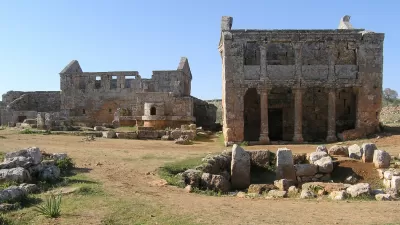
"The names of the cities are numerous: Jaradeh, Jabal Al Zawiya, Telanissos, Bara, Surkania, Dar Qita, Ruweiha, Surkania," writes RJ Evans. "All are silent witness to a civilization now vanished in to the footnotes of history. Their importance was, before the war, somewhat blithely underestimated by modern locals who still picked around them, occasionally planting small olive groves among the ruins.Youths would sometimes climb them as a dare - did you notice the two figures in the photograph above? Now, however, the ruins of this long forgotten civilization are all that protect many from the often ferocious shelling this area experiences."
Below is a CBS News report on the reuse of the ruins.
Read the full story: The Dead Cities of Syria: Ancient Abandoned Cities Now Repopulated by Refugees

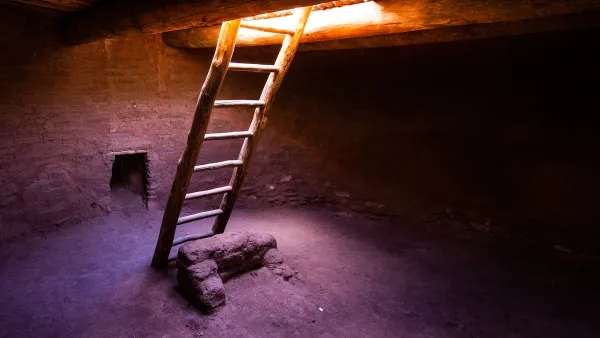
The Meaning of Ruins on the Landscape
In the latest in a far ranging series of interest to planners—centered on contrasts between urban and natural environments—Chuck Wolfe speculates about the role of ruins in urban and natural environments.
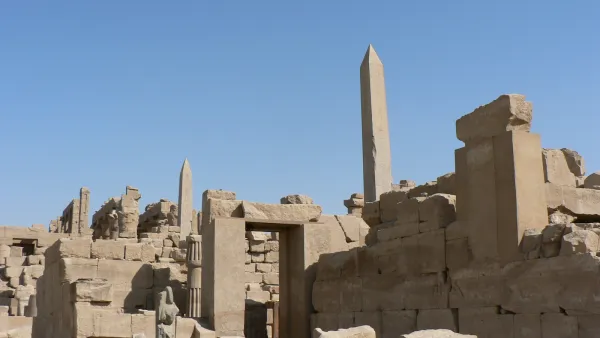
A Lost Ancient City Is Unearthed in Egypt
The newly unearthed "golden city" sheds light on everyday life at the height of ancient Egypt's power.
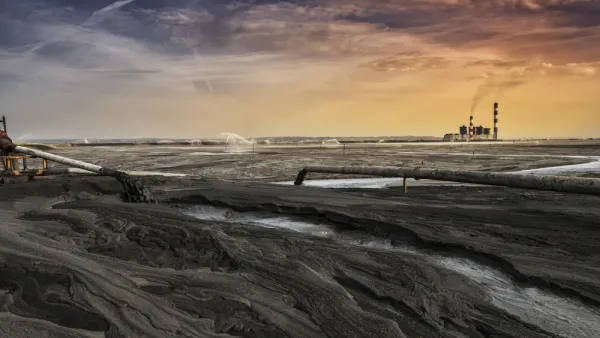
And Then There Was One
Donald Trump ran on an "America First" platform for president. The latest news from the climate talks in Bonn, Germany, though, shows that it is now "America Alone" in terms of nations who haven't adopted the Paris climate agreement.

Planetizen Federal Action Tracker
A weekly monitor of how Trump’s orders and actions are impacting planners and planning in America.

Chicago breaks ground on $3 billion megadevelopment
The new neighborhood, titled Foundry Park, will one day host 3,700 residences.

This MA town is drowning in its own sewage — and residents like it that way
Susan Murcott, a waste water expert, said if Carlisle didn't address their leaking sewage, the problem could turn “deadly.”

Amtrak cuts ribbon on Seattle Airo maintenance facility
The $250 million, nearly 100,000-square-foot building can house an entire Cascades Airo trainset.

To power data centers, Google seeks autonomous control of thousands of homes’ electricity
The tech company has signed a deal to indirectly pay Mid-Atlantic residents to reduce their power demand when the grid is strained.

From robotaxis to robotrains: LA, DC weigh driverless transit
If approved, the projects will take years to implement and face financial and technical hurdles.

FREE Course: Walkable City 1: Why Walkability?
After describing his path towards focusing on walkability as the essence of good planning, Jeff Speck marches through his five principal reasons for making more walkable places.
Reinventing Malls: Planning Alchemy—Turning Gray Fields Into Gold
The course focuses on the opportunities and imperatives that shape reinvention of mall sites.

City of Rosemead
Rutgers University, Edward J. Bloustein School of Planning and Public Policy
One Hundred Miles
The Architects Foundation
University of Cincinnati Online
Montrose County
The Pocatello Development Authority
The Urban Renewal Agency of the City of Pocatello