In the eight years since Hurricane Katrina, the Gulf Coast states have made great strides in adopting new visions for their cities and towns. A new report outlines the recovery's progress, pointing to successes in housing and transportation.


Federal, state, and local authorities' response to the needs of the Gulf Coast have resulted unexpected improvements, particularly in housing, explains Michael Newsom:
"The Katrina cottage, developed as an alternative to FEMA trailers, was also an overall success, [Former Biloxi, Mississippi Mayor Gerald] Blessey said. About 2,400 of the cottages, which came from ideas in the report, were permanently placed."
"'At first, (the cottages) were supposed to be temporary,' Blessey said. 'So many people liked it. Staying on their own lots made a lot of difference, especially to elderly people, disabled people. We were able to successfully convince all the jurisdictions to change their rules to allow them to become permanently placed.'"
"'We have about 1,000 more public housing units than we had pre-Katrina,' he said. 'That program for low, low income people was a godsend …. There's always a need for public housing and we had a need before Katrina, but the fact that we increased it by about 1,000 is really a credit to the local officials and the local housing authorities.'"
Additionally, in rebuilding transportation infrastructure has allowed the states to make improvements that they otherwise would not have. For example, two major bridges were rebuilt with biking and walking paths.
Read the full story: Eight years after Hurricane Katrina, many South Mississippi recovery visions, plans realized

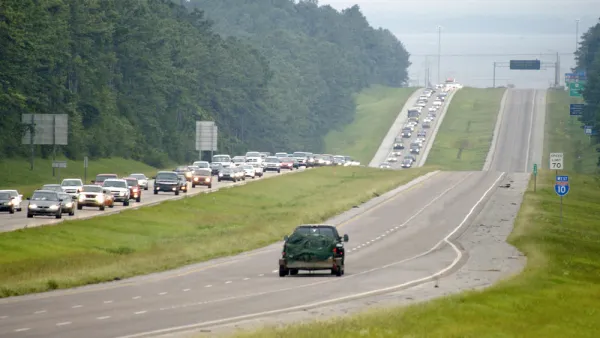
What We Didn't Learn From Katrina
Cities are immensely complex self-organizing systems, not mere top-down designs—but they do need top-down interventions in strategic places. Unfortunately, we still have inadequate models and tools.
New Orleans Transit Service Not Keeping Pace with Recovery
A pair of articles in the Times-Picayune, along with a new study from advocacy group Ride New Orleans, finds the transit system in New Orleans doing less with more.
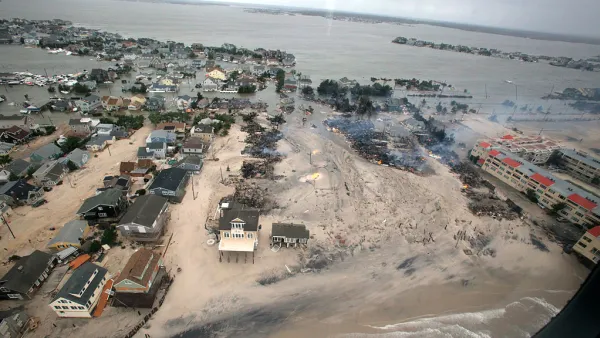
The Era of “When, Not If,” Compels a New Approach to Waterfront Development
On the anniversary of Hurricane Sandy, ULI offers guidance on post-disaster rebuilding and building in anticipation of future disasters in a way that helps preserve the environment, boost economic prosperity, and foster a high quality of life.

Planetizen Federal Action Tracker
A weekly monitor of how Trump’s orders and actions are impacting planners and planning in America.

Amtrak, CN end decades-long dispute with eight-year agreement
The new operating agreement establishes an updated framework for the companies to work together, including processes to resolve disputes.

Judges permit Denver to divert 77,000 acre feet from the Colorado River for reservoir expansion
Overuse and climate change have caused the Colorado River’s water levels to plummet.

NYC DOT wants faster, more permanent street upgrades
The city is examining ways to build more concrete infrastructure without getting entangled in 'decades-long' projects.

'Something we’ve never seen before:' rising utility rates could strain city finances nationwide
Data centers, climate change and other factors have caused utility rates in the United States to increase by 38% since 2020.

Trump to overrule local leaders, lease millions of acres of America’s Pacific Island territories’ seafloors to mining companies
International law says that the Indigenous people of America’s territories have a right to prior and informed consent regarding projects that impact their countries.

FREE Course: Walkable City 1: Why Walkability?
After describing his path towards focusing on walkability as the essence of good planning, Jeff Speck marches through his five principal reasons for making more walkable places.
Reinventing Malls: Planning Alchemy—Turning Gray Fields Into Gold
The course focuses on the opportunities and imperatives that shape reinvention of mall sites.

Harvard University Graduate School of Design
KFH Group Inc.
Greater Baltimore Committee
The Architects Foundation
University of Cincinnati Online
The Pocatello Development Authority
The Urban Renewal Agency of the City of Pocatello