By a 13-2 vote, the Los Angeles City Council lifted an unevenly applied decade-long ban on public murals on Wednesday, ending a dark period for a city that had long celebrated its social and cultural identity on public walls.


"The new rules, which must come back for an expected final approval next week, will permit new murals in business and industrial zones as long as artists register projects with the city and pay a $60 application fee," reports Catherine Saillant. "Commercial messages are prohibited and works must remain for at least two years as part of the city effort to control advertising."
"The decision culminates years of debate over how Los Angeles should regulate murals, which have chronicled generations of the city's history, from the mid-20th century struggles of Latinos on the Eastside to freeway displays celebrating the 1984 Los Angeles Olympics," she notes.
"'Murals are part and parcel of the social and cultural and historic fabric of the city,'' said Councilman Gil Cedillo, who represents mural-rich areas of the Eastside. 'We should recognize that.'"
Read the full story: Council lifts ban on public murals

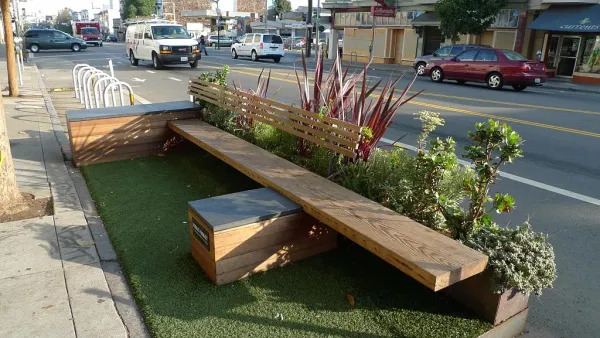
West Hollywood Pilots Pop-Up Walkability Improvements
Six-month pilot projects along the Sunset Strip include a parklet and painted sidewalk extensions by a street artist.
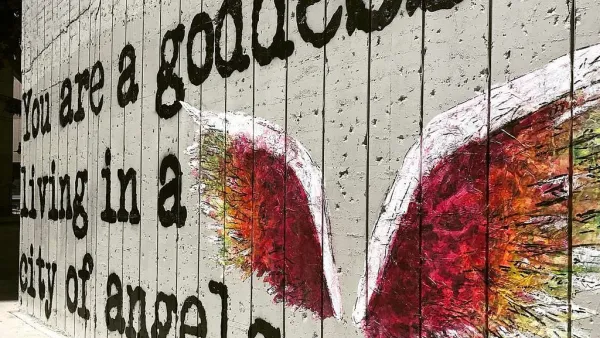
The Rise of Corporate Murals in LA
Downtown Los Angeles, styled DTLA by its new enthusiasts, has long been a site for street art and murals of dubious legality. Now, developers are paying artists to paint them.
Efforts Proceed to Make Los Angeles a Mural Center Once Again
An update on efforts by the City of Los Angeles to develop a new ordinance to allow artists to legally paint on the walls of private property.

Planetizen Federal Action Tracker
A weekly monitor of how Trump’s orders and actions are impacting planners and planning in America.

Amtrak, CN end decades-long dispute with eight-year agreement
The new operating agreement establishes an updated framework for the companies to work together, including processes to resolve disputes.

Judges permit Denver to divert 77,000 acre feet from the Colorado River for reservoir expansion
Overuse and climate change have caused the Colorado River’s water levels to plummet.

Atlanta City Council unanimously backs $3.5 billion Beltline light rail project
The resolution was drafted after Atlanta Mayor Andre Dickens pulled support for the Atlanta Streetcar extension last year.

SEPTA to bring nearby frequent transit to over 1 million new riders as part of decade-long plan
The agency's Accelerate plan will also bring frequent transit to twice the amount of jobs that are currently located near it.

NYC plants over 18,000 trees, the most new foliage in a decade
Many of the trees were planted in communities vulnerable to extreme heat.

FREE Course: Walkable City 1: Why Walkability?
After describing his path towards focusing on walkability as the essence of good planning, Jeff Speck marches through his five principal reasons for making more walkable places.
Reinventing Malls: Planning Alchemy—Turning Gray Fields Into Gold
The course focuses on the opportunities and imperatives that shape reinvention of mall sites.

City of Thousand Oaks
City of Wisconsin Rapids
Harvard University Graduate School of Design
The Architects Foundation
University of Cincinnati Online
The Pocatello Development Authority
The Urban Renewal Agency of the City of Pocatello