By 2050, scientists believe that flooding could inflict $1 trillion in annual loses globally, up from $6 billion per year today. The United States and China are well represented in a list of the 20 cities facing the highest annual flood costs.


A new study appearing in Nature Climate Change quantifies the damage that rising seas and increasing coastal development could inflict on the world's coastal cities, reports Brad Plumer. The cities that will be hit the hardest as a percentage of their GDP include New Orleans and Guangzhou, China, as well as several cities in developing countries.
The $1 trillion estimate is based on an assumption cities will proceed with business as usual. However, there are ways that cities can mitigate the damage that will be done.
"By contrast, if coastal cities worked to bolster their defenses — from levees to pumps to movable barriers — and improved flood monitoring, then the average annual losses go down to $63 billion per year. That’s still a big increase, but it’s not nearly as steep. (That said, the authors estimate those defenses could cost around $50 billion per year between now and 2050.)," explains Plumer.
Read the full story: These 20 cities have the most to lose from rising sea levels

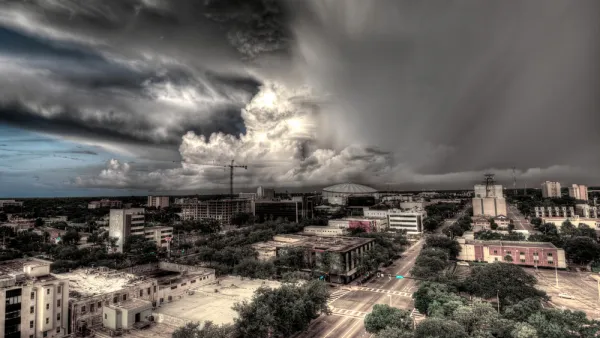
Tampa Bay Isn't Prepared for the Hurricanes of the Future
The area is especially vulnerable to storm surge, and increased development means more people are at risk when major hurricanes push through.
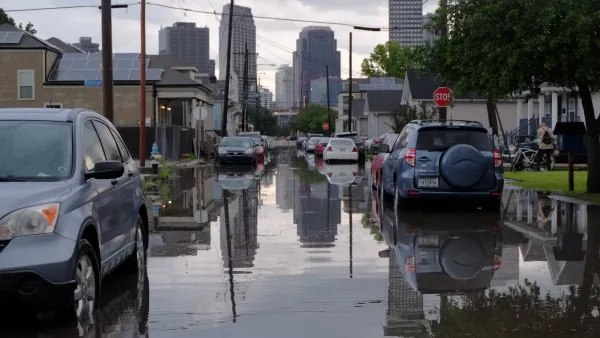
Study: New Orleans sea level rise is at 'point of no return'
Research shows that the city could be surrounded by water by the end of this century.
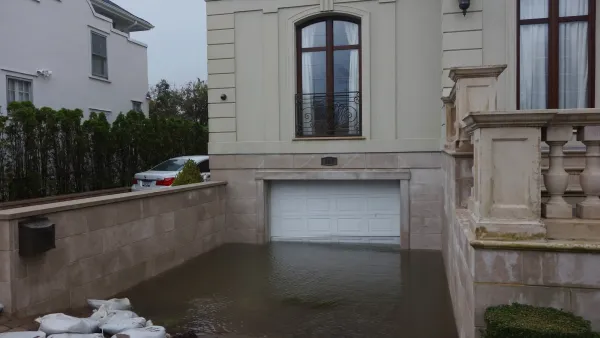
Over 500 NYC ‘Blue Zones’ at Risk of More Destructive Floods
High-risk flood zones cover roughly 20% of the city’s land.

Planetizen Federal Action Tracker
A weekly monitor of how Trump’s orders and actions are impacting planners and planning in America.

Amtrak, CN end decades-long dispute with eight-year agreement
The new operating agreement establishes an updated framework for the companies to work together, including processes to resolve disputes.

Northwest rail fans eager for Sept. 30 debut of Amtrak’s Airo fleet
Get ready for that new train smell and more seats. But they won’t go faster or run more frequently on the Cascades route in Washington and Oregon.

Record-breaking wildlife overpass in Colorado brings 91% reduction in animal collisions
Prior to the overpass, vehicles were hitting one deer per day on Colorado’s Interstate 25.

California lawmakers approve just 5% of much-needed LA28 transportation funding
State legislators appear just as unwilling as Trump to pay for Olympics-related transportation projects.

MTA looks to bring AI-assisted, multilingual announcement system to subways
Some of the transit agency’s audio systems haven’t been upgraded in 40 years.

FREE Course: Walkable City 1: Why Walkability?
After describing his path towards focusing on walkability as the essence of good planning, Jeff Speck marches through his five principal reasons for making more walkable places.
Reinventing Malls: Planning Alchemy—Turning Gray Fields Into Gold
The course focuses on the opportunities and imperatives that shape reinvention of mall sites.

City of Thousand Oaks
City of Wisconsin Rapids
Harvard University Graduate School of Design
The Architects Foundation
University of Cincinnati Online
The Pocatello Development Authority
The Urban Renewal Agency of the City of Pocatello