A preview of the next major United Nations climate change report is taking a stronger stance on the role of humans in causing global warming and predicting a possible sea level rise that would endanger cities such as London, New York, and Shanghai.


"An international team of scientists has found with near certainty that human activity is the cause of most of the temperature increases of recent decades, and warns that sea levels could rise by more than three feet by the end of the century if emissions continue at a runaway pace," reports Justin Gillis.
"The scientists, whose findings are reported in a summary of the next big United Nations climate report, largely dismiss a recent slowdown in the pace of warming, which is often cited by climate change contrarians, as probably related to short-term factors. The report emphasizes that the basic facts giving rise to global alarm about future climate change are more established than ever, and it reiterates that the consequences of runaway emissions are likely to be profound."
"The new document is not final and will not become so until an intensive, closed-door negotiating session among scientists and government leaders in Stockholm in late September," notes Gillis. "But if the past is any guide, most of the core findings of the document will survive that final review."
Read the full story: Sea Level Could Rise 3 Feet by 2100, Climate Panel Finds
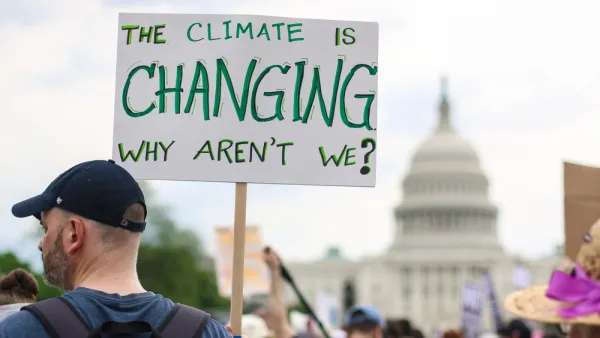
How Cities Can Curb Climate Change and Protect Vulnerable Residents
A new U.N. report urges cities to upgrade their infrastructure to bolster climate resilience and build more sustainable, climate-friendly places.
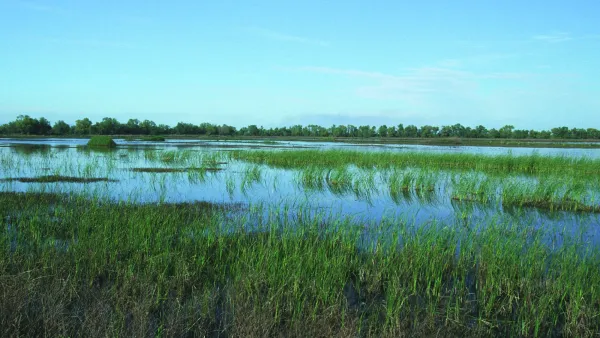
Bay Area Developments at Risk From Sea Level Rise
A controversial proposed housing development in Newark exemplifies the struggle between increasing housing supply and protecting vulnerable shoreline communities from flooding.
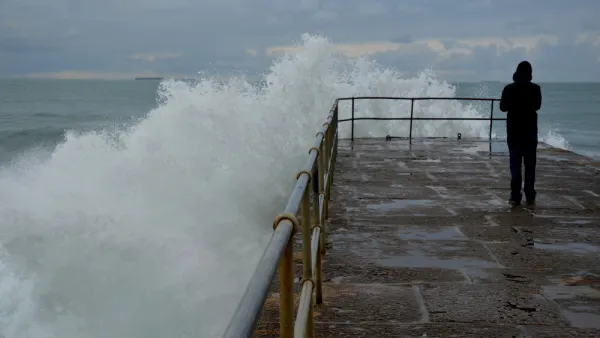
Visualizing the Effects of Sea Level Rise on U.S. Cities
A report from Climate Central calls for urgent action, illustrating the potential devastating impact of even a small rise in global temperature on the coastline of major cities.

Desperate measures: Advocates weigh draining Lake Powell to fill Colorado River
Draining the reservoir could reduce evaporation losses by a couple hundred thousand acre-feet.

Eastern Nebraska is running out of electricity
Data centers and electrification are straining eastern Nebraska’s grid, throttling economic development.

Malls are becoming the midtowns of the future
Mall and office park redevelopments are a generational opportunity to create new nodes of urbanity.

NYC breaks ground on anti-flooding infrastructure project
New York City's new system will reduce stormwater flows to local sewers by 90%.

One Kentucky town’s secret to affordable housing
The Smoketown Community Land Trust has already built seven affordable homes for community members.

Houston gains petal-shaped cooling infrastructure to make streets more ‘delightful’
The city has installed the pavilions along 15 blocks in Houston.

FREE Course: Walkable City 1: Why Walkability?
After describing his path towards focusing on walkability as the essence of good planning, Jeff Speck marches through his five principal reasons for making more walkable places.
Reinventing Malls: Planning Alchemy—Turning Gray Fields Into Gold
The course focuses on the opportunities and imperatives that shape reinvention of mall sites.

City of Rosemead
Rutgers University, Edward J. Bloustein School of Planning and Public Policy
One Hundred Miles
University of Michigan School for Environment and Sustainability (SEAS)
Hunter College, City University of New York (CUNY)
The Architects Foundation
City of Cambridge
Montrose County
The Pocatello Development Authority