With New Yorkers, and foreigners of means, increasingly smitten with the views afforded by the city's sprouting luxury residential towers, developers and brokers have found a novel way to sell lower-floor spaces - as 'mansions'.


"With the recession emphatically in the rearview mirror of the very wealthy, the mansion lifestyle is back in vogue," writes Robin Finn.
"By sleight of description, developers and brokerages are marketing as mansions enormous and extravagant lower-floor spaces inside — or in a few cases alongside — top-shelf condo conversions. This is because, according to them, using words like 'maisonette' or 'town house' would unfairly diminish the product in the eye of the buyer/beholder."
"Also, according to the purveyors, the newfangled concept is superior to the traditional version precisely because, along with all that newness and potential for customization, it offers an option the old-timers can’t: an embarrassment of 24/7 white-glove amenities, security and service," he continues.
“Maybe,” said Pamela Liebman, the chief executive of the Corcoran Group, “this is New York City’s version of the McMansion, a grand multilevel space that is fully amenitized. This is a way to differentiate a product that hasn’t been offered in the past: but whatever it’s called, it still has to deliver.”
Read the full story: Call Me ‘Mansion’
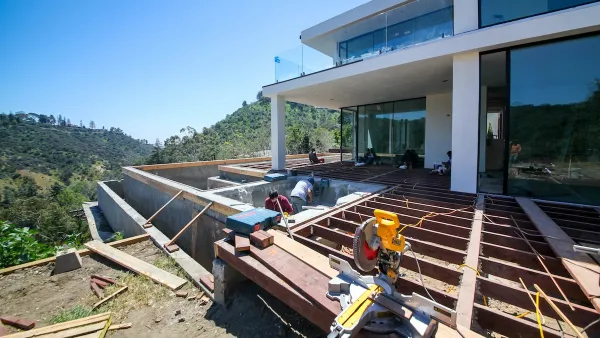
Instead of building new housing, LA developers are turning mansions into mega-mansions
In the richest areas, the number of houses valued at $30 million with demolition permits has skyrocketed since 2018.
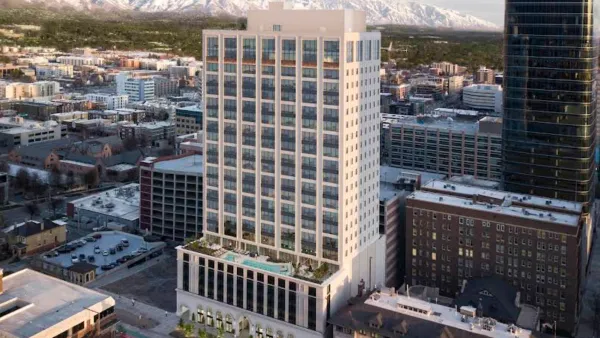
1960s Salt Lake City Tower Transformed Into 217 Luxury Housing Units
The new Seraph building may herald a new era of adaptive reuse in downtown Salt Lake City.
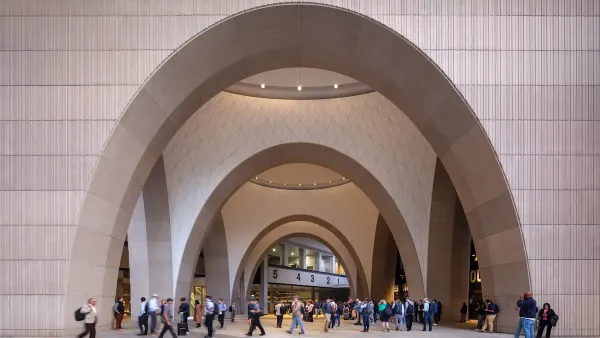
Boston Train Station Gets ‘Stunning’ Makeover
The historic South Station got some much-needed upgrades as part of a massive redevelopment project that will bring luxury condos and offices to the neighborhood.

Planetizen Federal Action Tracker
A weekly monitor of how Trump’s orders and actions are impacting planners and planning in America.

Eastern Nebraska is running out of electricity
Data centers and electrification are straining eastern Nebraska’s grid, throttling economic development.

Study reveals best places in the U.S. for cycling, walking
New research from Streetlight Data examines bicycle and pedestrian miles per capita in the 100 largest U.S. cities by population.

Instead of building new housing, LA developers are turning mansions into mega-mansions
In the richest areas, the number of houses valued at $30 million with demolition permits has skyrocketed since 2018.

Illinois considers spending $1 billion in taxpayer money on data center
A quantum computing campus and data center are currently under construction in Chicago.

As development costs rise, Boston moves to lessen affordable housing requirements
The Boston Zoning Commission and the City Council still need to approve Boston Mayor Michelle Wu’s proposed changes

FREE Course: Walkable City 1: Why Walkability?
After describing his path towards focusing on walkability as the essence of good planning, Jeff Speck marches through his five principal reasons for making more walkable places.
Reinventing Malls: Planning Alchemy—Turning Gray Fields Into Gold
The course focuses on the opportunities and imperatives that shape reinvention of mall sites.

City of Charlotte
City of Rosemead
Rutgers University, Edward J. Bloustein School of Planning and Public Policy
University of Michigan School for Environment and Sustainability (SEAS)
Hunter College, City University of New York (CUNY)
The Architects Foundation
City of Cambridge
The Pocatello Development Authority
The Urban Renewal Agency of the City of Pocatello