Throughout history, cities that built the tallest towers were the newbs and rubes of urbanization, proclaims land use attorney Bill Adams in this light hearted put-down of the architectural race for rarified air.


“'[A]ct like you’ve been there before,' not like a newcomer to the industrialized world," land use attorney Bill Adams challenges new city-state super powers.
"It seems like every place in the world that has been simmering awhile with an inferiority complex rushes to build a super high rise when they get some money. 'That’ll show the world we’re no rubes, no country bumpkins!' they seem to scream."
"In the early part of the last century, it was the U.S., and particularly New York City symbolizing the U.S. throwing off the yolk of a small ex-colony of the British Empire and flexing its new gilded era muscle. . . .On the international scene, the march continued through the latter part of the last century into the new millenium: Kuala Lumpur, Taipei, Dubai, Shanghai, etc. . . ."
"[T]rue urbanism can be traced more to how a city treats its citizens on the street than those that dwell in the air, and arrive and leave by car. . ."
Read the full story: Tall Towers: For Winners or Wannabes?
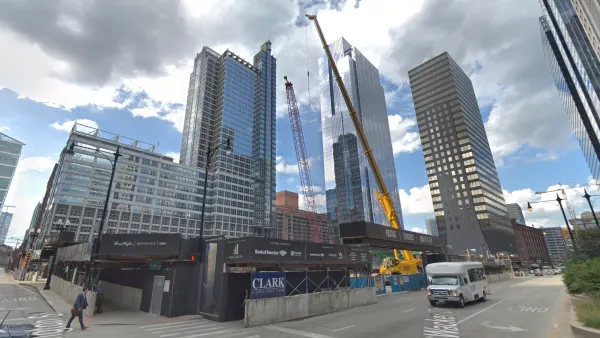
Chicago's Tallest Office Building Since 1990 Cracks the Top 20 Tallest in the City
The Bank of America Tower is the newest skyscraper to line the Chicago River.
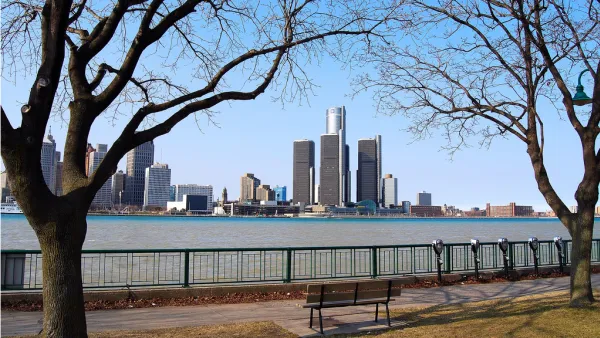
After Changes, New Tower Might Not Be Detroit's Tallest Tower After All
A building under construction at the former site of J.L. Hudson's department store in Detroit will no longer reach 900 feet, as once planned.
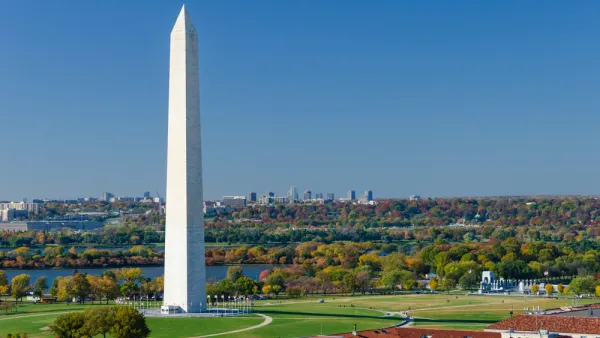
The Sky's the Limit for Washington, D.C.-Area High Rises
With a new high-rise under construction and even taller high-rise working its way through planning approvals, the Washington, D.C. area's building envelope is reaching new heights.

Planetizen Federal Action Tracker
A weekly monitor of how Trump’s orders and actions are impacting planners and planning in America.

Washington state to charge fee to drivers with fuel-efficient cars
Revenue from the fee will go towards supporting the state’s highways.

Study reveals best places in the U.S. for cycling, walking
New research from Streetlight Data examines bicycle and pedestrian miles per capita in the 100 largest U.S. cities by population.

Mamdani unveils his ‘most ambitious bus lane project’ so far
The city has added two new bus lanes, which it expects to speed up tens of thousands of bus riders’ commutes.

New Jersey and New York suggest $10.3 billion budget for transit
Some of the budget is dedicated to replacing Manhattan's Midtown Bus Terminal.

States split over EPA’s proposal to drop greenhouse gas rules for power plants
The proposed rule drew over 165K comments, including from officials, health and environmental groups, and private citizens.

FREE Course: Walkable City 1: Why Walkability?
After describing his path towards focusing on walkability as the essence of good planning, Jeff Speck marches through his five principal reasons for making more walkable places.
Reinventing Malls: Planning Alchemy—Turning Gray Fields Into Gold
The course focuses on the opportunities and imperatives that shape reinvention of mall sites.

City of Charlotte
City of Rosemead
Rutgers University, Edward J. Bloustein School of Planning and Public Policy
University of Michigan School for Environment and Sustainability (SEAS)
Hunter College, City University of New York (CUNY)
The Architects Foundation
University District Partnership
City of Cambridge
The Pocatello Development Authority