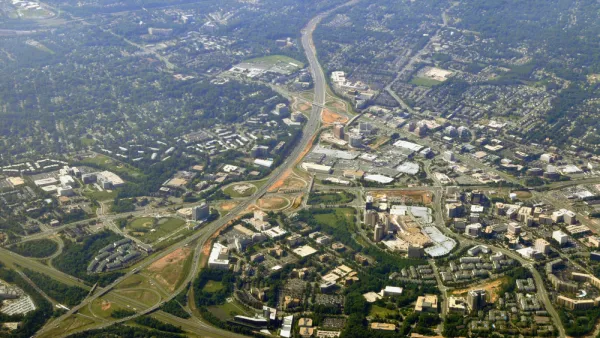
In Northern Virginia, where D.C.'s suburbs dissolve into rural landscape, the state's Department of Transportation is planning the Bi-County Parkway. Opponents question whether the state should provide a multi-billion dollar subsidy to developers.


"The debate over whether Northern Virginia needs a new highway is central to a larger question facing a region whose existing transportation infrastructure is bursting at the seams with finite funds to fix the bottlenecks: are more roads that cost billions of dollars to build the answer to fulfilling the Washington metropolitan area’s economic potential?" asks Martin Di Caro.
"Depending on who looks at these maps, the Bi-County Parkway is described in dramatically different ways. To [Ed] Gorski and his fellow environmentalists, the roadway is a boon for developers, a potential six-lane, divided highway with designs to leap across the Potomac River into Maryland."
"To supporters, the Bi-County Parkway is the culmination of years of planning and studies, a four-lane road that has been on both Prince William’s and Loudoun’s county-wide transportation plans for decades, designed to connect commuters to future job centers in a region expecting a population explosion over the next half century."
FULL STORY: Developers, Environmentalists Battle Over New Highway in D.C. Suburbs

Might Virginia's New Governor Halt a Controversial Highway Project?
Depending on who you're asking, Virginia's proposed Bi-County Parkway is either critical to supporting the state's growth or a sprawl-inducing gift to developers. With a key milestone in limbo, Governor Terry McAuliffe will have a chance to weigh in.
Northern Virginia Counties Not Happy With State Changes to Zoning Laws
Suburban housing construction has ground to a halt in Northern Virginia, according to county officials from the region, due to a law that changed the state's proffer system.
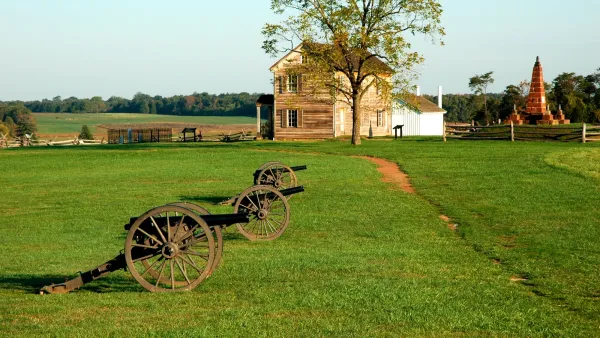
Virginia officials end support for proposed data center next to Civil War battlefield
The proposal for a 2,100-acre site in Prince William County has been in dispute for years.

The state-sanctioned urbicide of Austin
People don’t kill cities. Freeways do.

US to reduce Colorado River water deliveries to Mexico
A new Colorado Treaty amendment reduces Mexico’s Colorado River water allocation by 250,000 acre feet.

New Jersey’s second-largest city bans standalone data centers
Jersey City will continue to allow co-location facilities, such as those meant for research institutions that store their own data.

Amtrak not solely to blame for New Jersey commuter rail's unreliability, report finds
A new study from the Garden State Initiative found that NJ Transit’s budget grew 20% across a 4 year period, but reliability declined significantly over the same period.

EPA erases limits on planet-warming pollution from power plants
Under Monday’s plan, power plants would still have some limits on how much mercury, arsenic and other contaminants they can emit.

Phoenix announces new on-demand transit service, more frequent RAPID buses
Both new services will launch in October, and are part of Phoenix's Project Effective Access Solutions for Easing Congestion.

FREE Course: Walkable City 1: Why Walkability?
After describing his path towards focusing on walkability as the essence of good planning, Jeff Speck marches through his five principal reasons for making more walkable places.
Reinventing Malls: Planning Alchemy—Turning Gray Fields Into Gold
The course focuses on the opportunities and imperatives that shape reinvention of mall sites.

Eagle County Government
Harvard University Graduate School of Design
Nashville Planning Department
The Architects Foundation
University of Cincinnati Online
The Pocatello Development Authority
The Urban Renewal Agency of the City of Pocatello
Journal of the American Planning Association