A new study published by the National Endowment for the Arts profiles America's 2 million professional artists (including architects), with information on artist salaries, a breakdown of occupations, and the cities with the most working artists.


"Last week, we learned a lot more about the roughly 2 million artists in the workforce thanks to the NEA study, “Equal Opportunity Data Mining: National Statistics about Working Artists,” writes Katherine Boyle. "The study, based on Census data, classifies artists by occupation, demographics and region. The NEA also provides this handy interactive map, which ranks states according to artists as a share of the state’s total labor force."
Among the most interesting findings, says Boyle:
- California is still America’s favorite artist commune: Los Angeles (4.86 percent) and San Francisco (4.3 percent) boast the highest percentages of artists in their workforces.
- Design is the most common artistic profession: 39 percent of artists in the workforce classify themselves as designers. Architects make up 9 percent.
- Female architects still have a ways to go: Only one in four architects in the United States are women.
Read the full story: Five facts about professional artists in the United States
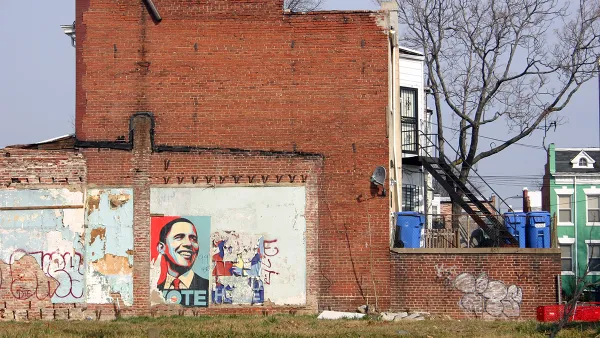
Street Artist Shepard Fairey Tackles Detroit
After billionaire landlord Dan Gilbert commissioned a mural, less-legal works in Fairey's style began showing up around the city. Detroit's case against the artist brings gentrification's ironies into focus.
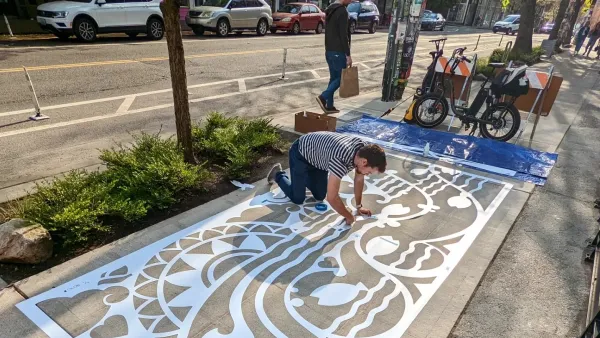
This Seattle sidewalk art only appears when it rains
Prompted to find a silver lining to the gloom of rainy Pacific Northwest days, an artist hit upon a novel solution: water-activated sidewalk paint.
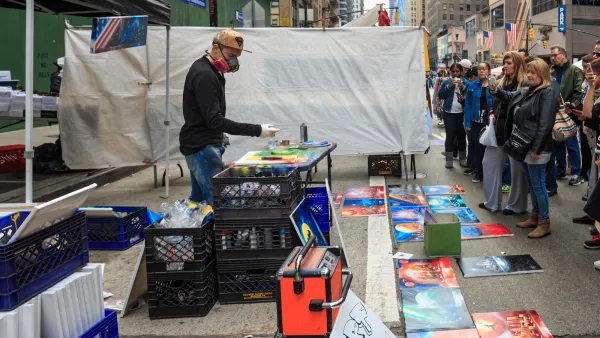
NYC has Lost 4% of its Resident Artists Since 2019
Advocates argue the city should build more affordable housing reserved for artists, who are being increasingly priced out.

Washington state to charge fee to drivers with fuel-efficient cars
Revenue from the fee will go towards supporting the state’s highways.

Illinois considers spending $1 billion in taxpayer money on data center
A quantum computing campus and data center are currently under construction in Chicago.

Trump to blast ‘hydrocarbon highway’ through ‘world’s longest art gallery’
Environmental and historic preservation groups are suing to stop the project.

NYC, state sue feds over mixed-immigration-status housing assistance rule
The state’s lawsuit argues that the rule change violates the Administrative Procedure Act.

Michigan to turn neighborhood into virtual power plant
Residents will soon be able to divert their excess energy to the grid in exchange for compensation.

Data center, mining project swarm to long-awaited Alaska railroad line
The state-owned railroad approved final plans for the spur line this week; the project is expected to cost $311 million, mostly funded by the federal government

FREE Course: Walkable City 1: Why Walkability?
After describing his path towards focusing on walkability as the essence of good planning, Jeff Speck marches through his five principal reasons for making more walkable places.
Reinventing Malls: Planning Alchemy—Turning Gray Fields Into Gold
The course focuses on the opportunities and imperatives that shape reinvention of mall sites.

City of Charlotte
City of Rosemead
Rutgers University, Edward J. Bloustein School of Planning and Public Policy
University of Michigan School for Environment and Sustainability (SEAS)
Hunter College, City University of New York (CUNY)
The Architects Foundation
University District Partnership